
Stöbern
genialokal zum Startbildschirm hinzufügen
Installieren Sie die genialokal App auf Ihrem Startbildschirm für einen schnellen Zugriff und eine komfortable Nutzung.
Installieren Sie die genialokal App auf Ihrem Startbildschirm für einen schnellen Zugriff und eine komfortable Nutzung.
Tippen Sie einfach auf Teilen:
 Und dann auf "Zum Home-Bildschirm [+]".
Bei genialokal.de kaufen Sie online bei Ihrer lokalen, inhabergeführten Buchhandlung!
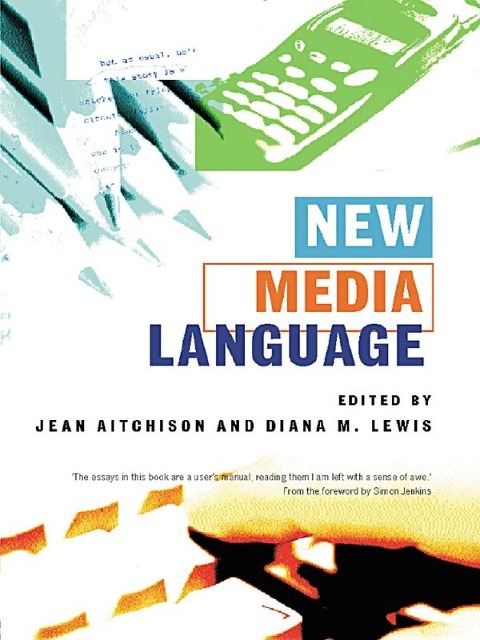
New Media Language brings leading media figures and scholars together to debate the shifting relations between today's media and contemporary language. From newspapers and television to email, the Internet and text messaging, there are ever increasing media conduits for news. This book investigates how developments in world media have affected, and been affected by, language. Exploring a wide range of topics, from the globalization of communication to the vocabulary of terrorism and the language used in the wake of September 11, New Media Language looks at the important and wide-ranging implications of these changes. From Malcolm Gluck on wine writing, to Naomi Baron on email, the authors provide authoritative and engaging insights into the ways in which language is changing, and in turn, changes us. With a foreword by Simon Jenkins, New Media Language is essential reading for anyone with an interest in today's complex and expanding media.
List of contributors, Foreword by Simon Jenkins, Acknowledgements, Introduction, Jean Aitchison and Diana Lewis, I. Modern media discourse, 1. Poles apart: globalisation and the development of news discourse across the 20th century Allan Bell 2. Modern media myths Raymond Snoddy, 3.Globalizing 'communication' Deborah Cameron, 4.The new incivility: threat or promise? Robin Lakoff, 5. Parochialising the Global: language in the British Tabloid Press Martin Conboy; II. Modes of the media 6. Reporting, reportage and literature John Carey, 7. Speaking to Middle England: Radio Four and its listeners, David Hendy, 8. Literacy and the new media: vita brevis, lingua brevis Angela Kesseler and Alexander Bergs, 9. Why email looks like speech: proofreading, pedagogy, and public face Naomi Baron, 10. Online news: a new genre? Diana Lewis; III. Representation and models, 11. Writing wine columns Malcolm Gluck, 12. Rhetoric, bluster and on_line gaffes: The tough life of a White House spin_doctor Alan Partington, 13. Politics is Marriage and Show Business: A View From Recent Taiwanese Political Discourse Jennifer Wei, 14. 'Emotional DIY' and Proper Parenting in Kilroy Nuria Lorenzo-Dus, 15. Language and American 'good taste': Martha Stewart as mass media role model Catherine Evans Davie; IV. The effect of the media on language, 16. Noun phrases in media texts: a quantificational approach Yibin Ni, 17. Economy vs. explicitness: the evolution of increasingly dense nominal styles in newspaper language Douglas Biber, 18. Newspapers and neologisms John Ayto, 19. Reliable authority. Tabloids, film, e-mail, and speech as sources for dictionaries, John Simpson, 20. From Armageddon to War: the vocabulary of terrorism Jean Aitchison, Index
Dieses eBook wird im PDF-Format geliefert und ist mit einem Adobe Kopierschutz (DRM) versehen. Sie können dieses eBook mit allen Geräten lesen, die das PDF-Format und den Adobe Kopierschutz (DRM) unterstützen.
Zum Beispiel mit den folgenden Geräten:
• tolino Reader
Laden Sie das eBook direkt über den Reader-Shop auf dem tolino herunter oder übertragen Sie das eBook auf Ihren tolino mit einer kostenlosen Software wie beispielsweise Adobe Digital Editions.
• Sony Reader & andere eBook Reader
Laden Sie das eBook direkt über den Reader-Shop herunter oder übertragen Sie das eBook mit der kostenlosen Software Sony READER FOR PC/Mac oder Adobe Digital Editions auf ein Standard-Lesegeräte mit epub- und Adobe DRM-Unterstützung.
• Tablets & Smartphones
Möchten Sie dieses eBook auf Ihrem Smartphone oder Tablet lesen, finden Sie hier unsere kostenlose Lese-App für iPhone/iPad und Android Smartphone/Tablets.
• PC & Mac
Lesen Sie das eBook direkt nach dem Herunterladen mit einer kostenlosen Lesesoftware, beispielsweise Adobe Digital Editions, Sony READER FOR PC/Mac oder direkt über Ihre eBook-Bibliothek in Ihrem Konto unter „Meine eBooks“ - „online lesen“.
Schalten Sie das eBook mit Ihrer persönlichen Adobe ID auf bis zu sechs Geräten gleichzeitig frei.
Bitte beachten Sie, dass die Kindle-Geräte das Format nicht unterstützen und dieses eBook somit nicht auf Kindle-Geräten lesbar ist.