Und dann auf "Zum Home-Bildschirm [+]".

Stöbern
genialokal zum Startbildschirm hinzufügen
Installieren Sie die genialokal App auf Ihrem Startbildschirm für einen schnellen Zugriff und eine komfortable Nutzung.
Installieren Sie die genialokal App auf Ihrem Startbildschirm für einen schnellen Zugriff und eine komfortable Nutzung.
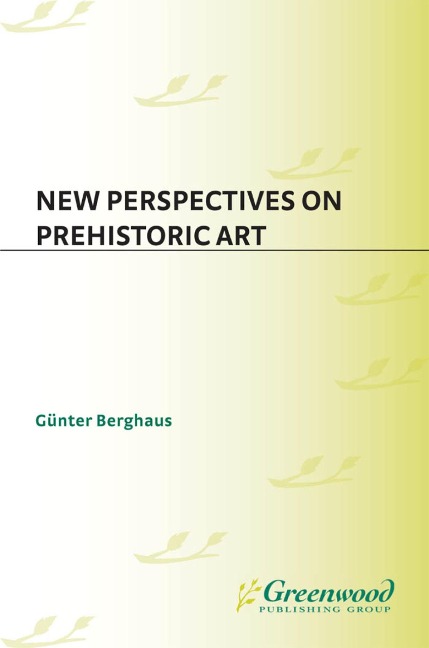
Following the discovery of Franco-Caribbean cave art in the nineteenth century, standard interpretations of these works usually revolved around hunting, magic, and fertility cults. Orthodox positions such as these have weighed heavily on later generations of art historians, archaeologists, and anthropologists, even those whose views dissented from those of their predecessors. In the last few decades, however, new approaches to cave art, often based on discoveries made in Africa, Asia, Australia, North America, and the Arctic region, have produced new insights into possible meanings and functions of prehistoric paintings and sculptures. This new collection of essays explores these insights, gathering the observations of eight experts from a variety of disciplines, and examining some of the social and spiritual functions of a variety of artistic genres ranging from 40,000 B.C. to 5,000 B.C.
These insights, which derive from evolutionary biology, feminist scholarship, ritual studies, and new modes of anthropology, argue collectively that prehistoric art was a culture-specific form of communication that should be interpreted in the social context of early hunger-gatherer societies and should not be measured with the criteria and paradigms of modern art. Essential reading for anyone interested in prehistoric art or its cultural implications, this volume represents a bold step forward in the research and analysis of the very first artists.
GÜNTER BERGHAUS is a Reader in Theatre History and Performance Studies at the Drama Department, University of Bristol. He has published extensively on theatre anthropology, ritual studies, avant-garde performance, and Renaissance and Baroque theatre. He has served as principal organizer of several international conferences and has held research awards from the Polish Academy of Sciences, the German Research Foundation, the Italian Ministry of Culture, the British Academy, and the Brazilian Ministry of Education.
List of Illustrations
Preface by Günter Berghaus
Consciousness, Intelligence, and Art: A View of the West European Middle to Upper Palaeolithic Transition by David Lewis-Williams
Hunter-gatherer Imagery in Aboriginal Australia: Interpreting Rock Art by Informed and Formal Methods by Christoper Chippindale
Cyclical Nucleation and Sacred Space: Rock Art at the Centre by Solveig A. Turpin
Women in Prehistoric Art by Camilla Power
Art in Human Evolution by Lawrence S. Barham
Paleoperformance: Investigating the Human Use of Caves in the Upper Paleolithic by Yann-Pierre Montelle
Rock Art and Rock Sites as Indicators of Prehistoric Theatre and Pitual Performances by Jon Nygaard
Prospecting the Primordial: Modernism and the Arts of Prehistory by Roger Cardinal
Bibliography
Index
Dieses eBook wird im PDF-Format geliefert und ist mit einem Adobe Kopierschutz (DRM) versehen. Sie können dieses eBook mit allen Geräten lesen, die das PDF-Format und den Adobe Kopierschutz (DRM) unterstützen.
Zum Beispiel mit den folgenden Geräten:
• tolino Reader
Laden Sie das eBook direkt über den Reader-Shop auf dem tolino herunter oder übertragen Sie das eBook auf Ihren tolino mit einer kostenlosen Software wie beispielsweise Adobe Digital Editions.
• Sony Reader & andere eBook Reader
Laden Sie das eBook direkt über den Reader-Shop herunter oder übertragen Sie das eBook mit der kostenlosen Software Sony READER FOR PC/Mac oder Adobe Digital Editions auf ein Standard-Lesegeräte mit epub- und Adobe DRM-Unterstützung.
• Tablets & Smartphones
Möchten Sie dieses eBook auf Ihrem Smartphone oder Tablet lesen, finden Sie hier unsere kostenlose Lese-App für iPhone/iPad und Android Smartphone/Tablets.
• PC & Mac
Lesen Sie das eBook direkt nach dem Herunterladen mit einer kostenlosen Lesesoftware, beispielsweise Adobe Digital Editions, Sony READER FOR PC/Mac oder direkt über Ihre eBook-Bibliothek in Ihrem Konto unter „Meine eBooks“ - „online lesen“.
Schalten Sie das eBook mit Ihrer persönlichen Adobe ID auf bis zu sechs Geräten gleichzeitig frei.
Bitte beachten Sie, dass die Kindle-Geräte das Format nicht unterstützen und dieses eBook somit nicht auf Kindle-Geräten lesbar ist.