
Stöbern
genialokal zum Startbildschirm hinzufügen
Installieren Sie die genialokal App auf Ihrem Startbildschirm für einen schnellen Zugriff und eine komfortable Nutzung.
Installieren Sie die genialokal App auf Ihrem Startbildschirm für einen schnellen Zugriff und eine komfortable Nutzung.
Tippen Sie einfach auf Teilen:
 Und dann auf "Zum Home-Bildschirm [+]".
Bei genialokal.de kaufen Sie online bei Ihrer lokalen, inhabergeführten Buchhandlung!
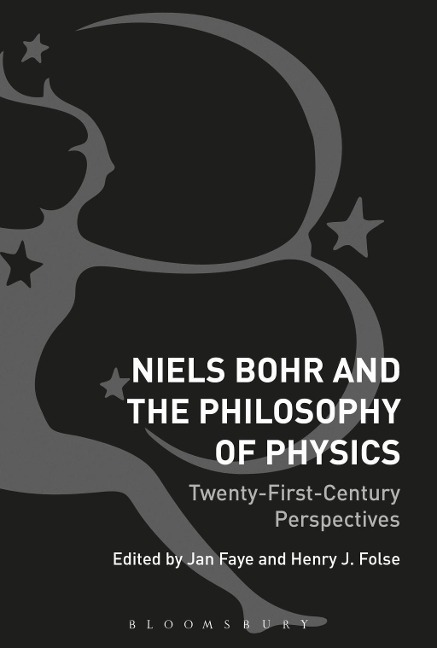
Niels Bohr and Philosophy of Physics: Twenty-First Century Perspectives examines the philosophical views, influences and legacy of the Nobel Prize physicist and philosophical spokesman of the quantum revolution, Niels Bohr.
The sixteen contributions in this collection by some of the best contemporary philosophers and physicists writing on Bohr's philosophy today all carefully distinguish his subtle and unique interpretation of quantum mechanics from views often imputed to him under the banner of the "Copenhagen Interpretation." With respect to philosophical influences on Bohr's outlook, the contributors analyse prominent similarities between his viewpoint and Kantian ways of thinking, the views of the Danish philosopher Harald Høffding, and themes characteristic of American pragmatism. In recognizing the importance of Bohr's epistemological naturalism they examine his defence of the indispensability of classical concepts from a variety of different perspectives.
This collection shows us that Bohr's interpretation of quantum mechanics, now nearly a century old, still has the power to shed light on a variety of issues that have arisen only since his lifetime, as well as decoherence theory and other non-collapse interpretations. Balancing historical themes with contemporary discussions, Niels Bohr and the Philosophy of Physics establishes Bohr's on-going contribution to the philosophy of physics and examines his place in the history of philosophy.
Jan Faye is a philosopher of science at the University of Copenhagen, Denmark.
Henry Folse is Professor Emeritus at Loyola University New Orleans, USA.
General Introduction
Part I: Understanding Bohr's Philosophical Background
1. Why Do We Find Bohr Obscure? Reading Bohr as a Philosopher of Experiment Kristian Camilleri (History and Philosophy of Science Department, University of Melbourne)
2. On Bohr's Transcendental Research Program Michel Bitbol (Director of Research, CNRS, Paris)
3. Transcendental Versus Quantitative Meanings of Bohr's Complementarity Principle Patricia Kauark-Leite (Philosophy Department, The Federal University of Minas Gerais)
4. Complementarity and Pragmatic Epistemology: A Comparison of Bohr and C.I.
Lewis Henry Folse (Professor of Philosophy, Loyola University)
5. Complementarity and Human Nature Jan Faye (Associate Professor, University of Copenhagen)
6. Bohr's Relational Holism and the Classical-quantum Interaction Mauro Dorato (Professor of Philosophy, University of Rome)
7. Complementarity As a Route to Inferentialism Stefano Osnaghi (ICI Berlin Institute for Cultural Inquiry)
8. Bohr's Thought from the Twentieth to the Twenty-First Century Arkady Plotnitsky (Professor of English, Theory and Cultural Studies, Purdue University)
Part II: Bohr's interpretation of quantum mechanics in twenty-first century physics
9. Complementarity and Quantum Tunneling Slobodan Perovic (Associate Professor of Philosophy, University of Belgrade)
10. Bohr and the Problem of the Quantum-to-Classical Transition Maximillian Schlosshauer & Kristian Camilleri (Department of Physics, University of Portland)
11. Bohr's epistemological contribution to the quantum-classical cut problems Manuel Bächtold (Philosophy of Science, Université Montpellier)
12. An Exploration of the History and Possible Future of Bohrian Quantum Empiricism Scott Tanona (Associate Professor of Philosophy, Kansas State University)
13. An Everett Perspective on Bohr and EPR Guido Bacciagaluppi (Associate Professor of Foundation of Physics, Utrecht University)
14. Niels Bohr and the Mathematical Formalism Dennis Dieks (Professor of Physics, Utrecht University)
15. From Classical Concepts to Commutative Algebras Klaas Landsman (Professor of Physics, Radboud University)
16. Why QBism Is Not the Copenhagen Interpretation and What John Bell Might Have Thought of It N. David Mermin (Professor of Physics, Cornell University)
Dieses eBook wird im PDF-Format geliefert und ist mit einem Adobe Kopierschutz (DRM) versehen. Sie können dieses eBook mit allen Geräten lesen, die das PDF-Format und den Adobe Kopierschutz (DRM) unterstützen.
Zum Beispiel mit den folgenden Geräten:
• tolino Reader
Laden Sie das eBook direkt über den Reader-Shop auf dem tolino herunter oder übertragen Sie das eBook auf Ihren tolino mit einer kostenlosen Software wie beispielsweise Adobe Digital Editions.
• Sony Reader & andere eBook Reader
Laden Sie das eBook direkt über den Reader-Shop herunter oder übertragen Sie das eBook mit der kostenlosen Software Sony READER FOR PC/Mac oder Adobe Digital Editions auf ein Standard-Lesegeräte mit epub- und Adobe DRM-Unterstützung.
• Tablets & Smartphones
Möchten Sie dieses eBook auf Ihrem Smartphone oder Tablet lesen, finden Sie hier unsere kostenlose Lese-App für iPhone/iPad und Android Smartphone/Tablets.
• PC & Mac
Lesen Sie das eBook direkt nach dem Herunterladen mit einer kostenlosen Lesesoftware, beispielsweise Adobe Digital Editions, Sony READER FOR PC/Mac oder direkt über Ihre eBook-Bibliothek in Ihrem Konto unter „Meine eBooks“ - „online lesen“.
Schalten Sie das eBook mit Ihrer persönlichen Adobe ID auf bis zu sechs Geräten gleichzeitig frei.
Bitte beachten Sie, dass die Kindle-Geräte das Format nicht unterstützen und dieses eBook somit nicht auf Kindle-Geräten lesbar ist.