
Stöbern
genialokal zum Startbildschirm hinzufügen
Installieren Sie die genialokal App auf Ihrem Startbildschirm für einen schnellen Zugriff und eine komfortable Nutzung.
Installieren Sie die genialokal App auf Ihrem Startbildschirm für einen schnellen Zugriff und eine komfortable Nutzung.
Tippen Sie einfach auf Teilen:
 Und dann auf "Zum Home-Bildschirm [+]".
Bei genialokal.de kaufen Sie online bei Ihrer lokalen, inhabergeführten Buchhandlung!

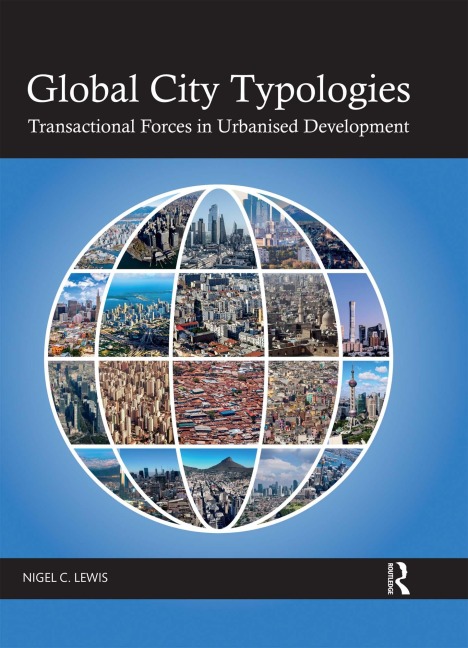
Global City Typologies explores the historical, cultural and socio-economic transactional forces in the development of existing cities through to newly planned and emerging cities. Individual chapters address different sets and typologies of global cities to analyse their comparative evolution and standing today. The separate parts and individual chapters have been grouped around 125 different established, planned and emerging cities and analysed according to different typologies and thematic categories that comprise historic cities, early trading cities, planned cities, emerging global cities, mega cities and megalopolitan agglomerations. These span five continents - including the industrial cities of Chicago and Manchester, new capitals such as Brasília and New Delhi, innovative cities such as Singapore and Tel Aviv and mega cities such as Mexico City. The book is fully illustrated throughout with modern and historical maps, which enables visualisation of the forces that have shaped ongoing development of these major global cities. This is an essential book for students and professionals in urban design and planning, administrators, economists, designers and developers.
Nigel C. Lewis is a consulting engineer, planner and designer who has practised in the UK, and across western and central Europe, the mid-East, Africa, Asia and the USA. As part of multi-disciplinary design and building teams, he has been responsible for the planning, design and realisation of both private and publicly financed facilities and urban infrastructure.
PART I - INTRODUCTION and URBAN THEORY PART II - ESTABLISHED HISTORIC CITIES 2.0 Introduction - Historic Cities 2.1 Imperial Cities 2.2 Theistic Cities 2.3 Former Capital Cities 2.4 Historic European Capital Cities 2.5 Academic and Ecclesiastic European Cities PART III - EARLY TRADING CITIES 3.0 Introduction - Early Trading Cities 3.1 Mercantile Port Cities 3.2 Lowland, Hanseatic, Baltic, and Scandinavian Port Cities 3.3 Maritime Cities 3.4 Island Cities 3.5 Mountain Cities PART IV - PLANNED CITIES 4.0 Introduction - Planned Cities 4.1 Former Soviet and Eastern European Cities 4.2 Divided Cities 4.3 Industrial & De-industrialised Cities 4.4 Modern American Cities 4.5 New Capital Cities PART V - EMERGING GLOBAL CITIES 5.0 Introduction - Emerging Global Cities 5.1 Innovative Cities 5.2 Trans-National Global Cities 5.3 Mega African Cities 5.4 Mega South American Cities 5.5 Mega Asian Cities PART VI - MEGALOPOLITAN AGGLOMERATIONS 6.0 Megalopolitan Agglomerations 6.1 Megalopolitan Europe 6.2 Megalopolitan Americas 6.3 Megalopolitan Japan 6.4 Megalopolitan India 6.5 Megalopolitan China PART VII - SUMMARY 7.0 Synopsis Bibliography & Further Reading