Und dann auf "Zum Home-Bildschirm [+]".

Stöbern
genialokal zum Startbildschirm hinzufügen
Installieren Sie die genialokal App auf Ihrem Startbildschirm für einen schnellen Zugriff und eine komfortable Nutzung.
Installieren Sie die genialokal App auf Ihrem Startbildschirm für einen schnellen Zugriff und eine komfortable Nutzung.
Ihr gewünschter Artikel ist in 0 Buchhandlungen vorrätig - wählen Sie hier eine Buchhandlung in Ihrer Nähe aus:

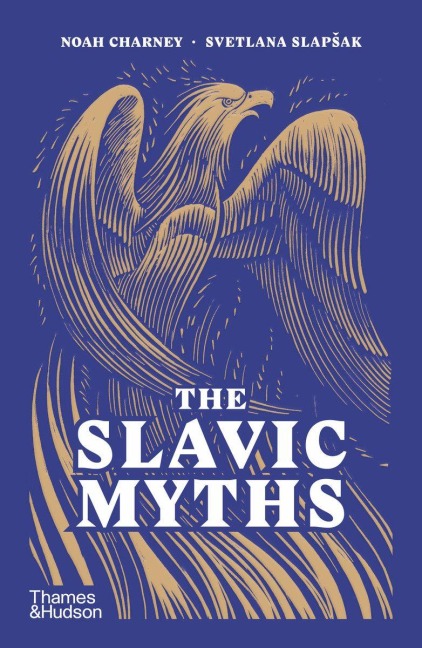
A Pulitzer-nominated author and one of the great public intellectuals of Slavic culture bring to life the unfamiliar myths and legends of the Slavic world.
Slavic cultures are far-ranging, comprising of East Slavs (Russia, Ukraine, Belarus), West Slavs (Czech Republic, Slovakia, Poland) and South Slavs (the countries of former Yugoslavia plus Bulgaria), yet they are connected by tales of adventure and magic with deep roots in a common lore. In this first collection of Slavic myths for an international readership, Noah Charney and Svetlana Slapšak expertly weave together a retelling of the ancient stories with nuanced analysis that illuminates their place at the heart of Slavic tradition.
Though less familiar to us than the legends of ancient Egypt, Greece and Scandinavia, in the world of Slavic mythology we find much that we can recognize: petulant deities, demons and faeries; witches, the sinister vestica, whose magic may harm or heal; a supreme god who can summon storms and hurl thunderbolts. Gods gather under the World Tree, reminiscent of Norse mythology's Yggdrasill; or, after the coming of Christianity, congregate among the clouds. The vampire - usually the only Serbo-Croatian word in any foreign-language dictionary - and the werewolf emerge from the shallow graves of Slavic belief.
In their careful analysis and sensitive reconstructions of the origin stories, Charney and Slapsak unearth the Slavic beliefs before their distortion first by Christian chroniclers and then by 19th-century scholars seeking origin stories for their new-born nation states. They reveal links not only to the neighbouring pantheons of Greece, Rome, Egypt and Scandinavia but also the belief systems of indigenous peoples of Australia, the Americas, Africa and Asia. In so doing, they draw out the universalities that cut across cultures in the stories we tell ourselves.
Noah Charney is an American art historian and internationally bestselling author of fiction (The Art Thief) and non-fiction (The Art of Forgery, The Collector of Lives and The Museum of Lost Art). Svetlana Slapsak is a leading specialist in Balkan studies and award-winning essayist who has published more than eighty books. She won the American PEN Freedom of Expression Award in 1993 and was nominated for the Nobel Peace Prize in 2005. Both Charney and Slapsak live in Slovenia.
Introduction: The Slav Epic: How the 19th Century Established Slavic Mythology
"Black Butterfly" - Vampires - "At Stake" - Werewolves - "Threshold" - Libuse and Women at the Threshold - "Do Not Weep" - Don't Mess with a Goddess: Three Versions of the Great Goddess Among the Slavs - "Ilya Muromets in Defense of Kiev" - Perun: The Supreme God in Heaven and the Heroes on Earth - "The Waterman" - Creatures of the Waters - "Firebird" - Slavic Magic: Spells, Magicians, Enchanted Animals, Plants and Treasures - Conclusion