Und dann auf "Zum Home-Bildschirm [+]".

Stöbern
genialokal zum Startbildschirm hinzufügen
Installieren Sie die genialokal App auf Ihrem Startbildschirm für einen schnellen Zugriff und eine komfortable Nutzung.
Installieren Sie die genialokal App auf Ihrem Startbildschirm für einen schnellen Zugriff und eine komfortable Nutzung.
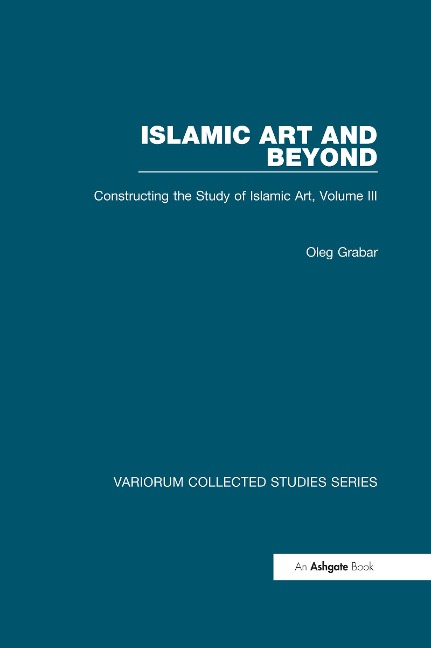
Islamic Art and Beyond is the third in a set of four volumes of studies on Islamic art by Oleg Grabar. Between them they bring together more than eighty articles, studies and essays, work spanning half a century by a master of the field. Each volume takes a particular section of the topic, the three other volumes being entitled: Early Islamic Art, 650-1100; Islamic Visual Culture, 1100-1800; and Jerusalem. Reflecting the many incidents of a long academic life, they illustrate one scholar's attempt at making order and sense of 1400 years of artistic growth. They deal with architecture, painting, objects, iconography, theories of art, aesthetics and ornament, and they seek to integrate our knowledge of Islamic art with Islamic culture and history as well as with the global concerns of the History of Art. In addition to the articles selected, each volume contains an introduction which describes, often in highly personal ways, the context in which Grabar's scholarship developed and the people who directed and mentored his efforts. The articles in the present volume illustrate how the author's study of Islamic art led him in two directions for a further understanding of the arts. One is how to define Islamic art and what impulses provided it with its own peculiar forms and dynamics of growth. Was it a faith or a combination of social, historical, and cultural events? And how has 'Islamic art' impacted on the contemporary arts of the Islamic world? The other issue is that of the meanings to be given to forms like domes, so characteristic of Islamic art, or to terms like symbol, signs, or aesthetic values in the arts, especially when one considers the contemporary world. The Islamic examples allow for the development of new intellectual positions for the history and criticism of the arts everywhere.
Oleg Grabar is Professor Emeritus in the School of Historical Studies at the Institute for Advanced Study, Princeton, USA, and Aga Khan Professor Emeritus of Islamic Art and Architecture at Harvard University, USA.
Contents: Preface; Introduction. Part One Theory of Art: History of art and history of literature: some random thoughts; An art of the object; On the universality of the history of art; From utopia to paradigms; Geometry and ideology: the Festival of Islam and the study of Islamic art; Different but compatible ends; Die ethische Dimension des Ornaments; Islamic ornament and Western abstraction. Part Two General Islamic Architecture: The Islamic dome, some considerations; The architecture of the Middle Eastern city: the case of the mosque; Art and architecture; Cities and citizens: the growth and culture of urban Islam; Symbols and signs of Islamic architecture; The meaning of history in Cairo; Architecture as art; From dome of heaven to pleasure dome; Graffiti or proclamations: why write on buildings? Part Three General Islamic Art: What makes Islamic art Islamic; Islamic art and archaeology; Reflections on the study of Islamic art; On catalogs, exhibitions and complete works; Between connoisseurship and technology: a review; The aesthetics of Islamic art. Index.
Dieses eBook wird im PDF-Format geliefert und ist mit einem Adobe Kopierschutz (DRM) versehen. Sie können dieses eBook mit allen Geräten lesen, die das PDF-Format und den Adobe Kopierschutz (DRM) unterstützen.
Zum Beispiel mit den folgenden Geräten:
• tolino Reader
Laden Sie das eBook direkt über den Reader-Shop auf dem tolino herunter oder übertragen Sie das eBook auf Ihren tolino mit einer kostenlosen Software wie beispielsweise Adobe Digital Editions.
• Sony Reader & andere eBook Reader
Laden Sie das eBook direkt über den Reader-Shop herunter oder übertragen Sie das eBook mit der kostenlosen Software Sony READER FOR PC/Mac oder Adobe Digital Editions auf ein Standard-Lesegeräte mit epub- und Adobe DRM-Unterstützung.
• Tablets & Smartphones
Möchten Sie dieses eBook auf Ihrem Smartphone oder Tablet lesen, finden Sie hier unsere kostenlose Lese-App für iPhone/iPad und Android Smartphone/Tablets.
• PC & Mac
Lesen Sie das eBook direkt nach dem Herunterladen mit einer kostenlosen Lesesoftware, beispielsweise Adobe Digital Editions, Sony READER FOR PC/Mac oder direkt über Ihre eBook-Bibliothek in Ihrem Konto unter „Meine eBooks“ - „online lesen“.
Schalten Sie das eBook mit Ihrer persönlichen Adobe ID auf bis zu sechs Geräten gleichzeitig frei.
Bitte beachten Sie, dass die Kindle-Geräte das Format nicht unterstützen und dieses eBook somit nicht auf Kindle-Geräten lesbar ist.