Und dann auf "Zum Home-Bildschirm [+]".

Stöbern
genialokal zum Startbildschirm hinzufügen
Installieren Sie die genialokal App auf Ihrem Startbildschirm für einen schnellen Zugriff und eine komfortable Nutzung.
Installieren Sie die genialokal App auf Ihrem Startbildschirm für einen schnellen Zugriff und eine komfortable Nutzung.

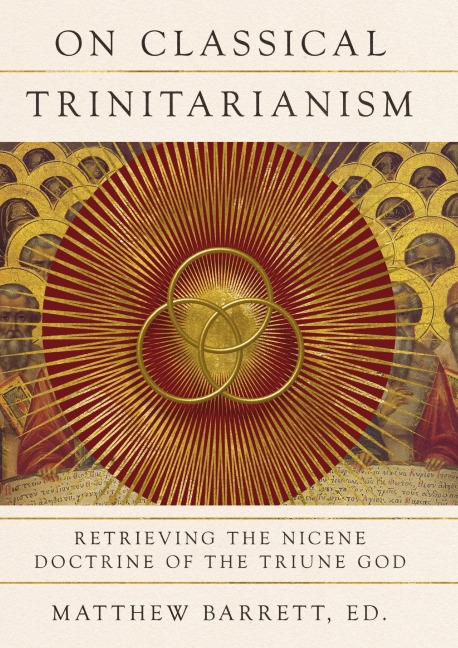


The Gospel Coalition Book Awards Winner - Theological Studies Modern theology claimed that it ignited a renaissance in trinitarian theology. Really, it has been a renaissance in social trinitarianism. Classical commitments like divine simplicity have been jettisoned, the three persons have been redefined as three centers of consciousness and will, and modern agendas in politics, gender, and ecclesiology determine the terms of the discussion. Contemporary trinitarian theology has followed the spirit of this trajectory, rejecting doctrines like eternal generation which were once a hallmark of Nicene orthodoxy and reintroducing subordinationism into the Trinity. Motivated by the longstanding need to retrieve the classical doctrine of the Trinity, theologian Matthew Barrett brings together Protestant, Roman Catholic, and Eastern Orthodox scholars to intervene in the conversation. With over forty contributions, this ecumenical volume resurrects the enduring legacy of Nicene orthodoxy, providing a theological introduction that listens with humility to the Great Tradition. In On Classical Trinitarianism, you find contributions from a wide range of scholars, including: - Katherin Rogers - Andrew Louth - Gilles Emery - Steven Duby - Gavin Ortlund - Adonis Vidu - Carl Trueman - Matthew Levering - Fred Sanders - Scott Swain - Karen Kilby - Amy Peeler - Thomas Joseph White - and more! The distinct yet united voices of On Classical Trinitarianism summon the next generation to move past modern revisionism for the sake of renewing classical trinitarian theology today. Together, they demonstrate that Nicene orthodoxy can endure in the modern world and unite the church catholic.
Amy Peeler is the Kenneth T. Wessner Chair of Biblical Studies at Wheaton College and Associate Priest at St. Mark's Episcopal Church in Geneva, IL. She is the author of Women and the Gender of God and a commentary on Hebrews.
Steven J. Duby (PhD, University of St Andrews) is associate professor of theology at Grand Canyon University. He is the author of Divine Simplicity: A Dogmatic Account.
Gavin Ortlund (PhD, Fuller Theological Seminary) is senior pastor at First Baptist Church of Ojai in Ojai, California. He was previously a research fellow for the Creation Project at the Carl F. H. Henry Center for Theological Understanding at Trinity Evangelical Divinity School. He is the author of Finding the Right Hills to Die On, Theological Retrieval for Evangelicals, and Anselm's Pursuit of Joy.
Matthew Levering (PhD Boston College) is the James N. Jr. and Mary D. Perry Chair of Theology at University of Saint Mary of the Lake in Mundelein, Illinois. He is the author or coauthor of over thirty-five books including Scripture and Metaphysics, Participatory Biblical Exegesis, and Engaging the Doctrine of Israel. He is also the director of the Center for Scriptural Exegesis, Philosophy, and Doctrine, and a longtime member of Evangelicals and Catholics Together.
J. V. Fesko (PhD, University of Aberdeen) is a minister in the Orthodox Presbyterian Church and Harriet Barbour Professor of Systematic and Historical Theology at Reformed Theological Seminary in Jackson, Mississippi. He initially served as a church planter from 1998 until 2004 when the church particularized and called him as their pastor. He served as pastor of Geneva Orthodox Presbyterian Church from 2004 until 2009 when he was called to serve as Academic Dean and Professor of Systematic and Historical Theology at Westminster Seminary California until June of 2019. Dr. Fesko's research interests include the integration of biblical and systematic theology, soteriology, and early modern Reformed theology.
Adonis Vidu is Andrew Mutch Distinguished Professor of Theology at Gordon-Conwell Theological Seminary. Dr. Vidu came to Gordon-Conwell from his native Romania, where he previously taught at Emmanuel University and the University of Bucharest. He is a constructive theologian who is involved in a recovery of the patristic and medieval trinitarian theology for the contemporary church. Having done previous work in theological epistemology (Theology After Neo-Pragmatism), hermeneutics (Postliberal Theological Method), doctrine of the atonement (Atonement, Law, and Justice), trinitarian theology (The Same God Who Works All Things, The Divine Missions), his latest research focuses on a trinitarian theology of the Christian life.
Ronni Kurtz (PhD, Midwestern Baptist Theological Seminary) is an assistant professor of theology at Cedarville University. He is also the author of No Shadow of Turning: Divine Immutability and the Economy of Redemption and the Fruitful Theology: How the Life of the Mind Leads to the Life of the Soul.
Samuel G. Parkison (PhD Midwestern Seminary) is Associate Professor of Theological Studies at Gulf Theological Seminary in the United Arab Emirates. He is the author of several books, including Proclaiming the Triune God: The Doctrine of the Trinity in the Life of the Church (co-author), as well as Thinking Christianly: Bringing Sundry Thoughts Captive to Christ, and Irresistible Beauty: Beholding Triune Glory in the Face of Jesus Christ.
Andrew Louth is professor emeritus of patristic and Byzantine studies at Durham University, England, and visiting professor of Eastern Orthodox theology at the Amsterdam Centre of Eastern Orthodox Theology (ACEOT), in the Faculty of Theology, theFree University, Amsterdam.
Christopher A. Hall (PhD, Drew University) served as president of Renovaré from 2015-2022. Previously, he was director of academic spiritual formation and Distinguished Professor of Theology at Eastern University.
Foreword by J. Todd Billings
Acknowledgments
The Nicene Creed: Or the Niceno-Constantinopolitan Creed, AD 381
Introduction: The Prospect and Promise of Classical Trinitarian Theology Matthew Barrett Part 1: Retrieving Nicene Trinitarianism
1. Ante-Nicene Trinitarianism: From Confession to Theology Donald Fairbairn
2. The Nicene Creed: Foundation of Orthodoxy Christopher A. Hall
3. The Beginnings of a Pro-Nicene Trinitarian Vision: Athanasius of Alexandria on the Activity of the Son and the Spirit Amy Brown Hughes and Shawn J. Wilhite
4. Hilary of Poitiers, on the Unity and Distinction of Father and Son: A Pro-Nicene Reading and Use of John 5:19 Carl L. Beckwith
5. The Cappadocians and the Maturity of Nicene Vocabulary Stephen Hildebrand
6. Maximos and John Damascene: Mid-Byzantine Reception of Nicaea Andrew Louth
7. Augustine ofHippo: Will the Real Augustine Please Stand Up? Keith E. Johnson
8. Anselm of Canterbury: Faith Seeking Trinitarian Understanding David S. Hogg
9. Thomas Aquinas's Appropriation of Pro-Nicene Theology of the Trinity Gilles Emery, OP
10. Creedal Critics or Creedal Confessors? The Reformers and the Reformed Scholastics J. V. Fesko
11. A Fading of the Trinitarian Imagination: The Fight for Nicene Confessionalism in the Eighteenthand Nineteenth Centuries Michael A. G. Haykin Part 2: Trinitarian Hermeneutics and Nicene Dogmatics
12. The Incomprehensibility of the Holy Trinity Ronni Kurtz
13. Trinity, Creatures, and Hermeneutics: Accounting Properly for both Theologia and Oikonomia Richard C. Barcellos
14. The Unity of God and the Unity of the Economy Steven J. Duby
15. Perfect Being Theology and Classical Trinitarianism Katherin A. Rogers
16. Trinity and Divine Simplicity James E. Dolezal
17. Three Persons, One Will Stephen J. Wellum
18. Trinity and Aseity Gavin Ortlund
19. The Immutable and Impassible Trinity-Part 1: The Biblical Teaching and Early Patristic Thought Thomas G. Weinandy
20. The Immutable and Impassible Trinity-Part 2: The Early Councils, Further Theological and Christological Developments, and Soteriological and Pastoral Implications Thomas G. Weinandy
21. Trinity and Love Matthew Levering
22. The Unbegotten Father John Baptist Ku
23. Only Begotten God: Eternal Generation, a Scriptural Doctrine Charles Lee Irons
24. Only Begotten Son: The Doctrinal Functions of Eternal Generation Fred Sanders
25. No Impassibility, No Eternal Generation: Retrieving a Pro-Nicene Distinctive Matthew Barrett
26. The Procession of the Spirit: Eternal Spiration Chris R. J. Holmes
27. The Spirit's Procession Revealed in the Spirit's Mission: An Augustinian Account Adonis Vidu
28. Three Agents, One Agency: The Undivided ExternalWorks of the Trinity Scott R. Swain
29. Trinity and Appropriations: Meaning, Practice, and Significance Josh Malone Part 3: The Renewal of Nicene Fidelity Today
30. Social or Classical? A Theological Dialogue Michael Allen and Matthew Barrett
31. Three Versus One? Some Problems of Social Trinitarianism Stephen R. Holmes
32. Perichoresis and Projection: Problems with Social Doctrines of the Trinity Karen Kilby
33. Is There Obedience in God? Nicene Orthodoxy and the Eternal Procession of the Son in Aquinas and Barth Thomas Joseph White
34. Renaissance or Revision? Metaphysical Departures from Classical Trinitarian Theism Craig A. Carter
35. Are Evangelicals Nicene Trinitarians? Evangelicalism's Debt to Social Trinitarianism D. Blair Smith
36. Reforming the Trinity? The Collapse of Classical Metaphysics and the Protestant Identity Crisis Carl Trueman
37. The Need for Nicene Exegesis: Eternal Functional Subordination's Hermeneutical Innovation Amy Peeler
38. The Need for Nicene Dogmatics: Eternal Functional Subordination's Dogmatic Inadequacy Glenn Butner
39. The Trinity Is Still Not Our Social Program: The Trinity and Gender Roles Samuel G. Parkison
40.