Und dann auf "Zum Home-Bildschirm [+]".

Stöbern
genialokal zum Startbildschirm hinzufügen
Installieren Sie die genialokal App auf Ihrem Startbildschirm für einen schnellen Zugriff und eine komfortable Nutzung.
Installieren Sie die genialokal App auf Ihrem Startbildschirm für einen schnellen Zugriff und eine komfortable Nutzung.
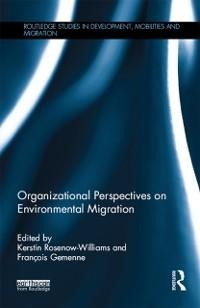
Over the past decade, international organizations (IOs) and non-governmental organizations (NGOs) have increasingly focused their efforts on the plight of environmental migrants in both industrialized and developing countries. However, to date very few studies have analysed the influence and rhetoric of advocacy groups in the debates on environmental migration. Organizational Perspectives on Environmental Migration fills this lacuna by drawing together and examining the related themes of climate change and environmental degradation, migration and organizational studies to provide a fresh perspective on their increasing relevance. In order to assess the role of IOs and NGOs in the environmental migration discourse and to understand their interaction and their ways of addressing the topic, the book contains a wide-range of contributions covering the perspectives of organizational sociologists, political scientists, anthropologists, geographers, lawyers and practitioners. The chapters are organized thematically around the perspectives of key actors in the area of environmental migration, including IOs, courts and advocacy groups. The geographically diverse and interdisciplinary range of contributions makes this volume an essential foundational text for organizational responses to environmental migration. This volume will be of great interest to students and scholars of migration studies, international relations, organizational sociology, refugee law and policy, and development studies.
Kerstin Rosenow-Williams is a postdoctoral researcher at the Institute for International Law of Peace and Armed Conflict and at the Chair for Sociology/Organisation, Migration, Participation, Ruhr University Bochum, Germany. François Gemenne is a research fellow in political science (FNRS/CEDEM - University of Liege/CEARC - University of Versailles), and an associate expert with CERI - Sciences Po, France.
1. Introduction: Organizational Perspectives on Environmental Migration Part I: The Complex Regime of Environmental Migration 2. Environmental Migration: A Concept between Complexes and Complexities 3. Climate Change and Environment related Migration in the European Union Policy: An Organizational Shift towards Adaptation and Development Part II: The Role of Courts 4. European Courts as Pacemakers for Defining and Potentially Expanding Protection for Environmental Migrants in Europe 5. Complementary Protection: The Role of Courts in Expanding Protection to 'Environmental Refugees' in Domestic Asylum Regimes Part III: The Role of International Organizations 6. The United Nations High Commissioner for Refugees' Discourse on Environmentally Displaced Persons: A Double-Edged Sword? 7. The Role of the International Organization for Migration in the International Governance of Environmental Migration 8. Environmental Migration and the International Red Cross/Red Crescent Movement Part IV: The Point of View of Practitioners 9. Displacement in the Context of Disasters, Climate Change and Environmental Degradation: The Norwegian Refugee Council 10. The United Nations Convention to Combat Desertification and the International Organization for Migration Partnership: Addressing Land, Sustainable Development and Human Mobility 11. Mobilizing Action on Climate Change and Migration: The UK Migration and Climate Change Coalition 12. Climate-Induced Migrants Need a Dignified Recognition under a New Protocol: Perspective from Bangladesh Part V: The Role of Advocacy Work 13. Civil Society Advocacy and Environmental Migration in Zimbabwe: A Case Study in Public Policy 14. Towards an 'Environmental Migration Management' Discourse: A Discursive Turn in Environmental Migration Advocacy 15. International Epistemic Organizations and their Role in Shaping the Politics of Environmental Migration 16. Conclusion: The Actors Involved in the Environmental Migration Complex
Dieses eBook wird im PDF-Format geliefert und ist mit einem Adobe Kopierschutz (DRM) versehen. Sie können dieses eBook mit allen Geräten lesen, die das PDF-Format und den Adobe Kopierschutz (DRM) unterstützen.
Zum Beispiel mit den folgenden Geräten:
• tolino Reader
Laden Sie das eBook direkt über den Reader-Shop auf dem tolino herunter oder übertragen Sie das eBook auf Ihren tolino mit einer kostenlosen Software wie beispielsweise Adobe Digital Editions.
• Sony Reader & andere eBook Reader
Laden Sie das eBook direkt über den Reader-Shop herunter oder übertragen Sie das eBook mit der kostenlosen Software Sony READER FOR PC/Mac oder Adobe Digital Editions auf ein Standard-Lesegeräte mit epub- und Adobe DRM-Unterstützung.
• Tablets & Smartphones
Möchten Sie dieses eBook auf Ihrem Smartphone oder Tablet lesen, finden Sie hier unsere kostenlose Lese-App für iPhone/iPad und Android Smartphone/Tablets.
• PC & Mac
Lesen Sie das eBook direkt nach dem Herunterladen mit einer kostenlosen Lesesoftware, beispielsweise Adobe Digital Editions, Sony READER FOR PC/Mac oder direkt über Ihre eBook-Bibliothek in Ihrem Konto unter „Meine eBooks“ - „online lesen“.
Schalten Sie das eBook mit Ihrer persönlichen Adobe ID auf bis zu sechs Geräten gleichzeitig frei.
Bitte beachten Sie, dass die Kindle-Geräte das Format nicht unterstützen und dieses eBook somit nicht auf Kindle-Geräten lesbar ist.