
Stöbern
genialokal zum Startbildschirm hinzufügen
Installieren Sie die genialokal App auf Ihrem Startbildschirm für einen schnellen Zugriff und eine komfortable Nutzung.
Installieren Sie die genialokal App auf Ihrem Startbildschirm für einen schnellen Zugriff und eine komfortable Nutzung.
Tippen Sie einfach auf Teilen:
 Und dann auf "Zum Home-Bildschirm [+]".
Bei genialokal.de kaufen Sie online bei Ihrer lokalen, inhabergeführten Buchhandlung!
Ihr gewünschter Artikel ist in 0 Buchhandlungen vorrätig - wählen Sie hier eine Buchhandlung in Ihrer Nähe aus:

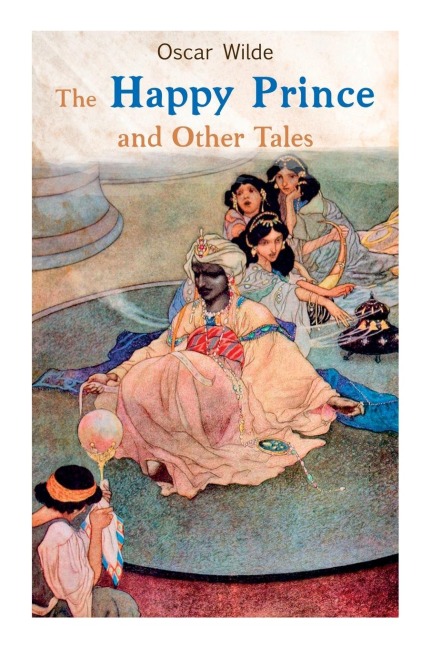
In "The Happy Prince and Other Tales," Oscar Wilde presents a collection of poignant fairy tales that juxtapose beauty with moral truths, revealing the inherent complexities of human nature. Written in Wilde's signature prose, the tales employ rich imagery and lyrical language, encapsulating themes of love, sacrifice, and social critique. Each story unfolds in a whimsical yet poignant manner, reflecting the fin-de-siècle literary context characterized by aestheticism and its exploration of the dualities of life, from the opulence of wealth to the despair of poverty. Oscar Wilde, an emblematic figure of the late 19th-century literary scene, drew inspiration from his experiences as a playwright and social observer. His acute awareness of societal disparities, coupled with his fascination for unconventional beauty, permeates this collection. Wilde's own struggles with identity and societal norms inform his exploration of the human condition, making his tales resonate with depth and irony. This enchanting collection is highly recommended for readers seeking to engage with the intricacies of morality and empathy. The tales invite both children and adults to reflect on the often-overlooked truths of life's beauty and hardship, making "The Happy Prince and Other Tales" a timeless tribute to the transformative power of love and kindness.
Oscar Fingal O'Flahertie Wills Wilde was born in Dublin in 1854. He went to Trinity College, Dublin and then to Magdalen College, Oxford, where he began to propagandize the new Aesthetic (or 'Art for Art's Sake') Movement.
Despite winning a first and the Newdigate Prize for Poetry, Wilde failed to obtain an Oxford scholarship, and was forced to earn a living by lecturing and writing for periodicals. After his marriage to Constance Lloyd in 1884, he tried to establish himself as a writer, but with little initial success. However, his three volumes of short fiction, The Happy Prince (1888), Lord Arthur Savile's Crime (1891) and A House of Pomegranates (1891), together with his only novel, The Picture of Dorian Gray (1891), gradually won him a reputation as a modern writer with an original talent, a reputation confirmed and enhanced by the phenomenal success of his Society Comedies - Lady Windermere's Fan, A Woman of No Importance, An Ideal Husband and The Importance of Being Earnest, all performed on the West End stage between 1892 and 1895.
Success, however, was short-lived. In 1891 Wilde had met and fallen extravagantly in love with Lord Alfred Douglas. In 1895, when his success as a dramatist was at its height, Wilde brought an unsuccessful libel action against Douglas's father, the Marquess of Queensberry. Wilde lost the case and two trials later was sentenced to two years' imprisonment for acts of gross indecency. As a result of this experience he wrote The Ballad of Reading Gaol. He was released from prison in 1897 and went into an immediate self-imposed exile on the Continent. He died in Paris in ignominy in 1900.