Und dann auf "Zum Home-Bildschirm [+]".

Stöbern
genialokal zum Startbildschirm hinzufügen
Installieren Sie die genialokal App auf Ihrem Startbildschirm für einen schnellen Zugriff und eine komfortable Nutzung.
Installieren Sie die genialokal App auf Ihrem Startbildschirm für einen schnellen Zugriff und eine komfortable Nutzung.
Ihr gewünschter Artikel ist in 0 Buchhandlungen vorrätig - wählen Sie hier eine Buchhandlung in Ihrer Nähe aus:

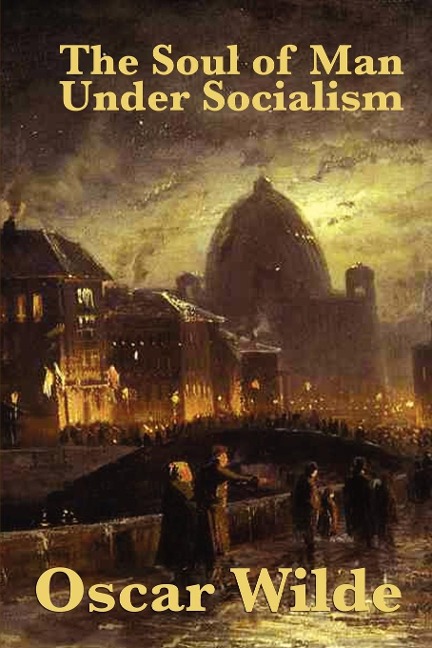
Oscar Wilde's provocative essay explores the relationship between individual freedom, creativity, and the social structures that shape human life. In The Soul of Man Under Socialism, Oscar Wilde presents a striking and unconventional vision of society in which true individualism flourishes once poverty and material hardship are removed. Writing in his characteristic style-elegant, paradoxical, and intellectually playful-Wilde argues that the purpose of social reform should not be the suppression of individuality but its liberation. Rejecting both harsh economic competition and rigid social conformity, Wilde imagines a society where artistic expression, personal development, and creative freedom become the highest aims of human life. In such a world, he suggests, individuals would no longer be consumed by the struggle for survival but would instead cultivate beauty, imagination, and intellectual growth. First published in 1891, the essay remains one of Wilde's most thoughtful works of social criticism. Blending political reflection with literary insight, The Soul of Man Under Socialism continues to invite readers to consider the balance between social justice and the freedom of the individual.
Oscar Wilde (16 October 1854 - 30 November 1900) was an Irish poet and playwright. After writing in different forms throughout the 1880s, he became one of London's most popular playwrights in the early 1890s. He is best remembered for his epigrams and plays, his novel The Picture of Dorian Gray, and the circumstances of his criminal conviction for "gross indecency", imprisonment, and early death at age 46. Wilde's parents were successful Anglo-Irish intellectuals in Dublin. Their son became fluent in French and German early in life. At university, Wilde read Greats; he proved himself to be an outstanding classicist, first at Trinity College Dublin, then at Oxford. He became known for his involvement in the rising philosophy of aestheticism, led by two of his tutors, Walter Pater and John Ruskin. After university, Wilde moved to London into fashionable cultural and social circles.