Und dann auf "Zum Home-Bildschirm [+]".

Stöbern
genialokal zum Startbildschirm hinzufügen
Installieren Sie die genialokal App auf Ihrem Startbildschirm für einen schnellen Zugriff und eine komfortable Nutzung.
Installieren Sie die genialokal App auf Ihrem Startbildschirm für einen schnellen Zugriff und eine komfortable Nutzung.
Ihr gewünschter Artikel ist in 0 Buchhandlungen vorrätig - wählen Sie hier eine Buchhandlung in Ihrer Nähe aus:

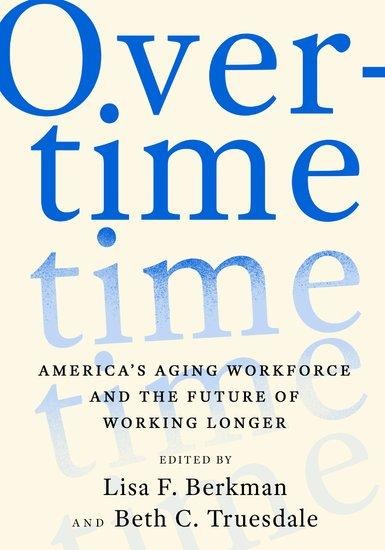
Overtime questions the conventional thinking that living longer means working longer, offering incisive new evidence for what the future of the American workforce will truly look like.
Lisa F. Berkman is Director of the Harvard Center for Population and Development Studies (HCPDS) and the Thomas D. Cabot Professor of Public Policy and of Epidemiology at the Harvard T.H. Chan School of Public Health. She is an internationally recognized social epidemiologist whose work focuses extensively on social and policy influences on population health and health equity. Her research orients toward understanding inequalities in health related to working conditions, social and economic policies, and social networks and isolation.
Beth Truesdale is a research fellow at the W.E. Upjohn Institute for Employment Research and a visiting scientist at the Harvard Center for Population and Development Studies. Dr. Truesdale is a sociologist whose research focuses on inequalities in work and aging, the future of retirement, and the effects of social institutions and public policies on Americans' well-being.
- Acknowledgments
- Contributors
- Introduction: Is Working Longer in Jeopardy?
- Lisa Berkman and Beth C. Truesdale
- Part I. Who Has a Job? Labor Trends from Commuting Zones to Countries
- Chapter 1: When I'm 54: Working Longer Starts Younger than We Think
- Beth C. Truesdale, Lisa Berkman, and Alexandra Mitukiewicz
- Chapter 2: The Geography of Retirement
- Courtney C. Coile
- Chapter 3: The European Context: Declining Health but Rising Labor Force Participation among the Middle-Aged
- Axel Börsch-Supan, Irene Ferrari, Giacomo Pasini and Luca Salerno
- Chapter 4: Work and Retirement in the U.S. after the COVID-19 Pandemic Shock
- Richard B. Freeman
- Part II. What's the Fit? Workers and Their Abilities, Motivations, and Expectations
- Chapter 5: The Link between Health and Working Longer: Disparities in Work Capacity
- Ben Berger, Italo Lopez-Garcia, Nicole Maestas, and Kathleen Mullen
- Chapter 6: The Psychology of Working Longer
- Margaret E. Beier and Meghan K. Davenport
- Chapter 7: Forecasting Employment of the Older Population
- Michael D. Hurd and Susann Rohwedder
- Part III. Lived Experience: The Role of Occupations, Employers, and Families
- Chapter 8: Dying with Your Boots On: The Realities of Working Longer in Low-Wage Work
- Mary Gatta and Jessica Horning
- Chapter 9: Ad Hoc, Limited, and Reactive: How Firms Respond to an Aging Workforce
- Peter Berg and Matthew Piszczek
- Chapter 10: How Caregiving for Parents Reduces Women's Employment: Patterns Across Sociodemographic Groups
- Sean Fahle and Kathleen McGarry
- Part IV. Politics and Policy: Where Population Aging Meets Rising Inequality
- Chapter 11: Working Longer in an Age of Rising Economic Inequality
- Gary Burtless
- Chapter 12: How Does Social Security Reform Indecision Affect Younger Cohorts?
- John B. Shoven, Sita Nataraj Slavov, and John G. Watson
- Chapter 13: The Biased Politics of "Working Longer"
- Jacob S. Hacker and Paul Pierson
- Conclusion: What Is the Way Forward?
- Lisa Berkman, Beth C. Truesdale, and Alexandra Mitukiewicz