Und dann auf "Zum Home-Bildschirm [+]".

Stöbern
genialokal zum Startbildschirm hinzufügen
Installieren Sie die genialokal App auf Ihrem Startbildschirm für einen schnellen Zugriff und eine komfortable Nutzung.
Installieren Sie die genialokal App auf Ihrem Startbildschirm für einen schnellen Zugriff und eine komfortable Nutzung.
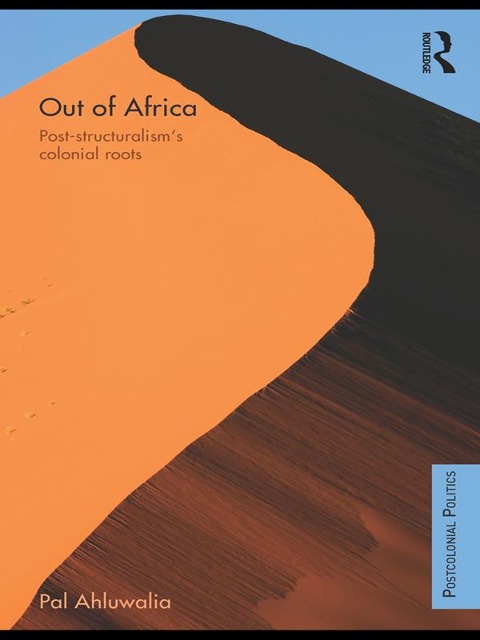
At the heart of this book is the argument that the fact that so many post-structuralist French intellectuals have a strong 'colonial' connection, usually with Algeria, cannot be a coincidence. The 'biographical' fact that so many French intellectuals were born in or otherwise connected with French Algeria has often been noted, but it has never been theorised. Ahluwalia makes a convincing case that post-structuralism in fact has colonial and postcolonial roots. This is an important argument, and one that 'connects' two theoretical currents that continue to be of great interest, post-structuralism and postcolonialism. The re-reading of what is now familiar material against the background of de-colonial struggles demonstrates the extent to which it is this new condition that prompted theory to question long-held assumptions inscribed in the European colonial enterprise. The wide-ranging discussion, ranging across authors as different as Foucault, Derrida, Fanon, Althusser, Cixous, Bourdieu and Lyotard, enables the reader to make connections that have remained unnoticed or been neglected. It also brings back into view a history of struggles, both political and theoretical, that has shaped the landscape of critique in the social sciences and humanities. This clear and lucid discussion of important and often difficult thinkers will be widely read and widely debated by students and academics alike.
Pal Ahluwalia is Pro Vice-Chancellor of the University of South Australia. He was previously Professor of the Politics Department, University of Adelaide, Australia, then Professor with the University of California, San Diego USA and Professor at Goldsmiths College, University of London, UK. He is editor of the Routledge journals African Identities, Social Identities and Sikh Formations.
1. Introduction 2. Algeria and Colonisation 3. Sartre, Camus and Fanon 4. Derrida 5. Cixous 6. Althusser, Bourdieu, Foucault and Lyotard 7. Conclusion
Dieses eBook wird im PDF-Format geliefert und ist mit einem Adobe Kopierschutz (DRM) versehen. Sie können dieses eBook mit allen Geräten lesen, die das PDF-Format und den Adobe Kopierschutz (DRM) unterstützen.
Zum Beispiel mit den folgenden Geräten:
• tolino Reader
Laden Sie das eBook direkt über den Reader-Shop auf dem tolino herunter oder übertragen Sie das eBook auf Ihren tolino mit einer kostenlosen Software wie beispielsweise Adobe Digital Editions.
• Sony Reader & andere eBook Reader
Laden Sie das eBook direkt über den Reader-Shop herunter oder übertragen Sie das eBook mit der kostenlosen Software Sony READER FOR PC/Mac oder Adobe Digital Editions auf ein Standard-Lesegeräte mit epub- und Adobe DRM-Unterstützung.
• Tablets & Smartphones
Möchten Sie dieses eBook auf Ihrem Smartphone oder Tablet lesen, finden Sie hier unsere kostenlose Lese-App für iPhone/iPad und Android Smartphone/Tablets.
• PC & Mac
Lesen Sie das eBook direkt nach dem Herunterladen mit einer kostenlosen Lesesoftware, beispielsweise Adobe Digital Editions, Sony READER FOR PC/Mac oder direkt über Ihre eBook-Bibliothek in Ihrem Konto unter „Meine eBooks“ - „online lesen“.
Schalten Sie das eBook mit Ihrer persönlichen Adobe ID auf bis zu sechs Geräten gleichzeitig frei.
Bitte beachten Sie, dass die Kindle-Geräte das Format nicht unterstützen und dieses eBook somit nicht auf Kindle-Geräten lesbar ist.