Und dann auf "Zum Home-Bildschirm [+]".

Stöbern
genialokal zum Startbildschirm hinzufügen
Installieren Sie die genialokal App auf Ihrem Startbildschirm für einen schnellen Zugriff und eine komfortable Nutzung.
Installieren Sie die genialokal App auf Ihrem Startbildschirm für einen schnellen Zugriff und eine komfortable Nutzung.
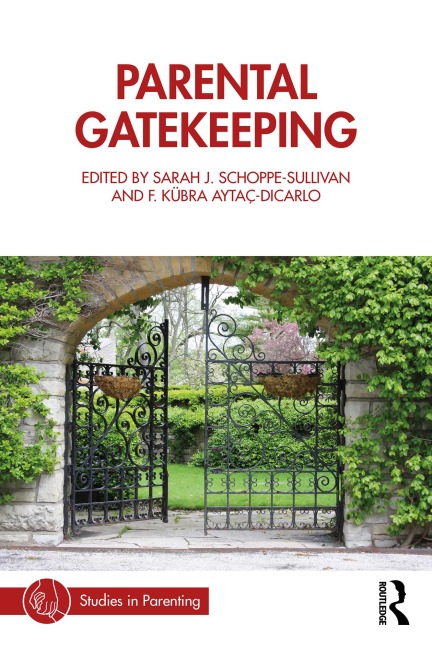
This pioneering volume reviews theory and research on parental gatekeeping-the extent to which parents support or thwart each other's involvement in parenting. Chapter authors review theories, conceptual models, and measures of gatekeeping, and evaluate its consequences for parent-child relationships. Offering a holistic perspective, this book not only explores mothers' gatekeeping of fathers but also considers the potential roles of others, including fathers, as gatekeepers. Chapter authors also explore parental gatekeeping processes in at-risk families, including separated and divorced families and those with adolescent and nonresident fathers. This book summarizes the key findings and critical gaps in the gatekeeping literature and suggests important directions for future research. This landmark text will be of interest to all students and scholars who study parenting, child development, and families. It will also serve as a valuable guide to future scholars in the burgeoning field of parenting research.
Sarah J. Schoppe-Sullivan is Professor in the Department of Psychology at The Ohio State University. She received her B.A. in Psychology from Northwestern University, and her M.A. and Ph.D. in Developmental Psychology from the University of Illinois at Urbana-Champaign. Professor Schoppe-Sullivan is a nationally and internationally recognized expert on coparenting, father-child relationships, and young children's social-emotional development. She is a fellow of the American Psychological Association, the Association for Psychological Science, and the National Council on Family Relations. F. Kübra Aytaç-DiCarlo is Presidential Fellow at The Ohio State University, where she is currently pursuing her second Ph.D. in Developmental Psychology. She earned her first Ph.D. in Developmental Psychology from Middle East Technical University (METU). Dr. Aytaç-DiCarlo also holds three M.S. degrees: one in Psychology from Ohio State, another in Psychology from METU, and a third in Sociology from METU, where she completed her B.S. in Sociology, with a double major in Philosophy and a minor in Political Science and Public Administration. Her research focuses on coparenting, couple relationships, and family well-being in diverse cultural contexts, with multiple publications in these areas.
1. Parental Gatekeeping: Introduction 2. Theoretical Perspectives on Parental Gatekeeping 3. Conceptualization and Measurement of Parental Gatekeeping 4. Predictors of Parental Gatekeeping 5. Consequences of Maternal Gatekeeping for Father-Child Relationships 6. Maternal Gatekeeping and Father Involvement in High-Risk Contexts 7. Gatekeeping in Family Law: Not an Open and Shut Case! 8. Conclusion and Future Research Directions
Dieses eBook wird im PDF-Format geliefert und ist mit einem Adobe Kopierschutz (DRM) versehen. Sie können dieses eBook mit allen Geräten lesen, die das PDF-Format und den Adobe Kopierschutz (DRM) unterstützen.
Zum Beispiel mit den folgenden Geräten:
• tolino Reader
Laden Sie das eBook direkt über den Reader-Shop auf dem tolino herunter oder übertragen Sie das eBook auf Ihren tolino mit einer kostenlosen Software wie beispielsweise Adobe Digital Editions.
• Sony Reader & andere eBook Reader
Laden Sie das eBook direkt über den Reader-Shop herunter oder übertragen Sie das eBook mit der kostenlosen Software Sony READER FOR PC/Mac oder Adobe Digital Editions auf ein Standard-Lesegeräte mit epub- und Adobe DRM-Unterstützung.
• Tablets & Smartphones
Möchten Sie dieses eBook auf Ihrem Smartphone oder Tablet lesen, finden Sie hier unsere kostenlose Lese-App für iPhone/iPad und Android Smartphone/Tablets.
• PC & Mac
Lesen Sie das eBook direkt nach dem Herunterladen mit einer kostenlosen Lesesoftware, beispielsweise Adobe Digital Editions, Sony READER FOR PC/Mac oder direkt über Ihre eBook-Bibliothek in Ihrem Konto unter „Meine eBooks“ - „online lesen“.
Schalten Sie das eBook mit Ihrer persönlichen Adobe ID auf bis zu sechs Geräten gleichzeitig frei.
Bitte beachten Sie, dass die Kindle-Geräte das Format nicht unterstützen und dieses eBook somit nicht auf Kindle-Geräten lesbar ist.