Und dann auf "Zum Home-Bildschirm [+]".

Stöbern
genialokal zum Startbildschirm hinzufügen
Installieren Sie die genialokal App auf Ihrem Startbildschirm für einen schnellen Zugriff und eine komfortable Nutzung.
Installieren Sie die genialokal App auf Ihrem Startbildschirm für einen schnellen Zugriff und eine komfortable Nutzung.

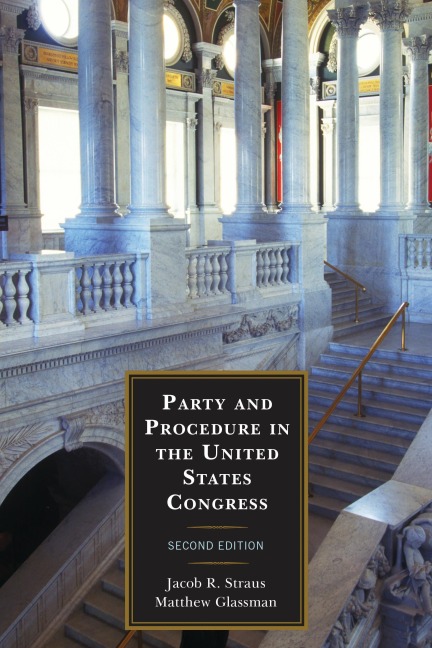
Understanding how Congressional political parties utilize floor procedure to advance a legislative agenda is fundamental to understanding how Congress operates. This book offers students and researchers an in-depth understanding of the procedural tools available to congressional leaders and committee chairs and how those tools are implemented in the House of Representatives, the Senate, and during negotiations between the chambers. While other volumes provide the party or the procedural perspective, this book combines these two features to create a robust analysis of the role that party can play in making procedural decisions. Additionally, the contributors provide an opportunity to take a holistic look at Congress and understand the changing dynamics of congressional power and its implementation over time. The second edition of Party and Procedure in the United States Congress includes case studies and analyses of the changes and innovations that have occurred since 2012, including the "nuclear option."
Jacob R. Straus is an analyst with the Congressional Research Service at the Library of Congress with a research specialization on Congress, lobbying and ethics, public policy and American political development. He is an adjunct professor of political science at Johns Hopkins University and at the University of Maryland Baltimore County's Shady Grove campus.
Matthew E. Glassman is an analyst with the Congressional Research Service, where he focuses on congressional operations and administration, legislative branch appropriations, and congressional history. He teaches courses on the Congress and interest groups as an adjunct professor at Catholic University in Washington, D.C.
1. Navigating Congress in the Age of Partisanship / Jacob R. Straus and Matthew E. Glassman
Section I: Legislative Language
2. Drafting the Law: Players, Power, and Processes / Scott Levy
Section II: House of Representatives
3. Keeping the Team Together: Explaining Party Discipline and Dissent in the U.S. Congress / Matthew Green and Briana Bee
4. The Motion to Recommit in the U.S. House / Jennifer Hayes Clark
5. Evolution of the Reconciliation Process, 1980-2015 / James V. Saturno
6. Post-Committee Adjustment in the Contemporary House: The Use of Rules Committee Prints / Mark J. Oleszek
7. Longitudinal Analysis of One-Minute Speeches in the House of Representatives / Colleen J. Shogan and Matthew E. Glassman
Section III: Senate
8. A Good Leader Never Blames His Tools: The Evolving Majority Party Toolkit in the U.S. Senate / Aaron S. King, Frank J. Orlando, and David W. Rohde
9. The Electoral Politics of Procedural Votes in the U.S. Senate / Joel Sievert
10. Partisanship, Filibustering, and Reform in the Senate / Gregory Koger
11. Irregular Order: Examining the Changing Congressional Amending Process / Michael S. Lynch, Anthony J. Madonna, and Rachel Surminsky
12. From Base Closings to the Budget: Exceptions to the Filibuster in the United States Senate / Molly E. Reynolds
Section IV: Inter-Chamber Analysis and Negotiation
13. Intraparty Caucus Formation in the United States Congress / James Wallner
14. Gender and Party Politics in a Polarized Era / Michele L. Swers
15. The Government Shutdown of 2013: A Perspective / Walter J. Oleszek