Und dann auf "Zum Home-Bildschirm [+]".

Stöbern
genialokal zum Startbildschirm hinzufügen
Installieren Sie die genialokal App auf Ihrem Startbildschirm für einen schnellen Zugriff und eine komfortable Nutzung.
Installieren Sie die genialokal App auf Ihrem Startbildschirm für einen schnellen Zugriff und eine komfortable Nutzung.
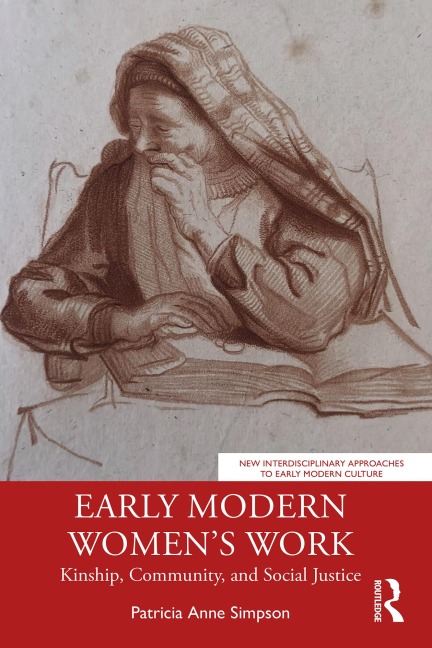
Early Modern Women's Work examines the contributions of female writers, artists, scientists, religious leaders, and patrons who engaged in entrepreneurial, intellectual, and emotional labor in German-speaking Europe. Through individual and collective authorship, the women analyzed in this study assert a claim to kinship and community, often beyond the hegemonic, heteronormative relationships to family, religion, and monarch. The contributions of early modern women to the construction of productive work spaces and the establishment of intellectual and actual communities are often overlooked or underestimated in scholarship on this period. This book serves as a cultural corrective to suppositions of gender-coded work, because alongside the dominant history of the private sphere as a feminine domain, a counter-narrative emerges with collective authorship. Despite the disparities in their biographies, the women whose work Simpson foregrounds highlight a range of early modern concerns, primarily but not exclusively in German-speaking Europe. These include debates about women's education and erudition; migration and displacement in search of religious or professional freedom; a persistent but varied discourse about female authorship and creative agency; and the assertion of subjectivity against the violent, fractious history of the Thirty Years' War and beyond. This book will be an ideal resource for students, scholars, and all those interested in German and European studies, women and gender studies, and the history of early modern work.
Patricia Anne Simpson is Professor of German at the University of Nebraska-Lincoln. Her research interests encompass the literature and history of German-speaking Europe, from early modernity to the present. Her recent monograph, German Empires and Decolonial Fantasies, 1492-1942 (2025), engages German colonial entanglements and the narratives they generated from the perspective of contemporary critical race theory.
Introduction: Early Modern Women's Work: Kinship, Community, and Social Justice Chapter One: Emotional Labor: The Work of Mourning Chapter Two: Acts of Faith: Maternality and Management Chapter Three: Writing for Your Life: Refuge and Precarity Chapter Four: Collaborations: Engendering Literary Identities Chapter Five: Kinship: "Amateurs" of Nature and Imitation Conclusion: Early Modern Lexicons: Gendered Communities and Social Justice Selected Readings Index
Dieses eBook wird im PDF-Format geliefert und ist mit einem Adobe Kopierschutz (DRM) versehen. Sie können dieses eBook mit allen Geräten lesen, die das PDF-Format und den Adobe Kopierschutz (DRM) unterstützen.
Zum Beispiel mit den folgenden Geräten:
• tolino Reader
Laden Sie das eBook direkt über den Reader-Shop auf dem tolino herunter oder übertragen Sie das eBook auf Ihren tolino mit einer kostenlosen Software wie beispielsweise Adobe Digital Editions.
• Sony Reader & andere eBook Reader
Laden Sie das eBook direkt über den Reader-Shop herunter oder übertragen Sie das eBook mit der kostenlosen Software Sony READER FOR PC/Mac oder Adobe Digital Editions auf ein Standard-Lesegeräte mit epub- und Adobe DRM-Unterstützung.
• Tablets & Smartphones
Möchten Sie dieses eBook auf Ihrem Smartphone oder Tablet lesen, finden Sie hier unsere kostenlose Lese-App für iPhone/iPad und Android Smartphone/Tablets.
• PC & Mac
Lesen Sie das eBook direkt nach dem Herunterladen mit einer kostenlosen Lesesoftware, beispielsweise Adobe Digital Editions, Sony READER FOR PC/Mac oder direkt über Ihre eBook-Bibliothek in Ihrem Konto unter „Meine eBooks“ - „online lesen“.
Schalten Sie das eBook mit Ihrer persönlichen Adobe ID auf bis zu sechs Geräten gleichzeitig frei.
Bitte beachten Sie, dass die Kindle-Geräte das Format nicht unterstützen und dieses eBook somit nicht auf Kindle-Geräten lesbar ist.