Und dann auf "Zum Home-Bildschirm [+]".

Stöbern
genialokal zum Startbildschirm hinzufügen
Installieren Sie die genialokal App auf Ihrem Startbildschirm für einen schnellen Zugriff und eine komfortable Nutzung.
Installieren Sie die genialokal App auf Ihrem Startbildschirm für einen schnellen Zugriff und eine komfortable Nutzung.
Ihr gewünschter Artikel ist in 0 Buchhandlungen vorrätig - wählen Sie hier eine Buchhandlung in Ihrer Nähe aus:

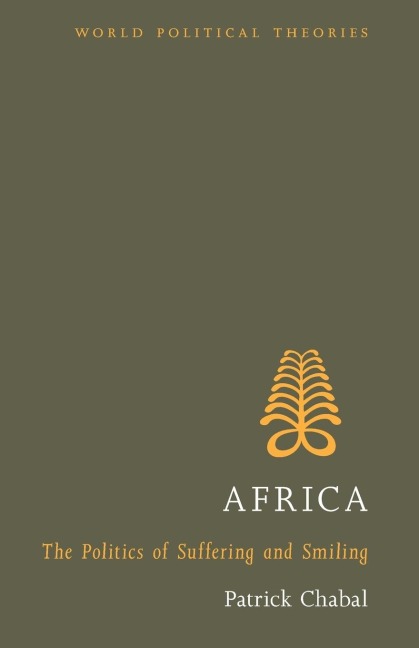
The question usually asked about Africa is: 'why is it going wrong?' Is the continent still suffering from the ravages of colonialism? Or is it the victim of postcolonial economic exploitation, poor governance and lack of aid? Whatever the answer, increasingly the result is poverty and violence. In Africa: The Politics of Suffering and Smiling Patrick Chabal approaches this question differently by reconsidering the role of theory in African politics. Chabal discusses the limitations of existing political theories of Africa and proposes a different starting point; arguing that political thinking ought to be driven by the need to address the immediacy of everyday life and death. How do people define who they are? Where do they belong? What do they believe? How do they struggle to survive and improve their lives? What is the impact of illness and poverty? In doing so, Chabal proposes a radically different way of looking at politics in Africa and illuminates the ways ordinary people 'suffer and smile'. This is a highly original addition to Zed's groundbreaking World Political Theories series.
Patrick Chabal is currently professor in the department of history at King's College London. He was educated at Harvard, Columbia and Cambridge, where he was a research fellow. He has been a visiting professor in Italy, France, Switzerland, India, Portugal, the USA, Venezuela and South Africa. He is engaged in a long-term project combining the study of culture in comparative politics with a focus on Africa and an enquiry into the theory of the human and social sciences. His books include Africa: The Politics of Suffering and Smiling (2009), Angola: The Weight of History (2008), Culture Troubles: Politics and the Interpretation of Meaning (2006), A History of Postcolonial Lusophone Africa (2002), Africa Works: Disorder as Political Instrument (1999), Power in Africa (1992 and 1994) and Amílcar Cabral (1983 and 2002), a number of which have been translated into other European languages.
Preface Introduction 1. The Politics of Being 2. The Politics of Belonging 3. The Politics of Believing 4. The Politics of Partaking 5. The Politics of Striving 6. The Politics of Surviving 7. The Politics of Suffering Conclusion Bibliography Index