
Stöbern
genialokal zum Startbildschirm hinzufügen
Installieren Sie die genialokal App auf Ihrem Startbildschirm für einen schnellen Zugriff und eine komfortable Nutzung.
Installieren Sie die genialokal App auf Ihrem Startbildschirm für einen schnellen Zugriff und eine komfortable Nutzung.
Tippen Sie einfach auf Teilen:
 Und dann auf "Zum Home-Bildschirm [+]".
Bei genialokal.de kaufen Sie online bei Ihrer lokalen, inhabergeführten Buchhandlung!
Ihr gewünschter Artikel ist in 0 Buchhandlungen vorrätig - wählen Sie hier eine Buchhandlung in Ihrer Nähe aus:

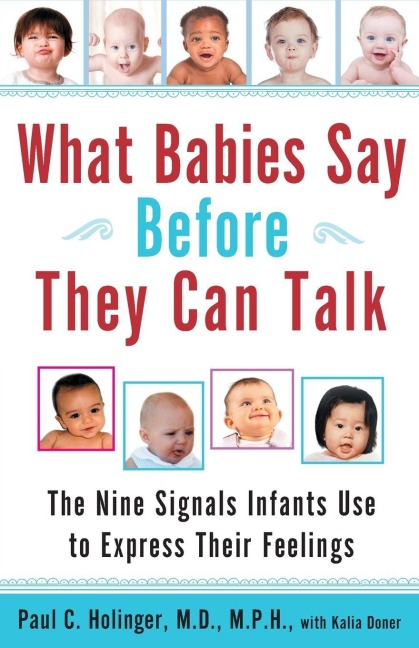
How many times have you held your fussing or crying baby and thought, "Come on, please tell me what's going on with you!"
Well, your infant does tell you.
In What Babies Say Before They Can Talk, Paul C. Holinger, M.D., M.P.H., a psychiatrist and psychoanalyst who has been studying children and their emotions for more than twenty-five years, explains how infants communicate with us, and we with them.
Dr. Holinger decodes the nine easily identifiable signals -- interest, enjoyment, surprise, distress, anger, fear, shame, disgust (a reaction to bad tastes), and dissmell (a reaction to bad smells) -- that all babies use to express their needs and wants. These insights will aid parents in discerning what their baby is feeling. This book can help all parents become more confident and self-aware in their interactions with their children, create positive communication, and put the joy back into parenting.
This is a unique work. It provides a foundation for understanding feelings and behavior. Based on emerging research, What Babies Say Before They Can Talk offers parents a new perspective on their babies' sense of the world and the people around them. The goal of this book is to help parents enhance their infants' potential, prevent problems, and raise happy, healthy, responsible children.
Paul C. Holinger, M.D., M.P.H., with Kalia Doner
Contents INTRODUCTION: My Journey: On the Road to Raising Happy, Capable, Responsible Children PART ONE: Understanding Your Infant...and Yourself ONE: Welcome to Baby's World TWO: The Foundation of Feelings: The Nine Basic Signals THREE: Responding to Your Infant's Signals: The Five Keys FOUR: Responding to Signals As Your Child Grows: Watching the Vocabulary Become More Complex FIVE: Cultivating Compatibility: How Understanding the Signals Helps You and Your Child Get Along SIX: Encouraging Playfulness SEVEN: "I Want to Be Like You, Mom and Dad!": How and Why Children Identify with Their Parents EIGHT: Building Your Child's Self-Esteem NINE: Turning Off Your Parenting Autopilot...: Identifying and Dealing with Your Assumptions About Being a Mom or a Dad TEN: ...And Becoming a Clued-In Parent: Getting to Know Your Child PART TWO: The Signals Signals of Fun: ELEVEN: Interest TWELVE: Enjoyment THIRTEEN: Surprise Signals for Help: FOURTEEN: Distress FIFTEEN: Anger SIXTEEN: Fear SEVENTEEN: Shame EIGHTEEN: Disgust and Dissmell NINETEEN: Beyond Signals: When Language Emerges and the Signals Transform into Words TWENTY: Reflections on Discipline and Limits EPILOGUE: As Your Child Gets Older... APPENDICES: A Guide to Further Insights Charts Resources INDEX