Und dann auf "Zum Home-Bildschirm [+]".

Stöbern
genialokal zum Startbildschirm hinzufügen
Installieren Sie die genialokal App auf Ihrem Startbildschirm für einen schnellen Zugriff und eine komfortable Nutzung.
Installieren Sie die genialokal App auf Ihrem Startbildschirm für einen schnellen Zugriff und eine komfortable Nutzung.
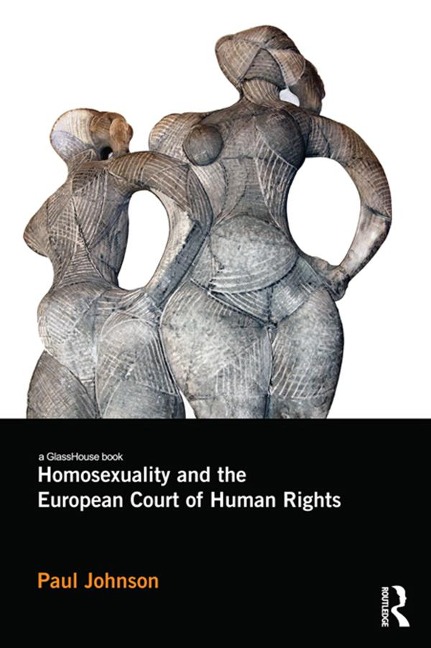
Homosexuality and the European Court of Human Rights is the first book-length study of the Court's jurisprudence in respect of sexual orientation. It offers a socio-legal analysis of the substantial number of decisions and judgments of the Strasbourg organs on the wide range of complaints brought by gay men and lesbians under the European Convention on Human Rights. Providing a systematic analysis of Strasbourg case law since 1955 and examining decades of decisions that have hitherto remained obscure, the book considers the evolution of the Court's interpretation of the Convention and how this has fashioned lesbian and gay rights in Europe. Going beyond doctrinal analysis by employing a nuanced sociological consideration of Strasbourg jurisprudence, Paul Johnson shows how the Court is a site at which homosexuality is both socially constructed and regulated. He argues that although the Convention is conceived as a 'living instrument' to be interpreted 'in the light of present-day conditions' the Court's judgments have frequently forged and advanced new social conditions in respect of homosexuality. Johnson argues that the Court's jurisprudence has an extra-legal importance because it provides an authoritative and powerful discursive resource that can be mobilized by lesbians and gay men to challenge homophobic and heteronormative social relations in contemporary societies. As such, the book considers how the Court's interpretation of the Convention might be evolved in the future to better protect lesbian and gay rights and lives.
Paul Johnson is Professor of Sociology at the University of York. His current research focuses on the relationship between law, sexuality and social control. He is the author of Love, Heterosexuality and Society (Routledge, 2005), Genetic Policing (Willan Publishing, 2008), and co-editor of Policing Sex (Routledge, 2012).
Table of cases. Introduction. PART 1: MAKING THE HOMOSEXUAL OF HUMAN RIGHTS 1. Emerging voices: homosexuality and the Commission 1955-1980. 2. An ontological struggle: the Court and the homosexual since 1981. PART 2: METHODS AND MORALS 3. Homosexuality in the judicial laboratory: instruments, interpretations, and evolutions. PART 3: EXISTING JURISPRUDENCE AND POTENTIAL FUTURE DEVELOPMENTS 4. 'An essentially private manifestation of the human personality': the limitations of Article 8. 5. The anti-discrimination provisions of the Convention: Article 14 and Protocol 12. 6. A right to marriage? Same-sex relationships and Article 12. 7. Expression, Assembly and Association: Articles 10 and 11. 8. Humiliation and debasement: degrading treatment and Article 3 Conclusion. Bibliography. Appendix 1: European Convention on Human Rights (truncated). Appendix 2: Chronological list of Decisions and Judgments of the Strasbourg organs in respect of homosexuality. Index
Dieses eBook wird im PDF-Format geliefert und ist mit einem Adobe Kopierschutz (DRM) versehen. Sie können dieses eBook mit allen Geräten lesen, die das PDF-Format und den Adobe Kopierschutz (DRM) unterstützen.
Zum Beispiel mit den folgenden Geräten:
• tolino Reader
Laden Sie das eBook direkt über den Reader-Shop auf dem tolino herunter oder übertragen Sie das eBook auf Ihren tolino mit einer kostenlosen Software wie beispielsweise Adobe Digital Editions.
• Sony Reader & andere eBook Reader
Laden Sie das eBook direkt über den Reader-Shop herunter oder übertragen Sie das eBook mit der kostenlosen Software Sony READER FOR PC/Mac oder Adobe Digital Editions auf ein Standard-Lesegeräte mit epub- und Adobe DRM-Unterstützung.
• Tablets & Smartphones
Möchten Sie dieses eBook auf Ihrem Smartphone oder Tablet lesen, finden Sie hier unsere kostenlose Lese-App für iPhone/iPad und Android Smartphone/Tablets.
• PC & Mac
Lesen Sie das eBook direkt nach dem Herunterladen mit einer kostenlosen Lesesoftware, beispielsweise Adobe Digital Editions, Sony READER FOR PC/Mac oder direkt über Ihre eBook-Bibliothek in Ihrem Konto unter „Meine eBooks“ - „online lesen“.
Schalten Sie das eBook mit Ihrer persönlichen Adobe ID auf bis zu sechs Geräten gleichzeitig frei.
Bitte beachten Sie, dass die Kindle-Geräte das Format nicht unterstützen und dieses eBook somit nicht auf Kindle-Geräten lesbar ist.