Und dann auf "Zum Home-Bildschirm [+]".

Stöbern
genialokal zum Startbildschirm hinzufügen
Installieren Sie die genialokal App auf Ihrem Startbildschirm für einen schnellen Zugriff und eine komfortable Nutzung.
Installieren Sie die genialokal App auf Ihrem Startbildschirm für einen schnellen Zugriff und eine komfortable Nutzung.
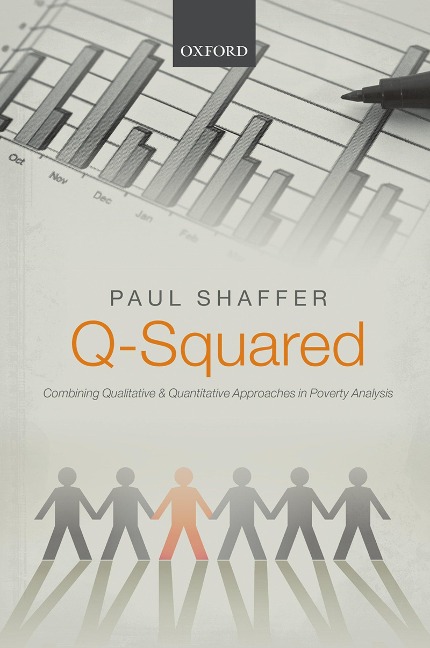
This book examines the underlying assumptions and implications of how we conceptualise and investigate poverty. The empirical entry point for such inquiry is a series of research initiatives that have used mixed method, combined qualitative and quantitative, or Q-Squared ( Q²) approaches, to poverty analysis. The Q² literature highlights the vast range of analytical tools within the social sciences that may be used to understand and explain social phenomena, along with interesting research results. This literature serves as a lens to probe issues about knowledge claims made in poverty debates concerning who are the poor (identification analysis) and why they are poor (causal analysis). Implicitly or explicitly, questions are raised about the reasons for emphasising different dimensions of poverty and favouring different units of knowledge, the basis for distinguishing valid and invalid claims, the meaning of causation, and the nature of causal inference, and so forth. Q² provides an entry point to address foundational issues about assumptions underlying approaches to poverty, and applied issues about the strengths and limitations of different research methods and the ways they may be fruitfully combined. Together, the strands of this inquiry make a case for methodological pluralism on the grounds that knowledge is partial, empirical adjudication imperfect, social phenomena complex, and mixed methods add value for understanding and explanation. Ultimately, the goals of understanding and explanation are best served if research questions dictate the choice of methodological approach rather than the other way around.
Paul Shaffer is a professor of international development studies at Trent University, Canada. He has conducted research, and worked on applied poverty issues, in around twenty five countries in sub-Saharan Africa and Asia. His publications have appeared in top international development journals such as World Development and the Journal of Development Studies. Shaffer was the recipient of the 2010 Symons Award for Excellence in Teaching, Trent University's highest teaching honour. He holds a DPhil from the Institute of Development Studies, University of Sussex.
- Part 1: Introduction - 1: Q-Squared: Combining qualitative and quantitative approaches to poverty analysis - Part 2: Identification: Who are the poor and what are their characteristics? - 2: Foundations: Epistemology - 3: First Generation Q²: Exploring differences - 4: Second Generation Q²: Addressing comparability and validity - Part 3: Causal Analysis: Why are people poor? - 5: Foundations: Causation and causal inference - 6: Q² Causal Analysis: Exploring the drivers of poverty status and dynamics - 7: Q² Impact Assessment: Evaluating the poverty impact of programs and projects - Part 4: Conclusion - 8: Conclusion - Appendix: Q² research designs and methods - A.1: Identification: Who are the poor and what are their characteristics? - A.2: Causal analysis of poverty status and dynamics - A.3: Causal analysis in impact assessment
Dieses eBook wird im PDF-Format geliefert und ist mit einem Adobe Kopierschutz (DRM) versehen. Sie können dieses eBook mit allen Geräten lesen, die das PDF-Format und den Adobe Kopierschutz (DRM) unterstützen.
Zum Beispiel mit den folgenden Geräten:
• tolino Reader
Laden Sie das eBook direkt über den Reader-Shop auf dem tolino herunter oder übertragen Sie das eBook auf Ihren tolino mit einer kostenlosen Software wie beispielsweise Adobe Digital Editions.
• Sony Reader & andere eBook Reader
Laden Sie das eBook direkt über den Reader-Shop herunter oder übertragen Sie das eBook mit der kostenlosen Software Sony READER FOR PC/Mac oder Adobe Digital Editions auf ein Standard-Lesegeräte mit epub- und Adobe DRM-Unterstützung.
• Tablets & Smartphones
Möchten Sie dieses eBook auf Ihrem Smartphone oder Tablet lesen, finden Sie hier unsere kostenlose Lese-App für iPhone/iPad und Android Smartphone/Tablets.
• PC & Mac
Lesen Sie das eBook direkt nach dem Herunterladen mit einer kostenlosen Lesesoftware, beispielsweise Adobe Digital Editions, Sony READER FOR PC/Mac oder direkt über Ihre eBook-Bibliothek in Ihrem Konto unter „Meine eBooks“ - „online lesen“.
Schalten Sie das eBook mit Ihrer persönlichen Adobe ID auf bis zu sechs Geräten gleichzeitig frei.
Bitte beachten Sie, dass die Kindle-Geräte das Format nicht unterstützen und dieses eBook somit nicht auf Kindle-Geräten lesbar ist.