Und dann auf "Zum Home-Bildschirm [+]".

Stöbern
genialokal zum Startbildschirm hinzufügen
Installieren Sie die genialokal App auf Ihrem Startbildschirm für einen schnellen Zugriff und eine komfortable Nutzung.
Installieren Sie die genialokal App auf Ihrem Startbildschirm für einen schnellen Zugriff und eine komfortable Nutzung.
Ihr gewünschter Artikel ist in 0 Buchhandlungen vorrätig - wählen Sie hier eine Buchhandlung in Ihrer Nähe aus:

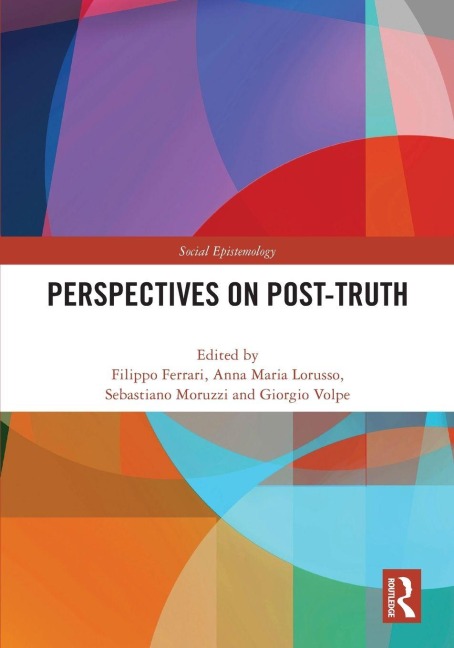
This volume tackles an array of complex and interrelated phenomena which are usually referred to as the post-truth condition - from confirmation bias to science denialism, misinformation, and the rise of polarized 'epistemic tribes' on social media. It was originally published as a special issue of Social Epistemology.
Filippo Ferrari is Assistant Professor of Philosophy at the University of Bologna. He received his PhD from the University of Aberdeen and held postdocs positions in the UK, Germany, and Italy. Ferrari is involved with several international research networks and has published extensively on a variety of topics, including two books on truth. Anna Maria Lorusso is Full Professor in the Department of Arts of Bologna University, where she teaches Semiotics, Semiotics of Culture and Analysis of Information. Her research is focused on the Semiotics of culture, with two main fields of research: logic of information (post-truth, fake news etc..) and cultural memory. Sebastiano Moruzzi is Associate Professor at the University of Bologna. His main research interests concern relativism, the nature of disagreement, ontological theories, theories of truth, theories of vagueness. Moruzzi is also involved in research concerning didactic innovation and he is very active in doing philosophy with children. Giorgio Volpe is Associate Professor of Philosophy at the University of Bologna. His research focuses on issues in epistemology, philosophy of language, and philosophy of logic, particularly where those areas intersect. In addition to numerous journal articles, he has written two books on truth.
Introduction: Perspectives on Post-Truth 1. The Origins of the Alleged Correlation between Vaccines and Autism: A Semiotic Approach 2. Why Post-Truth Cannot Be Our Epistemological Compass 3. Post-Enquiry and Disagreement: A Socio-Epistemological Model of the Normative Significance of Disagreement Between Scientists and Denialists 4. Epistemic Bunkers 5. The Possibility of Epistemic Nudging 6. Fake News as Discursive Genre: Between Hermetic Semiosis and Gossip 7. Consuming Fake News: Can We Do Any Better? 8. The Epistemological Compass and the (Post)Truth about Objectivity