Und dann auf "Zum Home-Bildschirm [+]".

Stöbern
genialokal zum Startbildschirm hinzufügen
Installieren Sie die genialokal App auf Ihrem Startbildschirm für einen schnellen Zugriff und eine komfortable Nutzung.
Installieren Sie die genialokal App auf Ihrem Startbildschirm für einen schnellen Zugriff und eine komfortable Nutzung.
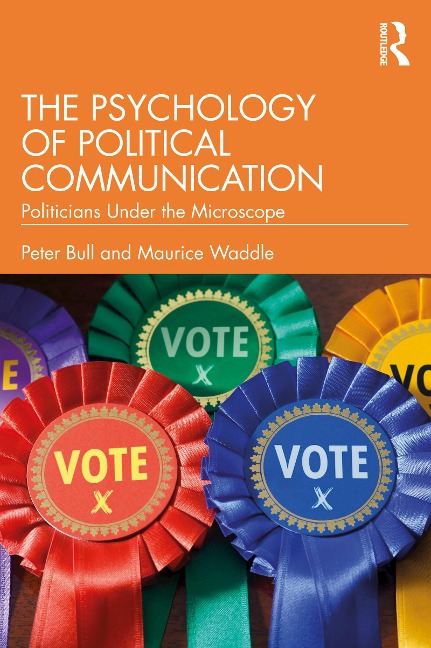
Contemporary politics is mass-communication politics. Politicians are not only seen and heard, they are seen and heard in close-up through television appearances, speeches, interviews, and on social media. In this book, the authors analyse the ways in which politicians communicate with each other, the media, and the electorate; they also discuss the implications of contemporary political discourse on the democratic process as a whole. Politicians in interviews are typically castigated for their evasiveness. However, microanalytic research shows that there is more to political discourse than this apparent ambiguity. This book reveals how equivocation, interruptions, and personal antagonism can offer valuable insights into a politician's communicative style. The authors review their empirical research not only on political interviews, but also on speeches, parliamentary debates, and political journalism. Further insights include how political speakers interact with their audiences, how party leaders engage in adversarial discourse at PMQs, and how the spoken messages of politicians can be affected by modern journalistic editing techniques. Thereby, this research generates greater awareness of communicative practices in a diverse range of political contexts. While the interviews and parliamentary debates analysed pertain to UK politics, the speeches also draw on the USA, and European and Far Eastern nations. This engaging book is a fascinating resource for students and academics in psychology, politics, communication, and other related disciplines such as sociology and linguistics. The research is also extremely relevant to policy makers and practitioners in politics and political journalism.
Peter Bull, PhD, FBPsS (Fellow of the British Psychological Society), is Honorary Professor in Psychology at the Universities of York and Salford, UK, and Visiting Professor in Political Communication at the University of Antwerp, Belgium. His principal interest is the detailed microanalysis of interpersonal communication: in particular, political discourse and nonverbal communication. Maurice Waddle, PhD, lectures in psychology at the University of York, UK. His research focuses on the interpersonal communication of politicians, including their interactions with audiences, interviewers, and parliamentary opponents. He is particularly interested in the phenomenon of personalisation (i.e., playing the man, not the ball) in politics.
Contents Preface Acknowledgements Part I. Concepts and Methods Chapter 1. Microanalysis Influences on microanalysis Central features of microanalysis Chapter 2. Theoretical Approaches The social skills model Face and facework Overall conclusions Chapter 3. Techniques of Analysis Transcription Speaker-audience interaction Question-response sequences Conclusions Part II. Empirical studies of political discourse Chapter 4. Claps and Claptraps: How Political Speakers and Audiences Interact Claptraps: Techniques for inviting applause Factors that affect speaker-audience interaction A model of speaker-audience interaction in political speeches Conclusions Chapter 5. Being Slippery? Equivocation in Political Interviews How much do politicians equivocate? In what ways do politicians equivocate? Equivocation profiles of leading politicians Why do politicians equivocate? Face and facework in political interviews Equivocation and deception Equivocation and the use of implicit discourse Equivocation and culture Conclusions Chapter 6. The Westminster Punch and Judy Show? Leaders' Exchanges at Prime Minister's Questions A background to PMQs Overview of PMQs adversarialism Distinctive features of PMQs discourse The punch of PMQs? Conclusions Chapter 7. Political Journalism Adversarialism Discussion and conclusions Part III Chapter 8. Summary and Conclusions References Index
Dieses eBook wird im PDF-Format geliefert und ist mit einem Adobe Kopierschutz (DRM) versehen. Sie können dieses eBook mit allen Geräten lesen, die das PDF-Format und den Adobe Kopierschutz (DRM) unterstützen.
Zum Beispiel mit den folgenden Geräten:
• tolino Reader
Laden Sie das eBook direkt über den Reader-Shop auf dem tolino herunter oder übertragen Sie das eBook auf Ihren tolino mit einer kostenlosen Software wie beispielsweise Adobe Digital Editions.
• Sony Reader & andere eBook Reader
Laden Sie das eBook direkt über den Reader-Shop herunter oder übertragen Sie das eBook mit der kostenlosen Software Sony READER FOR PC/Mac oder Adobe Digital Editions auf ein Standard-Lesegeräte mit epub- und Adobe DRM-Unterstützung.
• Tablets & Smartphones
Möchten Sie dieses eBook auf Ihrem Smartphone oder Tablet lesen, finden Sie hier unsere kostenlose Lese-App für iPhone/iPad und Android Smartphone/Tablets.
• PC & Mac
Lesen Sie das eBook direkt nach dem Herunterladen mit einer kostenlosen Lesesoftware, beispielsweise Adobe Digital Editions, Sony READER FOR PC/Mac oder direkt über Ihre eBook-Bibliothek in Ihrem Konto unter „Meine eBooks“ - „online lesen“.
Schalten Sie das eBook mit Ihrer persönlichen Adobe ID auf bis zu sechs Geräten gleichzeitig frei.
Bitte beachten Sie, dass die Kindle-Geräte das Format nicht unterstützen und dieses eBook somit nicht auf Kindle-Geräten lesbar ist.