Und dann auf "Zum Home-Bildschirm [+]".

Stöbern
genialokal zum Startbildschirm hinzufügen
Installieren Sie die genialokal App auf Ihrem Startbildschirm für einen schnellen Zugriff und eine komfortable Nutzung.
Installieren Sie die genialokal App auf Ihrem Startbildschirm für einen schnellen Zugriff und eine komfortable Nutzung.
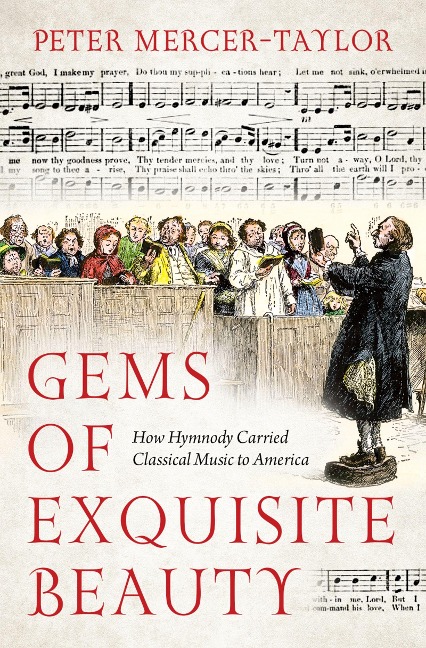
In the decades leading up to the Civil War, most Americans probably encountered European classical music primarily through hymn tunes. Hymnody was the most popular and commercially successful genre of the antebellum period in the United States, and the unquenchable thirst for new tunes to sing led to a phenomenon largely forgotten today: in their search for fresh material, editors lifted hundreds of tunes from the works of major classical composers to use as settings of psalms and hymns. The few that remain popular today millions have sung "Joyful, Joyful We Adore Thee" to Beethoven and "Hark, The Herald Angels Sing" to Mendelssohn are vestiges of one of the most distinctive trends in antebellum music-making. Gems of Exquisite Beauty is the first in-depth study of the historical rise and fall of this adaptation practice, its artistic achievements, and its place in nineteenth-century American musical life. It traces the contributions of pioneering figures like Arthur Clifton and the impact of bestsellers like the Handel and Haydn Society Collection, which helped turn Lowell Mason into America's most influential musician. By telling the tales of these hymns and those who brought them into the world, author Peter Mercer-Taylor reveals a central part of the history of how the American public first came to meet and creatively engage with Europe's rich musical practices.
Peter Mercer-Taylor is Professor of Musicology at the University of Minnesota. His teaching and scholarship have been divided between the nineteenth-century classical tradition--Felix Mendelssohn in particular--and contemporary popular music. Mercer-Taylor's articles have appeared in a range of journals, including 19th-Century Music, Popular Music, Musical Quarterly, The Journal of Musicology, Music & Letters, and Music Theory Spectrum.
Introduction Chapter 1: Antebellum Psalmody in its Cultural Context Chapter 2: An Immigrant's Musical Memoir: Clifton's 1819 Original Collection and the Modest Launch of a Tradition Chapter 3: Institutional Certification: Mason's 1822 Handel and Haydn Society Collection and the First Wave Chapter 4: Heyday: Kingsley's 1838 Sacred Choir and the Midcentury Mania Chapter 5: Psalmodic Adaptation as Musical Translation Epilogue Appendix 1: Classical Music in Antebellum American Psalmody: The Repertoire Appendix 2: The Repertoire by Composer Notes Works Cited Index
Dieses eBook wird im PDF-Format geliefert und ist mit einem Adobe Kopierschutz (DRM) versehen. Sie können dieses eBook mit allen Geräten lesen, die das PDF-Format und den Adobe Kopierschutz (DRM) unterstützen.
Zum Beispiel mit den folgenden Geräten:
• tolino Reader
Laden Sie das eBook direkt über den Reader-Shop auf dem tolino herunter oder übertragen Sie das eBook auf Ihren tolino mit einer kostenlosen Software wie beispielsweise Adobe Digital Editions.
• Sony Reader & andere eBook Reader
Laden Sie das eBook direkt über den Reader-Shop herunter oder übertragen Sie das eBook mit der kostenlosen Software Sony READER FOR PC/Mac oder Adobe Digital Editions auf ein Standard-Lesegeräte mit epub- und Adobe DRM-Unterstützung.
• Tablets & Smartphones
Möchten Sie dieses eBook auf Ihrem Smartphone oder Tablet lesen, finden Sie hier unsere kostenlose Lese-App für iPhone/iPad und Android Smartphone/Tablets.
• PC & Mac
Lesen Sie das eBook direkt nach dem Herunterladen mit einer kostenlosen Lesesoftware, beispielsweise Adobe Digital Editions, Sony READER FOR PC/Mac oder direkt über Ihre eBook-Bibliothek in Ihrem Konto unter „Meine eBooks“ - „online lesen“.
Schalten Sie das eBook mit Ihrer persönlichen Adobe ID auf bis zu sechs Geräten gleichzeitig frei.
Bitte beachten Sie, dass die Kindle-Geräte das Format nicht unterstützen und dieses eBook somit nicht auf Kindle-Geräten lesbar ist.