Und dann auf "Zum Home-Bildschirm [+]".

Stöbern
genialokal zum Startbildschirm hinzufügen
Installieren Sie die genialokal App auf Ihrem Startbildschirm für einen schnellen Zugriff und eine komfortable Nutzung.
Installieren Sie die genialokal App auf Ihrem Startbildschirm für einen schnellen Zugriff und eine komfortable Nutzung.
Ihr gewünschter Artikel ist in 0 Buchhandlungen vorrätig - wählen Sie hier eine Buchhandlung in Ihrer Nähe aus:

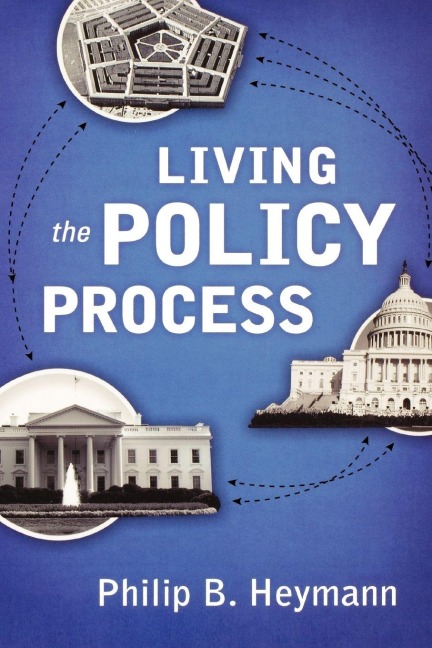
Policymaking in large bureaucracies is hardly a simple process. Even the most respected policymakers have to contend with obstacles that seemingly have little to do with the issue at hand - office politics, work structure, and shifting political environments. Yet learning to manage such complex environments is necessary for good policymaking. In Living the Policy Process, Philip Heymann outlines the complex thought processes of policymakers as they struggle to influence both foreign and domestic policy decisions from within the United States government bureaucracy.
Focusing on three critical situations to illuminate the politics of policy choice-the successful attempt to sell missiles to the Mujahideen in Afghanistan in the 1980s; the Iran-Contra scandal; and the FDA's attempt to regulate smoking as well as the efforts to do the same by an outside lobbyist-Heymann dissects the intuitive yet rigorous framework that highly skilled policymakers follow to influence government outcomes. Throughout, he offers detailed accounts of the policy process at work in the Reagan, first Bush, and Clinton administrations, from the cabinet level down to the middle tiers of the federal bureaucracy.
Heymann deftly describes the shifting real-world conditions that government officials face as they struggle to shape the policy agenda. Ultimately, Living the Policy Process offers a clear, incisive look at the complex considerations involved from all perspectives, with concrete examples, and enriches the understanding of the overall policy process for students, scholars, and practitioners.
Philip B. Heymann is James Barr Ames Professor of Law at the Harvard Law School. From his first job as clerk to U.S. Supreme Court Justice John Harlan to his post as Deputy U.S. Attorney General (1993 to 1994), Heymann has spent much of his career in government. A former Fulbright Scholar in France, with degrees from Yale University and Harvard Law School, he has been Assistant U.S. Attorney General in charge of the criminal division (1978 to 1981), Assistant to the Solicitor General in the Justice Department, Acting Administrator of the State Department's Bureau of Security and Consular Affairs, Deputy Assistant Secretary of State for the Bureau of International Organizations, and Executive Assistant to the Undersecretary of State. In addition, he was a former Associate Prosecutor and Consultant to the Watergate Special Force.
Preface: The Logic of Governmental Policy Choice
1: Introduction
Part I: Missiles for the Mujahideen
2: The Stinger Missile Case
3: Concerns and the Set of Beliefs that Connect Actions to Them
4: The Action Resumes in the Battle over the Stinger Missile
5: An Individual's Understanding of the Situation
6: Agendas and Windows of Opportunity
7: Influencing Others
Part II: Retaliation, Ransom, Revenues, Respect, and Rebellion
8: Respect and Loyalty
9: A Structure Held Together By Respect
Part III: Nicotine for Teens
10: Similarities and Differences
11: Recognizing and Creating a Dramatic Change in Setting for Policy Choice
12: Rival Coalitions of Influential Private Parties, and Congress as the Decision Maker
13: The Politics of Coalition Formation to Influence Legislation
14: The Dependence of Policy Outcomes on Processes of Choice
15: Weighing Intangibles, Questioning Assumptions
16: Effects of Process on Results
Appedices
List of Suggested Readings