Und dann auf "Zum Home-Bildschirm [+]".

Stöbern
genialokal zum Startbildschirm hinzufügen
Installieren Sie die genialokal App auf Ihrem Startbildschirm für einen schnellen Zugriff und eine komfortable Nutzung.
Installieren Sie die genialokal App auf Ihrem Startbildschirm für einen schnellen Zugriff und eine komfortable Nutzung.

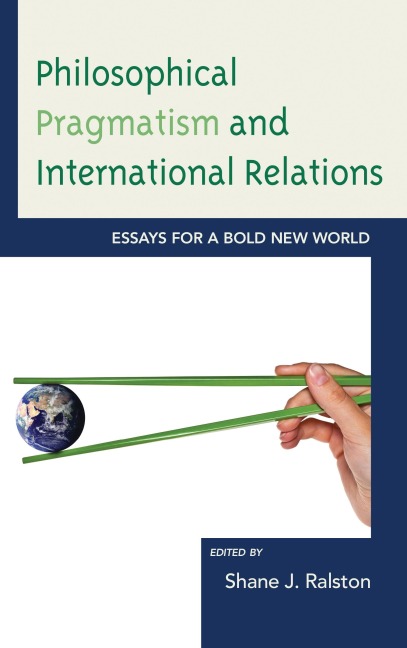
What are the implications of philosophical pragmatism for international relations theory and foreign policy practice? According to John Ryder, "a foreign policy built on pragmatist principles is neither naïve nor dangerous. In fact, it is very much what both the U.S. and the world are currently in need of." Close observers of Barack Obama's foreign policy statements have also raised the possibility of a distinctly pragmatist approach to international relations. Absent from the three dominant theoretical perspectives in the field-realism, idealism and constructivism-is any mention of pragmatism, except in the very limited, instrumentalist sense of choosing appropriate foreign policy tools to achieve proposed policy objectives. The key commitments of any international relations approach in the pragmatist tradition could include a flexible approach to crafting policy ends, theory integrally related to practice, a concern for both the normative and explanatory dimensions of international relations research, and policy means treated as hypotheses for experimental testing. Following the example of classic pragmatists such as John Dewey and neo-pragmatists like Richard Rorty, international relations scholars and foreign policy practitioners would have to forgo grand theories, instead embracing a situationally-specific approach to understanding and addressing emerging global problems. Unfortunately, commentary on the relationship between philosophical pragmatism and international relations has been limited. The authors in Philosophical Pragmatism and International Relations remedies this lacuna by exploring ways in which philosophical pragmatism, both classic and contemporary, can inform international relations theory and foreign policy practice today.
Shane J. Ralston is assistant professor of philosophy in the Humanities Department at Pennsylvania State University-Hazleton. His research is on democratic theory, pragmatism, international relations, and environmental philosophy. He is the book review editor for Education and Culture: The Journal of the John Dewey Society. He is also the author of John Dewey's Great Debates-Reconstructed and Pragmatic Environmentalism: Toward a Rhetoric of Eco-Justice.
Preface
Acknowledgments
Foreword
Introduction
Chapter 1: On Pragmatism and International Relations
Chapter 2: Getting Beyond International Relations Theory
Chapter 3: Pragmatism, Militarism, and Political Theory
Chapter 4: Pragmatism, Peacekeeping, and the Constabulary Force
Chapter 5: Justice and global Communities of Inquiry
Chapter 6: Science, Values, and Democracy in the Global Climate Change Debate
Chapter 7: Obama's Pragmatism in International Affairs-Appropriate or Appropriation?
Chapter 8: Presidential Rhetoric and Pragmatism's Possibilities
Bibliography
Index
About the Contributors