Und dann auf "Zum Home-Bildschirm [+]".

Stöbern
genialokal zum Startbildschirm hinzufügen
Installieren Sie die genialokal App auf Ihrem Startbildschirm für einen schnellen Zugriff und eine komfortable Nutzung.
Installieren Sie die genialokal App auf Ihrem Startbildschirm für einen schnellen Zugriff und eine komfortable Nutzung.
Ihr gewünschter Artikel ist in 0 Buchhandlungen vorrätig - wählen Sie hier eine Buchhandlung in Ihrer Nähe aus:

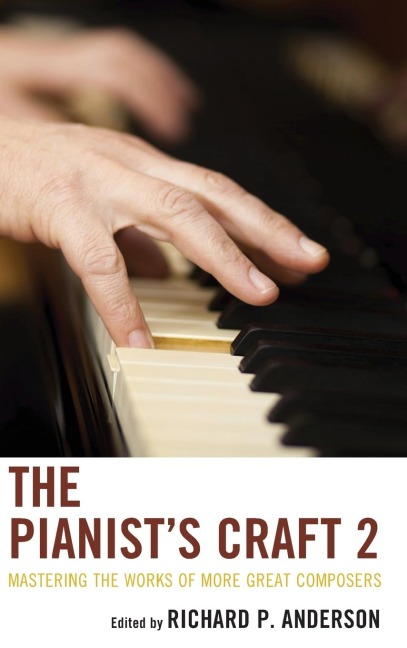
In The Pianist's Craft 2, pianist and scholar Richard P. Anderson gathers together a new collection of essays by renowned performing artists and teachers and discusses the preparation, pedagogy, and performance of selected works by an entirely different set of composers whose works are standard in the piano literature. In this volume, readers will find an invaluable collection of contributions on C.P.E. Bach, Antonio Soler, Felix Mendelssohn, Gabriel Fauré, Erno Dohnányi, Francis Poulenc, Heitor Villa-Lobos, Dmitri Kabalevsky, Alberto Ginastera, Aaron Copland, Samuel Barber, Olivier Messiaen, and John Cage.
The contributors-all nationally and internationally recognized as performing artists, teachers, recording artists, and clinicians-write thoughtfully about the composers whose work they have studied and played for years. Each author addresses issues unique to an individual composer, examining questions of phrasing, tempo, articulation, dynamics, rhythm, color, gesture, lyricism, instrumentation, and genre. Valuable insight is provided into teaching, performing, and preparing these great works-information otherwise available only in conferences, master classes, and private lessons.
This collection, with more than 250 musical illustrations, is intended for teachers and students of the intermediate and advanced levels of piano, instructors and performers at the university level, and those who love piano and piano music.
Motivated by five plus years of judgment for not appearing disabled enough, Anderson wrote this book as a simple visual tool to make clear that while appearing normal, living with Chronic Fatigue is a life-changing and controlling disease with a complex combination and fluctuation of symptoms that cannot be "seen." Adjusting to change, letting go of control, focusing on well-being, practicing yoga, and simply trusting and accepting what is has been a profound learning experience for Anderson.
Foreword by Norman Krieger Preface Acknowledgments Introduction Chapter 1: C.P.E.--Thinking Outside the Bachs: The Music of Carl Phillip Emanuel Bach Louis Nagel Chapter 2: Soler's Fandango Robin Hancock Chapter 3: Lyricism and Lightness in the Piano Music of Felix Mendelssohn Joel Hastings Chapter 4: Interior Virtuosity: Grasping Fauré's Piano Music David Korevaar Chapter 5: Reflections on Performing Dohnányi's Variations on a Nursery Song for Piano and Orchestra Timothy Ehlen Chapter 6: Francis Poulenc's Early Writing: A Critical Analysis of Trois pièces (1918) and Mouvements perpétuels (1919) Jerry Wong Chapter 7: Drinking from the Source of Universal Folklore: Villa-Lobos, Bach and Chorões Alexandre Dossin Chapter 8: The Musical Imagination of Dmitri Kabalevsky Timothy Shafer Chapter 9: Remembering Alberto Ginastera Barbara Nissman Chapter 10: Improving 'The Long Line' Through Score Markings in Piano Repertoire Caroline Hong Chapter 11: Aaron Copland and the Musical Idea Hilary Demske Chapter 12: Some Suggestions for Playing the Piano Music of Samuel Barber Jeffrey Jacob Chapter 13: A Practical Pianist's Introduction to Messiaen: Technical and Theoretical Approaches via the Vingt Regards sur l'Enfant-Jésus Christopher Taylor Chapter 14: A Pianist Looks at the Music of John Cage, 1946-1948 John Milbauer Chapter 15: The Importance of New Music in the Pianist's Repertoire Scott Holden Index About the Contributors About the Editor