Und dann auf "Zum Home-Bildschirm [+]".

Stöbern
genialokal zum Startbildschirm hinzufügen
Installieren Sie die genialokal App auf Ihrem Startbildschirm für einen schnellen Zugriff und eine komfortable Nutzung.
Installieren Sie die genialokal App auf Ihrem Startbildschirm für einen schnellen Zugriff und eine komfortable Nutzung.

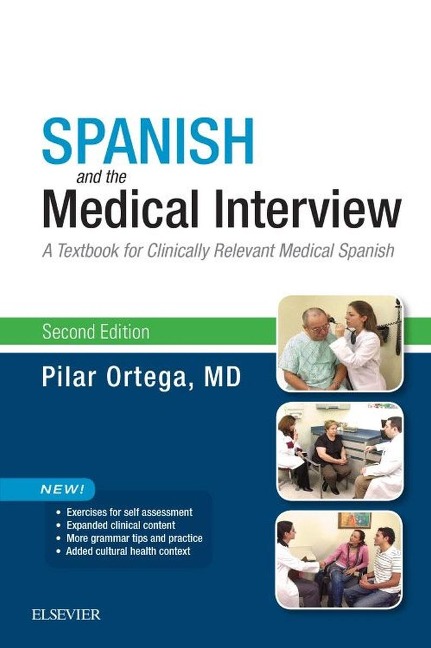
Focusing on communication needs in real-world clinical situations, Dr. Pilar Ortega's updated edition of this practical text helps you address today's growing demand for Spanish-speaking physicians and healthcare workers. This resource provides basic Spanish skills, sample interview questions, relevant cultural information, and more, in addition to online videos of physician-patient interactions, interactive self-assessment tools, and clinical vignettes. You'll find exactly what you need to develop better physician-patient communication skills, increase your cultural competence, and make better clinical decisions in your practice.Understand the nuts and bolts of better communication through Spanish grammar, vocabulary, pronunciation, sample interview questions, and helpful interview techniques.
- Improve your skills with new and expanded content including more practice exercises for self-assessment, information on cultural issues, grammar tips and practice, complex clinical scenarios, and how to best use interpreters in your practice.- Stay up to date with new chapters on pediatric health; common procedures and informed consent; the physician's impression and plan; diabetes medication; travel history and special exposures; adult immunization history; exercise and adult health safety screening; and specialized physical examination.- Gauge and hone your doctor-patient communication skills with interactive self-assessment tools and practice exercises.- Watch video of real-time physician-patient exchanges (with English and Spanish subtitles), complete interactive practice exercises, and learn from clinical vignettes-all online at Student Consult.- eBook version included! Access the entire book online or offline across all devices with the Student Consult eBook.
Pilar Ortega, MD is a board-certified Emergency Physician and Assistant Professor at the U. Illinois at Chicago, where she directs the Medical Spanish program. Dr. Ortega is Co-founder and Chair for the Medical Organization for Latino Advancement (MOLA), a non-profit professional association whose goal is to increase the number of Hispanic and bilingual physicians and to improve the health of Hispanics in the U.S. She is the author of our Spanish and the Medical Interview (2nd Ed., 2015), a textbook for providers to learn to communicate with Spanish-speaking patients. This new titles would be a cases and question companion to the textbook. Dr. Ortega is the director of the recently developed U.S. National Medical Spanish Taskforce-a group of interdisciplinary and inter-institutional leaders who are developing an evidence-based process for Medical Spanish standardization and language concordance research in medical settings. She is internationally recognized for her contributions on the topics of language concordance in health, linguistic competency assessment, and Medical Spanish education.
CHAPTER 1Basics of Conversational Spanish1.1 Pronunciation1.2 Syntax and Grammar1.3 Verb Conjugation1.4 Addressing the Patient: Tú versus UstedCHAPTER 2Setting the Stage for the Clinical Encounter2.1 General Greetings2.2 Addressing the Patient2.3 Provider's Introduction2.4 Extended Introduction: Getting to Know the Patient2.5 Setting the AgendaCHAPTER 3History of the Present Illness3.1 Basic Anatomy3.2 Chief Complaint3.3 History of the Present IllnessCHAPTER 4Past Medical History and Review of Systems4.1 Past Medical History of Chronic Diseases4.2 Past Medical History of Acute Diseases4.3 Past Surgical History4.4 Review of SystemsCHAPTER 5Medications and Drug Effects5.1 Medication History5.2 Allergy History5.3 Medication Instructions5.4 Drug Side Effects5.5 Diabetes MedicationCHAPTER 6Family History6.1 Naming Family Members6.2 Talking about Family Life and Health6.3 Family HistoryCHAPTER 7Social and Sexual History7.1 Assuring the Patient of Confidentiality7.2 Social History7.3 Travel History and Special Exposures7.4 Substance Use History7.5 Sexual History7.6 Review of Reproductive SystemsCHAPTER 8Mental Health and Cognition8.1 General Mental Health8.2 Spirituality and Health8.3 Cognitive Assessment8.4 Psychiatric History and Review of SystemsCHAPTER 9Preventive Health and Nutrition9.1 Access to Preventive Medical Care9.2 Preventive Routine Screening Tests9.3 Adult Immunization History9.4 Exercise and Adult Health Safety Screening9.5 Diet History9.6 Body Mass Index, Special Diets, and RecommendationsCHAPTER 10Pediatrics10.1 Addressing the Pediatric Patient10.2 Pregnancy, Delivery, and Neonatal History10.3 Developmental History10.4 Pediatric Safety10.5 Immunization History10.6 Infant Diet10.7 Common Pediatric IllnessesCHAPTER 11Physical Examination11.1 General Physical Examination11.2 Specialized Physical Examination11.3 Physical FindingsCHAPTER 12Procedures and Informed Consent12.1 Informed Consent12.2 Discussing Common Procedures12.3 Discussing Emergent Procedures12.4 Advanced DirectivesCHAPTER 13Impression and Plan13.1 Physician's Impression13.2 Plan of Care: Additional Testing13.3 Plan of Care: Treatment and Follow-up13.4 Discussing Test Results13.5 Delivering Bad News13.6 System-Based Summary of Impression and Plan13.7 Concluding the VisitCHAPTER 14Knowing your Limitations: When and How to Use a Medical Interpreter14.1 When to Use a Medical Interpreter14.2 Types of Medical Interpretation14.3 Working Effectively with a Medical InterpreterAPPENDIXAbbreviated Spanish Medical Interview GuideExtended Spanish Medical Interview GuideANSWER KEYBIBLIOGRAPHYINDEX