Und dann auf "Zum Home-Bildschirm [+]".

Stöbern
genialokal zum Startbildschirm hinzufügen
Installieren Sie die genialokal App auf Ihrem Startbildschirm für einen schnellen Zugriff und eine komfortable Nutzung.
Installieren Sie die genialokal App auf Ihrem Startbildschirm für einen schnellen Zugriff und eine komfortable Nutzung.
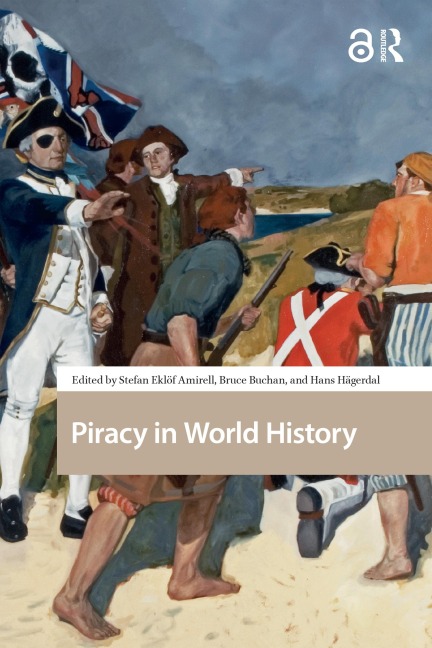
In a modern global historical context, scholars have often regarded piracy as an essentially European concept which was inappropriately applied by the expanding European powers to the rest of the world, mainly for the purpose of furthering colonial forms of domination in the economic, political, military, legal and cultural spheres. By contrast, this edited volume highlights the relevance of both European and non-European understandings of piracy to the development of global maritime security and freedom of navigation. It explores the significance of 'legal posturing' on the part of those accused of piracy, as well as the existence of non-European laws and regulations regarding piracy and related forms of maritime violence in the early modern era. The authors in Piracy in World History highlight cases from various parts of the early-modern world, thereby explaining piracy as a global phenomenon.
Stefan Eklöf Amirell is a professor of global history at Linnaeus University, Sweden, and the director of the Linnaeus University Centre for Concurrences in Colonial and Postcolonial Studies. His research focuses on colonial encounters and maritime violence during the long nineteenth century. Hans Hägerdal is a professor of history at Linnaeus University, Sweden. His major fields are East and Southeast Asian history, in particular focusing on early-modern colonial encounters and contact zones, historiographical questions, and the history of slaving. Bruce Buchan is an intellectual historian specializing in the intersection of colonization with the history of ideas in the late eighteenth century. He is an associate professor in the School of Humanities, Languages, and Social Sciences, at Griffith University in Brisbane, Australia.
Acknowledgements, 1 Introduction: Piracy in World History, 2 Publique Enemies to Mankind: International Pirates as a Product of International Politics, 3 All at Sea: Locke's Tyrants and the Pyrates of Political Thought, 4 The Colonial Origins of Theorizing Piracy's Relation to Failed States, 5 The Bugis-Makassar Seafarers: Pirates or Entrepreneurs?, 6 Piracy in India's Western Littoral: Reality and Representation, 7 Holy Warriors, Rebels, and Thieves: Defining Maritime Violence in the Ottoman Mediterranean, 8 Piracy, Empire, and Sovereignty in Late Imperial China, 9 Persistent Piracy in Philippine Waters: Metropolitan Discourses about Chinese, Dutch, Japanese, and Moro Coastal Threats, 1570-1800, 10 Sweden, Barbary Corsairs, and the Hostis Humani Generis: Justifying Piracy in European Political Thought, 11 Pirates of the Sea and the Land: Concurrent Vietnamese and French Concepts of Piracy during the Second Half of the Nineteenth Century, 12 Pirate Passages in Global History: Afterword
Dieses eBook wird im PDF-Format geliefert und ist mit einem Adobe Kopierschutz (DRM) versehen. Sie können dieses eBook mit allen Geräten lesen, die das PDF-Format und den Adobe Kopierschutz (DRM) unterstützen.
Zum Beispiel mit den folgenden Geräten:
• tolino Reader
Laden Sie das eBook direkt über den Reader-Shop auf dem tolino herunter oder übertragen Sie das eBook auf Ihren tolino mit einer kostenlosen Software wie beispielsweise Adobe Digital Editions.
• Sony Reader & andere eBook Reader
Laden Sie das eBook direkt über den Reader-Shop herunter oder übertragen Sie das eBook mit der kostenlosen Software Sony READER FOR PC/Mac oder Adobe Digital Editions auf ein Standard-Lesegeräte mit epub- und Adobe DRM-Unterstützung.
• Tablets & Smartphones
Möchten Sie dieses eBook auf Ihrem Smartphone oder Tablet lesen, finden Sie hier unsere kostenlose Lese-App für iPhone/iPad und Android Smartphone/Tablets.
• PC & Mac
Lesen Sie das eBook direkt nach dem Herunterladen mit einer kostenlosen Lesesoftware, beispielsweise Adobe Digital Editions, Sony READER FOR PC/Mac oder direkt über Ihre eBook-Bibliothek in Ihrem Konto unter „Meine eBooks“ - „online lesen“.
Schalten Sie das eBook mit Ihrer persönlichen Adobe ID auf bis zu sechs Geräten gleichzeitig frei.
Bitte beachten Sie, dass die Kindle-Geräte das Format nicht unterstützen und dieses eBook somit nicht auf Kindle-Geräten lesbar ist.