Und dann auf "Zum Home-Bildschirm [+]".

Stöbern
genialokal zum Startbildschirm hinzufügen
Installieren Sie die genialokal App auf Ihrem Startbildschirm für einen schnellen Zugriff und eine komfortable Nutzung.
Installieren Sie die genialokal App auf Ihrem Startbildschirm für einen schnellen Zugriff und eine komfortable Nutzung.
Ihr gewünschter Artikel ist in 0 Buchhandlungen vorrätig - wählen Sie hier eine Buchhandlung in Ihrer Nähe aus:

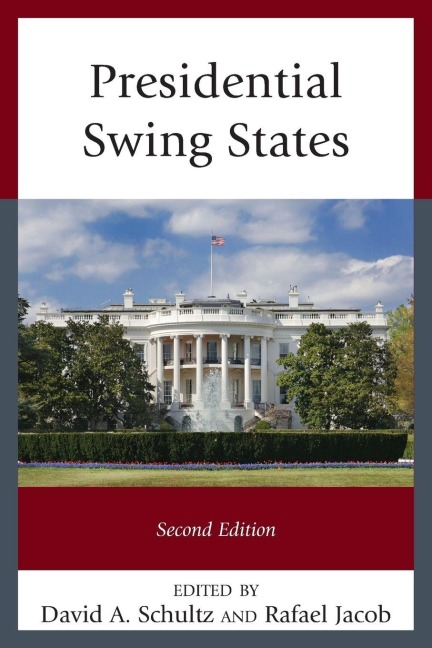
The 2020 United States presidential race is arguably already over except for about 12 states and 20 counties. If recent presidential election trends are any indication of what will happen in 2020, Democrats in Texas and Republicans in New York might as well stay home on election day because their votes will matter little in the presidential race. The same might be said for voters in most states and counties in the United States. Conversely, for those in Ohio, Florida, Colorado, Iowa, and a handful of other states, every vote matters. These states will be battered with a barrage of presidential candidate visits, commercials, political spending, and countless stories in the media. This book analyzes why the presidential race has been effectively reduced to about a dozen states and 20 counties. Contributors to this volume make substantial updates and additions in light of the 2016 and in anticipation of the 2020 presidential elections, including 6 new chapters exploring why some states are swingers in presidential elections, capable of being won by either of the major candidates. The volume also adds a chapter examining important swing counties throughout the country. Presidential Swing States describes what makes these few states and counties unique and why the presidency is decided by who wins them. With cases studies written by prominent political scientists who are experts on these swing states, Presidential Swing States also explains why some states have been swingers but no longer are, why some are swinging, and which states may become the ones that decide the presidency.
David A. Schultz is professor of political science at Hamline University. Rafael Jacob is post-doctoral fellow at the Raoul-Dandurand Chair's Center for U.S. Studies and instructor at the University of Ottawa's School of Political Studies.
Chapter 1: Purple Battlegrounds: Presidential Campaign Strategies and Swing State Voters Scott L. McLean Part I: The "Classic" Swing States Chapter 2: Florida: Still the Largest Swing State Sean D. Foreman Chapter 3: Iowa: Still Swinging After All These Years Donna R. Hoffman and Christopher W. Larimer Chapter 4: New Hampshire as a Swing State Dante J. Scala Chapter 5: Nevada: A Swing State No More? Demographic and Political Change in the Silver State David F. Damore and Rebecca D. Gill Chapter 6: Ohio Sean Trende Part II: The "Recent" Swing States Chapter 7: Still Contesting Colorado? The Politics of the 2016 Election in Colorado Robert R. Preuhs, Norman Provizer, and Andrew Thangasamy Chapter 8: North Carolina: Still Swingin' in the South Christopher A. Cooper and H. Gibbs Knotts Chapter 9: Virginia: Demography Drives the Old Dominion's Destiny John J. McGlennon Part III: The "New-Found" Swing States Chapter 10: Michigan: Hiding Behind a Thin Blue Wall David A. Dulio and John S. Klemanski Chapter 11: Keys to the Keystone State: Pennsylvania's Return as a Premier Swing State Rafael Jacob and Christopher Borick Chapter 12: A Blue State Turns Red: The Future of Wisconsin Politics in the Aftermath of the Surprising 2016 Election Neil Kraus and Aaron C. Weinschenk Part IV: The "Emerging" Swing States? Chapter 13: Arizona: Right of Center with Potential to Change Kate Kenski Chapter 14: The "Two Maines" in a (Potentially) New Swing State Amy Fried and James P. Melcher Chapter 15: The Loyal Blue State of Minnesota: Turning Purple David A. Schultz Chapter 16: Swing Counties in Presidential Elections David A. Schultz