Und dann auf "Zum Home-Bildschirm [+]".

Stöbern
genialokal zum Startbildschirm hinzufügen
Installieren Sie die genialokal App auf Ihrem Startbildschirm für einen schnellen Zugriff und eine komfortable Nutzung.
Installieren Sie die genialokal App auf Ihrem Startbildschirm für einen schnellen Zugriff und eine komfortable Nutzung.


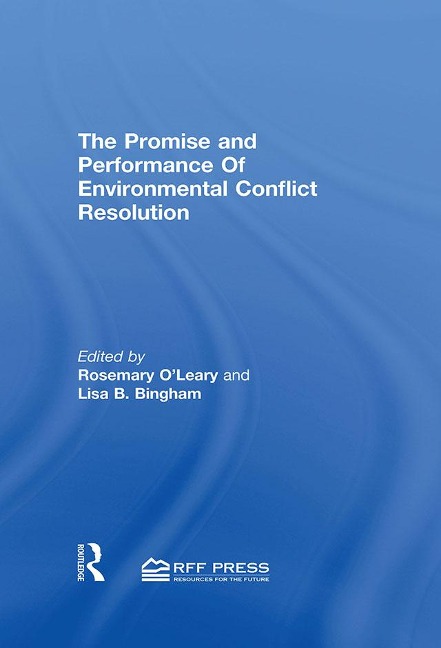
Environmental conflict resolution (ECR) is a process of negotiation that allows stakeholders in a dispute to reach a mutually satisfactory agreement on their own terms. The tools of ECR, such as facilitation, mediation, and conflict assessment, suggest that it fits well with other ideas for reforming environmental policy. First used in 1974, ECR has been an official part of policymaking since the mid 1990s. The Promise and Performance of Environmental Conflict Resolution is the first book to systematically evaluate the results of these efforts. The Promise and Performance of Environmental Conflict Resolution presents empirical research along with insights from some of ECR's most experienced practitioners. Beginning with a primer about concepts and methods, the book describes the kinds of disputes where ECR has been applied, making it clear that 'despite the faith of proponents in the power and usefulness of ECR, it is not applicable to all environmental conflicts.' The contributions that follow critically investigate the record and potential of ECR, drawing on perspectives from political science, public administration, regional planning, philosophy, psychology, anthropology, and law. ECR is being extended to almost every area of environmental policy. Rosemary O'Leary and Lisa Bingham argue that truly effective use of ECR requires something more than advocacy. The Promise and Performance of Environmental Conflict Resolution provides scholars, policymakers, students, and practitioners with critical assessments, so that ECR can be used to its best advantage.
Rosemary O Leary is professor of Public Administration and director of the Ph.D. program at the Maxwell School of Citizenship and Public Affairs at Syracuse University. O Leary co-founded and co-directed of the Indiana Conflict Resolution Institute. Lisa B. Bingham is Keller-Runden Professor of Public Service and director of the Indiana Conflict Resolution Institute at the Indiana University School of Public and Environmental Affairs. Professor Bingham co-founded the Indiana Conflict Resolution Institute.
Foreword Gail Bingham Preface About the Contributors Part I Introduction 1. The Challenges of Environmental Conflict Resolution Lisa Bingham, Kirk Emerson, Tina Nabatchi, Rosemary O Leary, and John Stephens 2. Whose Reality Counts? Juliana E. Birkhoff and Kem Lowry Part II Upstream Environmental Conflict Resolution 3. Dispute Resolution as a Method of Public Participation Thomas C. Beierle and Jerry Cayford 4. Is Satisfaction Success? Evaluating Public Participation in Regulatory Policymaking Cary Coglianese Part III Midstream Environmental Conflict Resolution 5. Intractable Conflict Marcia Caton Campbell 6. Achievement of Relationship Change Tamra Pearson D Estree 7. Retrospective and Prospective Frame Elicitation Sanda Kaufman and Barbara Gray 8. Facilitators, Coordinators, and Outcomes William Leach and Paul Sabatier Part IV Downstream Environmental Conflict Resolution at the State and Federal Levels 9. Evaluation of Environmental Dispute Resolution Programs Andy Rowe 10. An Evaluation System for State and Federal Conflict Resolution Programs: The Policy Consensus Initiative Kirk Emerson and Chris Carlson 11. State Agency Administrative Mediation: A Florida Trial Frances Stokes Berry, Bruce Stiftel, and Aysin Dedkorkut 12. Court-Annexed Environmental Mediation: The District of Oregon Pilot Project Lisa A. Kloppenberg 13. Dispute Resolution at the U.S. Environmental Protection Agency Rosemary O Leary and Susan Raines Part V Downstream Environmental Conflict Resolution and Outcome Measures 14. The Assessment of Environmental Outcomes Mette Brogden 15. Economic Characteristics of Successful Outcomes Bonnie Colby Part VI Conclusion 16. Fulfilling the Promise of Environmental Conflict Resolution Lisa Bingham, David Fairman, Dan Fiorino, and Rosemary O Leary Index
Dieses eBook wird im PDF-Format geliefert und ist mit einem Adobe Kopierschutz (DRM) versehen. Sie können dieses eBook mit allen Geräten lesen, die das PDF-Format und den Adobe Kopierschutz (DRM) unterstützen.
Zum Beispiel mit den folgenden Geräten:
• tolino Reader
Laden Sie das eBook direkt über den Reader-Shop auf dem tolino herunter oder übertragen Sie das eBook auf Ihren tolino mit einer kostenlosen Software wie beispielsweise Adobe Digital Editions.
• Sony Reader & andere eBook Reader
Laden Sie das eBook direkt über den Reader-Shop herunter oder übertragen Sie das eBook mit der kostenlosen Software Sony READER FOR PC/Mac oder Adobe Digital Editions auf ein Standard-Lesegeräte mit epub- und Adobe DRM-Unterstützung.
• Tablets & Smartphones
Möchten Sie dieses eBook auf Ihrem Smartphone oder Tablet lesen, finden Sie hier unsere kostenlose Lese-App für iPhone/iPad und Android Smartphone/Tablets.
• PC & Mac
Lesen Sie das eBook direkt nach dem Herunterladen mit einer kostenlosen Lesesoftware, beispielsweise Adobe Digital Editions, Sony READER FOR PC/Mac oder direkt über Ihre eBook-Bibliothek in Ihrem Konto unter „Meine eBooks“ - „online lesen“.
Schalten Sie das eBook mit Ihrer persönlichen Adobe ID auf bis zu sechs Geräten gleichzeitig frei.
Bitte beachten Sie, dass die Kindle-Geräte das Format nicht unterstützen und dieses eBook somit nicht auf Kindle-Geräten lesbar ist.