Und dann auf "Zum Home-Bildschirm [+]".

Stöbern
genialokal zum Startbildschirm hinzufügen
Installieren Sie die genialokal App auf Ihrem Startbildschirm für einen schnellen Zugriff und eine komfortable Nutzung.
Installieren Sie die genialokal App auf Ihrem Startbildschirm für einen schnellen Zugriff und eine komfortable Nutzung.
Ihr gewünschter Artikel ist in 0 Buchhandlungen vorrätig - wählen Sie hier eine Buchhandlung in Ihrer Nähe aus:

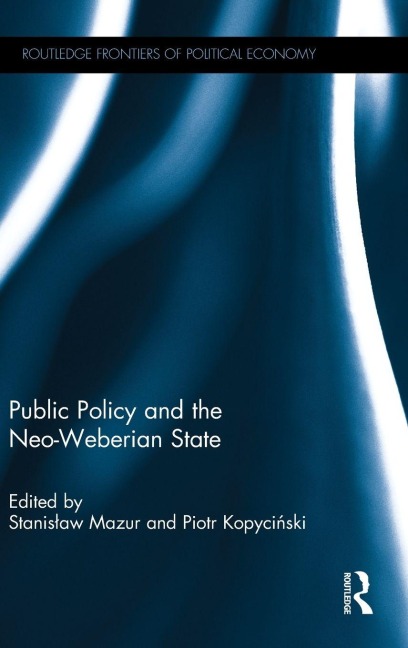
This book explores a range of issues related to the neo-Weberian approach in the context of contemporary challenges in the creation and evaluation of public policies in the aftermath of the 2008 financial crisis. The chapters focus on the fundamental public policy issues, theoretical and methodological foundations, instruments for public policy implementation, and the tasks and challenges facing policymakers. This volume also discusses the context of neo-Weberism and its impact on the processes of transformation of societies. Furthermore, it identifies and systematizes the theoretical and functional elements of the approach under consideration.
-
Stanislaw Mazur is Professor at the Cracow University of Economics, Faculty of Public Economy and Administration, Poland, and is Dean of the Faculty of Public Economy and Administration. Piotr Kopyciński is Assistant Professor at the Cracow University of Economics, Faculty of Public Economy and Administration, Poland, and is an expert in more than 20 research and implementation projects in the analysis of public policy, innovation, local and regional development.
List of illustrations List of contributors Introduction STANIS-AW MAZUR AND PIOTR KOPYCI-SKI PART I The neo-Weberian state: fundamental principles 1 The origins of and trends in the neo-Weberian approach MAREK -WIKLICKI AND STANIS-AW MAZUR 2 The social and political context of the neo-Weberian state MICHA- MO-D-E- AND MICHA- -ABI-SKI 3 The neo-Weberian state and paradigms of public management STANIS-AW MAZUR AND MAREK ORAMUS PART II The neo-Weberian state and public policies 4 The neo-Weberian approach in economic policy TOMASZ GEODECKI 5 The neo-Weberian approach in innovation policy PIOTR KOPYCI-SKI 6 The neo-Weberian public management model in the context of labour market policy in Poland MACIEJ FR-CZEK 7 The neo-Weberian approach in industrial policy -UKASZ MAMICA 8 The neo-Weberian approach in health policy in selected countries JACEK KLICH 9 The neo-Weberian approach in territorial policy PIOTR KOPYCI-SKI 10 The neo-Weberian approach as a public management model in urban areas MICHA- KUD-ACZ Conclusion: the neo-Weberian concept of state and its implications for public management PAWE- BIA-YNICKI-BIRULA, JAKUB G-OWACKI AND JACEK KLICH Index