Und dann auf "Zum Home-Bildschirm [+]".

Stöbern
genialokal zum Startbildschirm hinzufügen
Installieren Sie die genialokal App auf Ihrem Startbildschirm für einen schnellen Zugriff und eine komfortable Nutzung.
Installieren Sie die genialokal App auf Ihrem Startbildschirm für einen schnellen Zugriff und eine komfortable Nutzung.


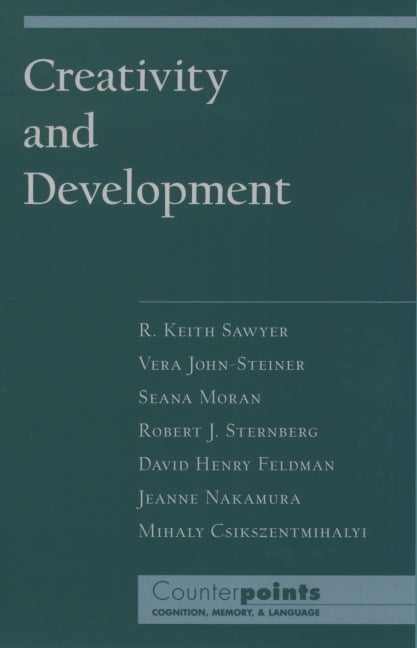
What is creativity, and where does it come from? Creativity and Development explores the fascinating connections and tensions between creativity research and developmental psychology, two fields that have largely progressed independently of each other-until now. In this book, scholars influential in both fields explore the emergence of new ideas, and the development of the people and situations that bring them to fruition. The uniquely collaborative nature of Oxford's Counterpoints series allows them to engage in a dialogue, addressing the key issues and potential benefits of exploring the connections between creativity and development. Creativity and Development is based on the observation that both creativity and development are processes that occur in complex systems, in which later stages or changes emerge from the prior state of the system. In the 1970s and 1980s, creativity researchers shifted their focus from personality traits to cognitive and social processes, and the co-authors of this volume are some of the most influential figures in this shift. The central focus on system processes results in three related volume themes: how the outcomes of creativity and development emerge from dynamical processes, the interrelation between individual processes and social processes, and the role of mediating artifacts and domains in developmental and creative processes. The chapters touch on a wide range of important topics, with the authors drawing on their decades of research into creativity and development. Readers will learn about the creativity of children's play, the creative aspects of children's thinking, the creative processes of scientists, the role of education and teaching in creative development, and the role of multiple intelligences in both creativity and development. The final chapter is an important dialogue between the authors, who engage in a roundtable discussion and explore key questions facing contemporary researchers, such as: Does society suppress children's creativity? Are creativity and development specific to an intelligence or a domain? What role do social and cultural contexts play in creativity and development? Creativity and Development presents a powerful argument that both creativity scholars and developmental psychologists will benefit by becoming more familiar with each other's work.
Dieses eBook wird im PDF-Format geliefert und ist mit einem Adobe Kopierschutz (DRM) versehen. Sie können dieses eBook mit allen Geräten lesen, die das PDF-Format und den Adobe Kopierschutz (DRM) unterstützen.
Zum Beispiel mit den folgenden Geräten:
• tolino Reader
Laden Sie das eBook direkt über den Reader-Shop auf dem tolino herunter oder übertragen Sie das eBook auf Ihren tolino mit einer kostenlosen Software wie beispielsweise Adobe Digital Editions.
• Sony Reader & andere eBook Reader
Laden Sie das eBook direkt über den Reader-Shop herunter oder übertragen Sie das eBook mit der kostenlosen Software Sony READER FOR PC/Mac oder Adobe Digital Editions auf ein Standard-Lesegeräte mit epub- und Adobe DRM-Unterstützung.
• Tablets & Smartphones
Möchten Sie dieses eBook auf Ihrem Smartphone oder Tablet lesen, finden Sie hier unsere kostenlose Lese-App für iPhone/iPad und Android Smartphone/Tablets.
• PC & Mac
Lesen Sie das eBook direkt nach dem Herunterladen mit einer kostenlosen Lesesoftware, beispielsweise Adobe Digital Editions, Sony READER FOR PC/Mac oder direkt über Ihre eBook-Bibliothek in Ihrem Konto unter „Meine eBooks“ - „online lesen“.
Schalten Sie das eBook mit Ihrer persönlichen Adobe ID auf bis zu sechs Geräten gleichzeitig frei.
Bitte beachten Sie, dass die Kindle-Geräte das Format nicht unterstützen und dieses eBook somit nicht auf Kindle-Geräten lesbar ist.