Und dann auf "Zum Home-Bildschirm [+]".

Stöbern
genialokal zum Startbildschirm hinzufügen
Installieren Sie die genialokal App auf Ihrem Startbildschirm für einen schnellen Zugriff und eine komfortable Nutzung.
Installieren Sie die genialokal App auf Ihrem Startbildschirm für einen schnellen Zugriff und eine komfortable Nutzung.


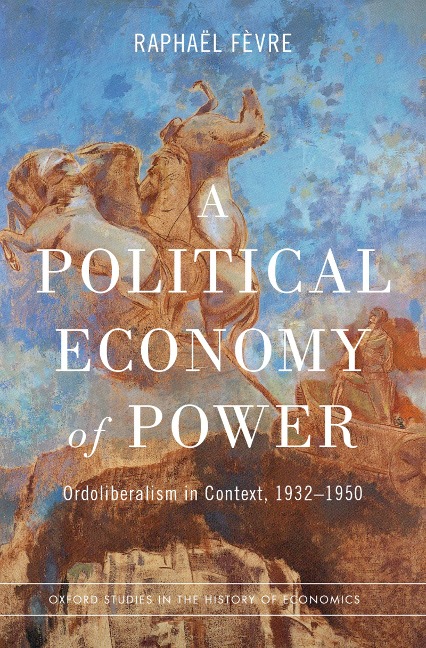
The first English analysis of German ordoliberalism from the perspective of both intellectual history and history of economic thought In comparison with Keynesianism, monetarism, or other economic paradigms of the twentieth century, ordoliberalism has been generally neglected. However, after first emerging in Germany during interwar years, ordoliberalism is now at the center of the ongoing debates about the foundations, the present governance, and the future prospects of the European Union. In A Political Economy of Power, Raphaël Fèvre retraces the intellectual history of ordoliberalism, focusing on the works of its main representatives Walter Eucken and Wilhelm Röpke, together with the contributions of Franz Böhm, Alexander Rüstow, Leonhard Miksch, and Friedrich Lutz. Fèvre provides a clear and comprehensive definition of ordoliberalism, describes in detail its principles, and explains how ordoliberalism came to heavily influence German post-war reconstruction despite its emergence during the Nazi period. He also investigates the reasons for its success in West Germany in the immediate aftermath of the war, and its lasting influence through a partial transformation to a contemporary form of neoliberal orthodoxy. A Political Economy of Power provides a contextualized and interdisciplinary study of ordoliberalism-one of the most influential intellectual projects of the second half of the twentieth century in Europe.
Raphaël Fèvre is Assistant Professor in Economics at Université Côte d'Azur (France) and associate member of the Centre Walras-Pareto (Switzerland). He works on topics in history of economic thought and methodology of the 20th century.
Acknowledgments Introduction: The Making of Ordoliberalism Chapter 1: From the Ashes of the Western Liberal Order Chapter 2: Science Against Interests Chapter 3: Economy Through Orders Chapter 4: Authority Taming Power Chapter 5: Epilogue-Time for Responsibility Conclusions: Ordoliberalism, From Crystallization to Ossification Bibliography Index
Dieses eBook wird im PDF-Format geliefert und ist mit einem Adobe Kopierschutz (DRM) versehen. Sie können dieses eBook mit allen Geräten lesen, die das PDF-Format und den Adobe Kopierschutz (DRM) unterstützen.
Zum Beispiel mit den folgenden Geräten:
• tolino Reader
Laden Sie das eBook direkt über den Reader-Shop auf dem tolino herunter oder übertragen Sie das eBook auf Ihren tolino mit einer kostenlosen Software wie beispielsweise Adobe Digital Editions.
• Sony Reader & andere eBook Reader
Laden Sie das eBook direkt über den Reader-Shop herunter oder übertragen Sie das eBook mit der kostenlosen Software Sony READER FOR PC/Mac oder Adobe Digital Editions auf ein Standard-Lesegeräte mit epub- und Adobe DRM-Unterstützung.
• Tablets & Smartphones
Möchten Sie dieses eBook auf Ihrem Smartphone oder Tablet lesen, finden Sie hier unsere kostenlose Lese-App für iPhone/iPad und Android Smartphone/Tablets.
• PC & Mac
Lesen Sie das eBook direkt nach dem Herunterladen mit einer kostenlosen Lesesoftware, beispielsweise Adobe Digital Editions, Sony READER FOR PC/Mac oder direkt über Ihre eBook-Bibliothek in Ihrem Konto unter „Meine eBooks“ - „online lesen“.
Schalten Sie das eBook mit Ihrer persönlichen Adobe ID auf bis zu sechs Geräten gleichzeitig frei.
Bitte beachten Sie, dass die Kindle-Geräte das Format nicht unterstützen und dieses eBook somit nicht auf Kindle-Geräten lesbar ist.