Und dann auf "Zum Home-Bildschirm [+]".

Stöbern
genialokal zum Startbildschirm hinzufügen
Installieren Sie die genialokal App auf Ihrem Startbildschirm für einen schnellen Zugriff und eine komfortable Nutzung.
Installieren Sie die genialokal App auf Ihrem Startbildschirm für einen schnellen Zugriff und eine komfortable Nutzung.
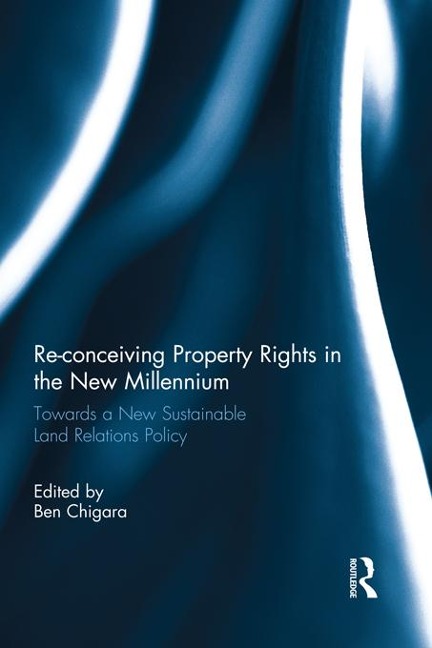
This book constitutes volume two of a two volume examination of development community land issues in Southern Africa. Following from volume one Southern African Development Community Land Issues, this book considers the possibility of a new, sustainable land relations policy for Southern African Development Community States (SADC) that are currently mired up in land disputes that have become subject of domestic, regional and international tribunals. Chigara demonstrates that land relations in the SADC have always been, and will perhaps remain, a matter for constitutional regulation. Because constitutional laws are distinctive from other laws only by constitutional design, legal contests appear to be the least likely means for settlement in the sub-region. Only human rights inspired policies, that respond to the call for social justice by acknowledging both the current and the underlying contexts to the disputes, hold the most potential to resolve these disputes. The book recommends efficient pedagogical counter-apartheid-rule psychological distortions regarding the significance of human dignity (PECAPDISH) as a pre-requisite and corollary to the dismantling of the salient physical legacy of apartheid-rule in affected SADC States. The book shows that PECAPDISH's potential and benefits would be enormous. The book will be of interest to students and researchers of Property and Conveyancing Law, Human Rights Law, and Land Law.
Ben Chigara is Professor of International Laws at Brunel University, UK.
Part 1: Ideological, Socio-Economic and Cultural Issues Around Land 1. Land Ownership and Economic, Social and Cultural Rights in the Southern African Development Community (SADC), Manisuli Ssenyonjo 2. Genderised Land Reform and Social Justice - A Gender Perspective on the Formalization of Communal Land Tenure, Annika Rudman 3. Framing Women's Rights and Citizenship Within the SADC Land Reform Discourse: A Feminist Critique, Lyn Ossome 4. Land and Resource Rights, Tenure Arrangements and Reform in Community Based Natural Resource Management in SADC, Munyaradzi Saruchera and Sibongile Manzana 5. The Land Question in Southern Africa: A Political Economy Perspective, Edward Lahiff Part 2: Possibilities and Further Challenges 6. Farm Workers on Private Agriculture Land Holdings: A Pathway to the Common Settlement of a SADC Land Issues?, Sibo Banda 7. Property Guarantees in Old and New Southern African Constitutions, Clement Ngongola 8. SADC Within the Region: The African Union (AU) Approach to Land Issues, Rachel Murray 9. Deconstructing SADC Land Relations: Towards a New, Sustainable Land Relations Policy?, Ben Chigara
Dieses eBook wird im PDF-Format geliefert und ist mit einem Adobe Kopierschutz (DRM) versehen. Sie können dieses eBook mit allen Geräten lesen, die das PDF-Format und den Adobe Kopierschutz (DRM) unterstützen.
Zum Beispiel mit den folgenden Geräten:
• tolino Reader
Laden Sie das eBook direkt über den Reader-Shop auf dem tolino herunter oder übertragen Sie das eBook auf Ihren tolino mit einer kostenlosen Software wie beispielsweise Adobe Digital Editions.
• Sony Reader & andere eBook Reader
Laden Sie das eBook direkt über den Reader-Shop herunter oder übertragen Sie das eBook mit der kostenlosen Software Sony READER FOR PC/Mac oder Adobe Digital Editions auf ein Standard-Lesegeräte mit epub- und Adobe DRM-Unterstützung.
• Tablets & Smartphones
Möchten Sie dieses eBook auf Ihrem Smartphone oder Tablet lesen, finden Sie hier unsere kostenlose Lese-App für iPhone/iPad und Android Smartphone/Tablets.
• PC & Mac
Lesen Sie das eBook direkt nach dem Herunterladen mit einer kostenlosen Lesesoftware, beispielsweise Adobe Digital Editions, Sony READER FOR PC/Mac oder direkt über Ihre eBook-Bibliothek in Ihrem Konto unter „Meine eBooks“ - „online lesen“.
Schalten Sie das eBook mit Ihrer persönlichen Adobe ID auf bis zu sechs Geräten gleichzeitig frei.
Bitte beachten Sie, dass die Kindle-Geräte das Format nicht unterstützen und dieses eBook somit nicht auf Kindle-Geräten lesbar ist.