
Stöbern
genialokal zum Startbildschirm hinzufügen
Installieren Sie die genialokal App auf Ihrem Startbildschirm für einen schnellen Zugriff und eine komfortable Nutzung.
Installieren Sie die genialokal App auf Ihrem Startbildschirm für einen schnellen Zugriff und eine komfortable Nutzung.
Tippen Sie einfach auf Teilen:
 Und dann auf "Zum Home-Bildschirm [+]".
Bei genialokal.de kaufen Sie online bei Ihrer lokalen, inhabergeführten Buchhandlung!
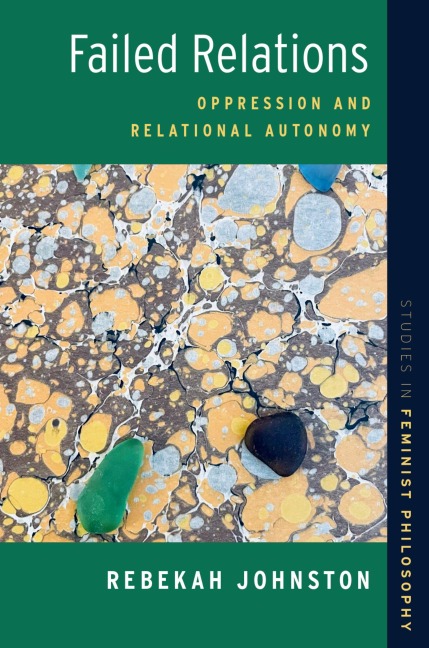
Theories of personal autonomy identify the conditions that must be met in order for a person's life, identity, desires, motivations, values, and actions truly to count as her own. To make one's life one's own, in the senses relevant to personal autonomy, however, is not to escape relation---autonomy is intricately dependent on relations. Failed Relations articulates significant ways in which oppressive social circumstances constrain the autonomy of marginalized agents by failing to provide and sustain the relations required for autonomy. While much has been done to articulate the causally relational connections between oppression and autonomy, Failed Relations elaborates on the undertheorized ways in which oppressive social circumstances are constitutively relevant to autonomy. Rebekah Johnston moves away from a focus on socialization and the internalization of oppressive norms. Instead, she centers in her analysis the implications for autonomy of living with those empowered to harass and engage in racial profiling, of experiences of epistemic injustice, of the political distribution of negative affect, and of practices of displacing the first personal, experiential perspectives of marginalized agents from the public sphere. These alternative considerations bring into focus the constitutively relational relevance of oppression to autonomy. They also provide an interpretive lens that can accommodate the claim that an agent may not internalize oppressive norms and values in ways that damage her, yet may nevertheless find her autonomy constrained by oppressive social relations.
Rebekah Johnston is Associate Professor of Philosophy at Wilfrid Laurier University, Canada.
Introduction 1. Living With Who Others Get To Be: Self-Determination and Status 2. Self-Governance, Self-Expressive Activities, and Communal Competence 3. Self-Governance, Hermeneutical Resources, and Communicative Needs 4. Authenticity and Constitutively Relational Emotions 5. Self-Authorization and Social Recognition Conclusion References Index
Dieses eBook wird im PDF-Format geliefert und ist mit einem Adobe Kopierschutz (DRM) versehen. Sie können dieses eBook mit allen Geräten lesen, die das PDF-Format und den Adobe Kopierschutz (DRM) unterstützen.
Zum Beispiel mit den folgenden Geräten:
• tolino Reader
Laden Sie das eBook direkt über den Reader-Shop auf dem tolino herunter oder übertragen Sie das eBook auf Ihren tolino mit einer kostenlosen Software wie beispielsweise Adobe Digital Editions.
• Sony Reader & andere eBook Reader
Laden Sie das eBook direkt über den Reader-Shop herunter oder übertragen Sie das eBook mit der kostenlosen Software Sony READER FOR PC/Mac oder Adobe Digital Editions auf ein Standard-Lesegeräte mit epub- und Adobe DRM-Unterstützung.
• Tablets & Smartphones
Möchten Sie dieses eBook auf Ihrem Smartphone oder Tablet lesen, finden Sie hier unsere kostenlose Lese-App für iPhone/iPad und Android Smartphone/Tablets.
• PC & Mac
Lesen Sie das eBook direkt nach dem Herunterladen mit einer kostenlosen Lesesoftware, beispielsweise Adobe Digital Editions, Sony READER FOR PC/Mac oder direkt über Ihre eBook-Bibliothek in Ihrem Konto unter „Meine eBooks“ - „online lesen“.
Schalten Sie das eBook mit Ihrer persönlichen Adobe ID auf bis zu sechs Geräten gleichzeitig frei.
Bitte beachten Sie, dass die Kindle-Geräte das Format nicht unterstützen und dieses eBook somit nicht auf Kindle-Geräten lesbar ist.