Und dann auf "Zum Home-Bildschirm [+]".

Stöbern
genialokal zum Startbildschirm hinzufügen
Installieren Sie die genialokal App auf Ihrem Startbildschirm für einen schnellen Zugriff und eine komfortable Nutzung.
Installieren Sie die genialokal App auf Ihrem Startbildschirm für einen schnellen Zugriff und eine komfortable Nutzung.
Ihr gewünschter Artikel ist in 0 Buchhandlungen vorrätig - wählen Sie hier eine Buchhandlung in Ihrer Nähe aus:

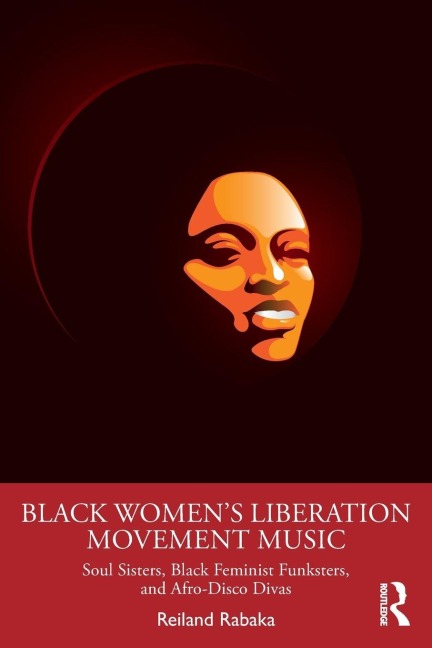
Black Women's Liberation Movement Music argues that the Black Women's Liberation Movement of the mid-to-late 1960s and 1970s was a unique combination of Black political feminism, Black literary feminism, and Black musical feminism, among other forms of Black feminism.
This book critically explores the ways the soundtracks of the Black Women's Liberation Movement often overlapped with those of other 1960s and 1970s social, political, and cultural movements, such as the Black Power Movement, Women's Liberation Movement, and Sexual Revolution. The soul, funk, and disco music of the Black Women's Liberation Movement era is simultaneously interpreted as universalist, feminist (in a general sense), and Black female-focused. This music's incredible ability to be interpreted in so many different ways speaks to the importance and power of Black women's music and the fact that it has multiple meanings for a multitude of people. Within the worlds of both Black Popular Movement Studies and Black Popular Music Studies there has been a long-standing tendency to almost exclusively associate Black women's music of the mid-to-late 1960s and 1970s with the Black male-dominated Black Power Movement or the White female-dominated Women's Liberation Movement. However, this book reveals that much of the soul, funk, and disco performed by Black women was most often the very popular music of a very unpopular and unsung movement: The Black Women's Liberation Movement.
Black Women's Liberation Movement Music is an invaluable resource for students, teachers, and researchers of Popular Music Studies, American Studies, African American Studies, Critical Race Studies, Gender Studies, and Sexuality Studies.
Reiland Rabaka is the Founder and Director of the Center for African & African American Studies and Professor of African, African American, and Caribbean Studies in the Department of Ethnic Studies at the University of Colorado Boulder. He is also a research fellow in the College of Human Sciences at the University of South Africa (UNISA).
Introduction. The Musical Icons and Anthems of the Black Women's Liberation Movement 1. The Black Women's Liberation Movement 2. Black Musical Feminism 3. Soul Sisters 4. Black Feminist Funksters 5. Afro-Disco Divas Conclusion. On the Popular Music of Black Women's Unpopular Movement