Und dann auf "Zum Home-Bildschirm [+]".

Stöbern
genialokal zum Startbildschirm hinzufügen
Installieren Sie die genialokal App auf Ihrem Startbildschirm für einen schnellen Zugriff und eine komfortable Nutzung.
Installieren Sie die genialokal App auf Ihrem Startbildschirm für einen schnellen Zugriff und eine komfortable Nutzung.
Ihr gewünschter Artikel ist in 0 Buchhandlungen vorrätig - wählen Sie hier eine Buchhandlung in Ihrer Nähe aus:

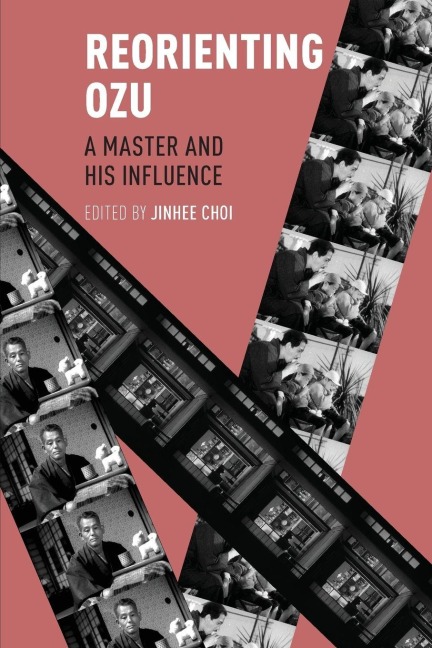
Considered by many film critics and scholars as a master of Japanese Cinema, director Ozu Yasujiro still inspires filmmakers both within and outside of Japan. With fifteen never before published chapters in English by contributors from North America, Europe, and Japan, Reorienting Ozu explores the Japanese director's oeuvre and his lasting impact on global art cinema. Exploring major theoretical frameworks that characterize Ozu studies, chapters consider the various cultural factors that influenced the director's cinematic output, such as the anxiety of middleclass Japan in the 1930s, the censorship imposed by the US-occupation after World War II, and women's rights in Ozu's late work such as Tokyo Twilight (1957). Ultimately, chapters illuminate Ozu's influence on the directors of Japan and beyond. With the recent restoration and re-release of Ozu's early and late films, this volume provides an opportunity to examine not only the auteur's major works but also the relationships--both cultural and aesthetic--that are forged among directors across the world.
Jinhee Choi is Reader in Film Studies at Kings College London
- Introduction
- Jinhee Choi
- Branding Ozu
- 1. Watch Again! Look Well! Look! David Bordwell
- 2. Ozu, The Ineffable Darrell W Davis
- 3. Ozu to Asia via Hasumi Aaron Gerow
- 4. A Dialogue with 'Memory' in Hou Hsiao-hsien's Café Lumière - Mitsuyo Wada-Marciano
- 5. Ozuesque as a Sensibility: or On the notion of Influence Jinhee Choi
- Historicizing Ozu
- 6. A New Form of Silent Cinema: Intertitles and Interlocutions in Ozu Yasujiro's Late Silent Films Michael Raine
- 7. Ozu and the Aesthetics of Shadow: Lighting and Cinematography in There Was a Father (Chichi ariki, 1942)Daisuke Miyao
- 8. Modernity, Shoshimin Films and the Proletarian-Film Movement: Ozu in Dialogue with Vertov Yuki Takinami
- 9. Laughing in the Shadows of Empire: Humor in Ozu's Brothers and Sisters of the Toda Family (1941) Junji Yoshida
- Tracing Ozu
- 10. Autumn Afternoons: Negotiating the Ghost of Ozu in Iguchi Nami's Dogs and Cats - Adam Bingham
- 11. Playing the Holes: Notes on the Ozuesque Gags Manuel Garin and Albert Elduque
- 12. Rhythm, Texture, Moods: Ozu Yasujiro, Claire Denis and a Vision of a Post-colonial Aesthetic Kate Taylor-Jones
- 13. Wenders Travels with Ozu Mark Betz
- 14. Look? Optical / Sound Situations and Interpretation: Ozu - (Deleuze) - Kiarostami David Deamer
- 15. Sparse or Slow: Ozu and Joanna Hogg William Brown