Und dann auf "Zum Home-Bildschirm [+]".

Stöbern
genialokal zum Startbildschirm hinzufügen
Installieren Sie die genialokal App auf Ihrem Startbildschirm für einen schnellen Zugriff und eine komfortable Nutzung.
Installieren Sie die genialokal App auf Ihrem Startbildschirm für einen schnellen Zugriff und eine komfortable Nutzung.
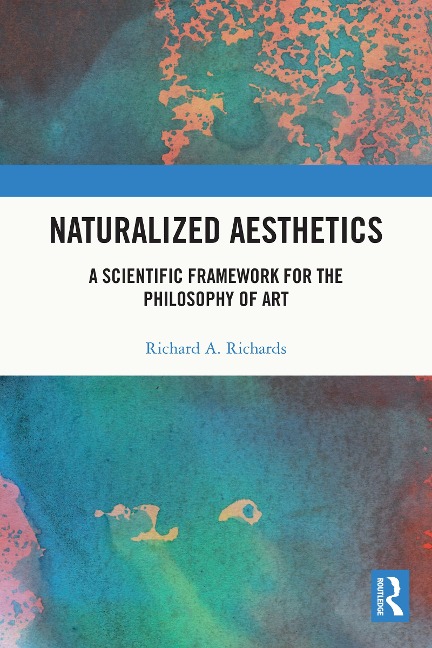
This book bridges the gap between the many insights into art provided by research in evolutionary theory, psychology and neuroscience and those enduring normative issues best addressed by philosophy. The sciences have helped us understand how art functions, our art preferences, and the neurological systems underlying our engagement with art. But we continue to rely on philosophy to tell us what is truly good in art, how we should engage with art, and the conceptual basis for this engagement. Naturalized Aesthetics: A Scientific Framework for the Philosophy of Art integrates a systematic and comprehensive naturalism, grounded in the sciences, with an "ecology" of art. It shows how the environments in which we make and experience art - our "engineered art niches" - affect the practice and experience of art and generate normativity - the goods and the shoulds - in our engagement with art. There are, in effect, two "streams" of normativity, according to this book: a niche-dependent, social, impersonal and objective stream and a niche-independent, individual, personal and subjective stream. Recognition of these two streams allows us to make progress in long-standing and unresolved philosophical disputes about how to interpret, evaluate and conceive art. Key Features: - Provides a structured and critical introduction to the scientific accounts of art based on evolutionary thinking, psychology and neuroscience. - Develops an "ecology" of art based on the insight that we engage with art in engineered niches. - Presents a naturalistic account of normativity based on the recognition of two streams: a niche-dependent, social, impersonal and objective stream; and a niche-independent, individual, personal and subjective stream. - Serves as an introduction and critical analysis of the debates about the interpretation, evaluation and definitions of art.
Richard A. Richards, Professor at the University of Alabama, received his Ph.D. in Philosophy from The Johns Hopkins University with a certificate in the History and Philosophy of Science. He has wide-ranging research interests, writing on a variety of topics in the history and philosophy of biology and aesthetics. He has published three books through Cambridge University Press: The Species Problem: A Philosophical Analysis (2010), Biological Classification: A Philosophical Introduction (2016) and The Biology of Art (2019).
1. Aesthetics and Naturalism 2. The Evolution of Art 3. The Psychology of Art 4. The Ecology of Art 5. Art Criticism 6. Interpreting Art 7. Evaluating Art 8. Defining Art 9. Conclusion
Dieses eBook wird im PDF-Format geliefert und ist mit einem Adobe Kopierschutz (DRM) versehen. Sie können dieses eBook mit allen Geräten lesen, die das PDF-Format und den Adobe Kopierschutz (DRM) unterstützen.
Zum Beispiel mit den folgenden Geräten:
• tolino Reader
Laden Sie das eBook direkt über den Reader-Shop auf dem tolino herunter oder übertragen Sie das eBook auf Ihren tolino mit einer kostenlosen Software wie beispielsweise Adobe Digital Editions.
• Sony Reader & andere eBook Reader
Laden Sie das eBook direkt über den Reader-Shop herunter oder übertragen Sie das eBook mit der kostenlosen Software Sony READER FOR PC/Mac oder Adobe Digital Editions auf ein Standard-Lesegeräte mit epub- und Adobe DRM-Unterstützung.
• Tablets & Smartphones
Möchten Sie dieses eBook auf Ihrem Smartphone oder Tablet lesen, finden Sie hier unsere kostenlose Lese-App für iPhone/iPad und Android Smartphone/Tablets.
• PC & Mac
Lesen Sie das eBook direkt nach dem Herunterladen mit einer kostenlosen Lesesoftware, beispielsweise Adobe Digital Editions, Sony READER FOR PC/Mac oder direkt über Ihre eBook-Bibliothek in Ihrem Konto unter „Meine eBooks“ - „online lesen“.
Schalten Sie das eBook mit Ihrer persönlichen Adobe ID auf bis zu sechs Geräten gleichzeitig frei.
Bitte beachten Sie, dass die Kindle-Geräte das Format nicht unterstützen und dieses eBook somit nicht auf Kindle-Geräten lesbar ist.