Und dann auf "Zum Home-Bildschirm [+]".

Stöbern
genialokal zum Startbildschirm hinzufügen
Installieren Sie die genialokal App auf Ihrem Startbildschirm für einen schnellen Zugriff und eine komfortable Nutzung.
Installieren Sie die genialokal App auf Ihrem Startbildschirm für einen schnellen Zugriff und eine komfortable Nutzung.

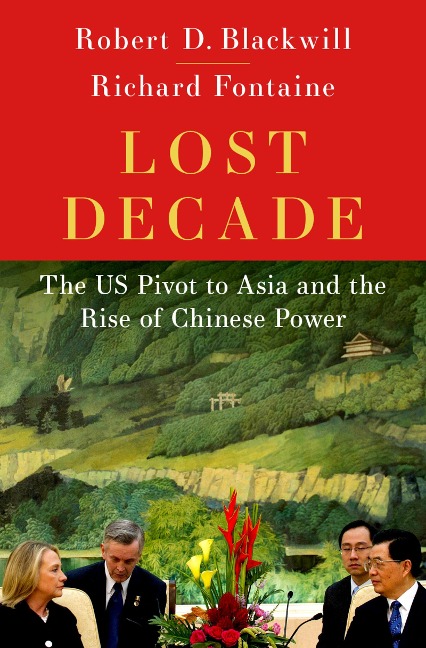
Lost Decade is an essential guide for understanding the historic shift to Asia-centric geopolitics and its implications for America's present and future. Across the political spectrum, there is wide agreement that Asia should stand at the center of US foreign policy. But this worldview, first represented in the Obama Administration's 2011 "Pivot to Asia," marks a dramatic departure from the entire history of American grand strategy. More than a decade on, we now have the perspective to evaluate it in depth. In Lost Decade, Robert Blackwill and Richard Fontainetwo eminent figures in American foreign policytake this long view. They conclude that while the Pivot's strategic logic is strong, there are few successes to speak of, and that we need a far more coherent approach to the Indo-Pacific region. They examine the Pivot through various lenses: situating it historically in the context of America's global foreign policy, revealing the inside story of how it came about, assessing the effort thus far, identifying the ramifications in other regions (namely Europe and the Middle East), and proposing a path forward. The authors stress that the US has far less margin for foreign policy error today than a decade ago. As the international order becomes more unstable, Blackwill and Fontaine argue that it is imperative that policymakers fully understand what the Pivot to Asia aimed to achieveand where it fell shortin order to muster the resources, alliances, and resolve to preserve an open order in Asia and the world. Crafting an effective policy for the region, they contend, is crucial for preserving American security, prosperity, and democratic values.
Robert D. Blackwill is the Henry A. Kissinger Senior Fellow for U.S. Foreign Policy at the Council on Foreign Relations (CFR). Blackwill served as deputy national security advisor for strategic planning under President George W. Bush, as presidential envoy to Iraq, and ambassador to India from 2001 to 2003. He is the recipient of the German government's Commander's Cross of the Order of Merit for his work on German Unification at the White House in the George H.W. Bush administration. His previous books include War by Other Means: Geoeconomics and Statecraft (2016), and Lee Kuan Yew: The Grand Master's Insights on China, the United States, and the World (2013). His CFR Special Reports include The End of World Order and American Foreign Policy (2020); Implementing Grand Strategy Toward China: Twenty-Two U.S. Policy Prescriptions (2020); Containing Russia (2018). Richard Fontaine is the Chief Executive Officer of the Center for a New American Security (CNAS). He served as President of CNAS from 2012-19 and as Senior Fellow from 2009-12. Prior to CNAS, he was foreign policy advisor to Senator John McCain and worked at the State Department, the National Security Council (NSC), and on the staff of the Senate Foreign Relations Committee. Fontaine served as foreign policy advisor to the McCain 2008 presidential campaign and subsequently as the minority deputy staff director on the Senate Armed Services Committee. He also served as Associate Director for Near Eastern Affairs at the NSC from 2003-04. Fontaine began his foreign policy career as a staff member on the Senate Foreign Relations Committee, focusing on the Middle East and South Asia. Fontaine currently serves as executive director of the Trilateral Commission and on the Defense Policy Board.
Acknowledgements Chapter 1: Introduction Chapter 2: What's at Stake: The Pivot and American Vital National Interests Chapter 3: The Pivots Before the Pivot: The Clinton and Bush Administrations Chapter 4: Rhetoric Meets Reality: Obama's Pivot to Asia Chapter 5: Turning on China: The Pivot During the Trump Administration Chapter 6: Gaining Ground: Biden Policy Toward Asia and China Chapter 7: Please Stay: Europe and the Pivot Chapter 8: America Is Going Home: The Middle East and the Pivot Chapter 9: We Don't Want to Choose: The Indo-Pacific and the Pivot Chapter 10: We Will Build in Any Case: China Rises as the Pivot Flops Chapter 11: Balancing Military Power in Asia: Defense Policy and the Pivot Chapter 12: Pivoting from Offense to Defense: The Changing Role of Economic Policy Chapter 13: Competition and Cooperation: Transnational Issues and the Pivot Chapter 14: Conclusion: The US Pivot to Asia and American Grand Strategy Notes