Und dann auf "Zum Home-Bildschirm [+]".

Stöbern
genialokal zum Startbildschirm hinzufügen
Installieren Sie die genialokal App auf Ihrem Startbildschirm für einen schnellen Zugriff und eine komfortable Nutzung.
Installieren Sie die genialokal App auf Ihrem Startbildschirm für einen schnellen Zugriff und eine komfortable Nutzung.
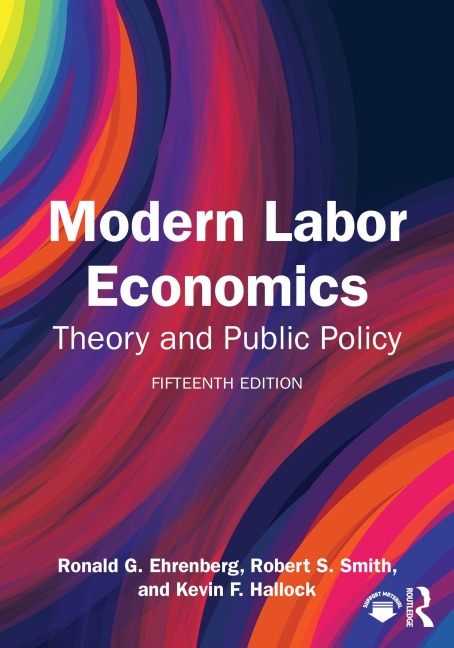
Modern Labor Economics: Theory and Public Policy, now in its fifteenth edition, continues to be the leading text for one-semester courses in labor economics at the undergraduate and graduate levels. It offers a thorough overview of the modern theory of labor market behavior and reveals how this theory is used to analyze public policy. Designed for students who may not have extensive backgrounds in economics, the text balances theoretical coverage with examples of practical policy applications that allow students to see concepts in action. The authors believe that showing students the social implications of the concepts discussed in the course will enhance their motivation to learn. Consequently, this text presents numerous examples of policy decisions that have affected, and been affected by, the ever-shifting labor market. This new edition continues to offer the following: - a balance of relevant, contemporary examples - coverage of the current economic climate - an introduction to basic methodological techniques and problems - tools for review and further study This fifteenth edition presents updated data and examples throughout and offers greater coverage of monopsonistic labor markets (including anti-trust regulations and rulings), the economics of education, the gender pay gap, recent developments in unions, and unemployment, plus new material on the work-from-home trend and AI. Supplementary materials for students and instructors are also available.
Ronald G. Ehrenberg, Professor Emeritus, Economics, Cornell University. Recipient of the Weiss Fellowship, Cornell's highest award for undergraduate teaching. Robert S. Smith, Professor of Economics, Cornell University. Weiss Presidential Fellow, honoring outstanding contributions to Cornell's undergraduate education. Kevin F. Hallock, President and Professor of Economics, University of Richmond; formerly dean of the Johnson College of Business, Cornell University.
1. Introduction 2. Overview of the Labor Market 3. The Demand for Labor 4. Labor Demand Elasticities 5. Frictions in the Labor Market 6. Supply of Labor to the Economy: The Decision to Work 7. Labor Supply: Household Production, the Family, and the Life Cycle 8. Compensating Wage Differentials and Labor Markets 9. Investments in Human Capital: Education and Training 10. Worker Mobility: Migration, Immigration, and Turnover 11. Pay and Productivity: Wage Determination Within the Firm 12. Gender, Race, and Ethnicity in the Labor Market 13. Unions and the Labor Market 14. Unemployment 15. Inequality in Earnings 16. The Labor Market Effects of International Trade and Production Sharing. Answers to Odd-Numbered Review Questions and Problems
Dieses eBook wird im PDF-Format geliefert und ist mit einem Adobe Kopierschutz (DRM) versehen. Sie können dieses eBook mit allen Geräten lesen, die das PDF-Format und den Adobe Kopierschutz (DRM) unterstützen.
Zum Beispiel mit den folgenden Geräten:
• tolino Reader
Laden Sie das eBook direkt über den Reader-Shop auf dem tolino herunter oder übertragen Sie das eBook auf Ihren tolino mit einer kostenlosen Software wie beispielsweise Adobe Digital Editions.
• Sony Reader & andere eBook Reader
Laden Sie das eBook direkt über den Reader-Shop herunter oder übertragen Sie das eBook mit der kostenlosen Software Sony READER FOR PC/Mac oder Adobe Digital Editions auf ein Standard-Lesegeräte mit epub- und Adobe DRM-Unterstützung.
• Tablets & Smartphones
Möchten Sie dieses eBook auf Ihrem Smartphone oder Tablet lesen, finden Sie hier unsere kostenlose Lese-App für iPhone/iPad und Android Smartphone/Tablets.
• PC & Mac
Lesen Sie das eBook direkt nach dem Herunterladen mit einer kostenlosen Lesesoftware, beispielsweise Adobe Digital Editions, Sony READER FOR PC/Mac oder direkt über Ihre eBook-Bibliothek in Ihrem Konto unter „Meine eBooks“ - „online lesen“.
Schalten Sie das eBook mit Ihrer persönlichen Adobe ID auf bis zu sechs Geräten gleichzeitig frei.
Bitte beachten Sie, dass die Kindle-Geräte das Format nicht unterstützen und dieses eBook somit nicht auf Kindle-Geräten lesbar ist.