Und dann auf "Zum Home-Bildschirm [+]".

Stöbern
genialokal zum Startbildschirm hinzufügen
Installieren Sie die genialokal App auf Ihrem Startbildschirm für einen schnellen Zugriff und eine komfortable Nutzung.
Installieren Sie die genialokal App auf Ihrem Startbildschirm für einen schnellen Zugriff und eine komfortable Nutzung.
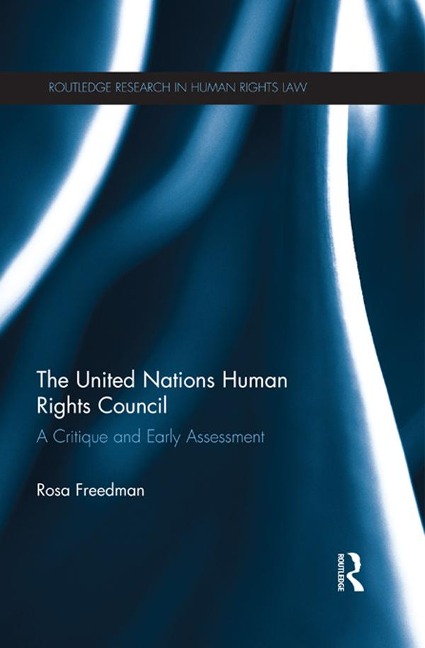
The United Nations Human Rights Council was created in 2006 to replace the UN Commission on Human Rights. The Council's mandate and founding principles demonstrate that one of the main aims, at its creation, was for the Council to overcome the Commission's flaws. Despite the need to avoid repeating its predecessor's failings, the Council's form, nature and many of its roles and functions are strikingly similar to those of the Commission. This book examines the creation and formative years of the United Nations Human Rights Council and assesses the extent to which the Council has fulfilled its mandate. International law and theories of international relations are used to examine the Council and its functions. Council sessions, procedures and mechanisms are analysed in-depth, with particular consideration given to whether the Council has become politicised to the same extent as the Commission. Whilst remaining aware of the key differences in their functions, Rosa Freedman compares the work of the Council to that of treaty-based human rights bodies. The author draws on observations from her attendance at Council proceedings in order to offer a unique account of how the body works in practice. The United Nations Human Rights Council will be of great interest to students and scholars of human rights law and international relations, as well as lawyers, NGOs and relevant government agencies.
Dr Rosa Freedman is a Lecturer at the University of Birmingham and a member of the English Bar. Specialising in International Law and International Human Rights, she has published articles in, amongst others, the Netherlands Quarterly of Human Rights and the International Journal of Human Rights. She has worked for various NGOs and contributes to The Guardian online
Part 1: The Human Rights Council's Mandate 1. Background: From Commission to Council 2. Reforming the UN Principal Charter-Based Human Rights Body 3. Creation and Mandate Part 2: Criteria for Assessing the Council 4. International Relations Theories 5. Roles and Functions of International Organisations 6. Politicisation of International Organisations 7. The United States and the Human Rights Council 8. The Council's Inaction on Darfur 9. Innovative Mechanisms 10. Conclusion
Dieses eBook wird im PDF-Format geliefert und ist mit einem Adobe Kopierschutz (DRM) versehen. Sie können dieses eBook mit allen Geräten lesen, die das PDF-Format und den Adobe Kopierschutz (DRM) unterstützen.
Zum Beispiel mit den folgenden Geräten:
• tolino Reader
Laden Sie das eBook direkt über den Reader-Shop auf dem tolino herunter oder übertragen Sie das eBook auf Ihren tolino mit einer kostenlosen Software wie beispielsweise Adobe Digital Editions.
• Sony Reader & andere eBook Reader
Laden Sie das eBook direkt über den Reader-Shop herunter oder übertragen Sie das eBook mit der kostenlosen Software Sony READER FOR PC/Mac oder Adobe Digital Editions auf ein Standard-Lesegeräte mit epub- und Adobe DRM-Unterstützung.
• Tablets & Smartphones
Möchten Sie dieses eBook auf Ihrem Smartphone oder Tablet lesen, finden Sie hier unsere kostenlose Lese-App für iPhone/iPad und Android Smartphone/Tablets.
• PC & Mac
Lesen Sie das eBook direkt nach dem Herunterladen mit einer kostenlosen Lesesoftware, beispielsweise Adobe Digital Editions, Sony READER FOR PC/Mac oder direkt über Ihre eBook-Bibliothek in Ihrem Konto unter „Meine eBooks“ - „online lesen“.
Schalten Sie das eBook mit Ihrer persönlichen Adobe ID auf bis zu sechs Geräten gleichzeitig frei.
Bitte beachten Sie, dass die Kindle-Geräte das Format nicht unterstützen und dieses eBook somit nicht auf Kindle-Geräten lesbar ist.