
Stöbern
genialokal zum Startbildschirm hinzufügen
Installieren Sie die genialokal App auf Ihrem Startbildschirm für einen schnellen Zugriff und eine komfortable Nutzung.
Installieren Sie die genialokal App auf Ihrem Startbildschirm für einen schnellen Zugriff und eine komfortable Nutzung.
Tippen Sie einfach auf Teilen:
 Und dann auf "Zum Home-Bildschirm [+]".
Bei genialokal.de kaufen Sie online bei Ihrer lokalen, inhabergeführten Buchhandlung!

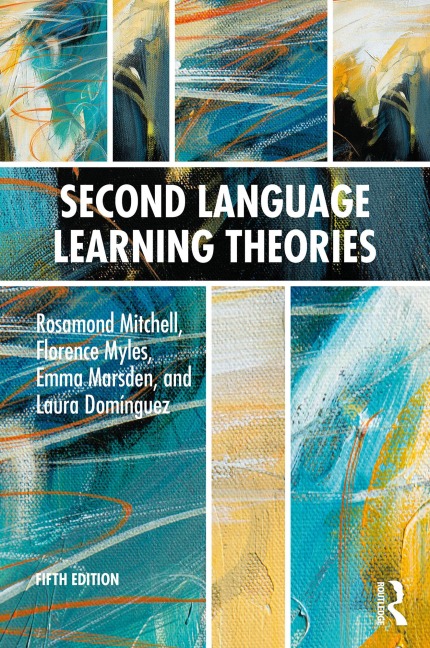
Written by a team of leading experts working in different second language acquisition (SLA) specialisms, this fifth edition is a clear and concise introduction to the main theories of SLA from multiple perspectives, comprehensively updated to reflect the latest developments in SLA research. The book covers all the main theoretical perspectives currently active in SLA and sets each chapter within a broader framework. Chapters examine the claims and scope of each theory and how each views language, the learner, and the acquisition process, supplemented by summaries of key studies and data examples from a variety of languages. Chapters end with an evaluative summary of the theories discussed. Key features to this fifth edition include updated accounts of cognitive approaches to second language (L2) learning, the implications of advances in generative linguistics, and the "social turn" in L2 research; reworked chapters on functional, sociocultural, and sociolinguistic perspectives; an entirely new chapter on individual differences; and updated examples using recent studies. Second Language Learning Theories continues to be an essential resource for graduate students in second language acquisition.
Rosamond Mitchell FAcSS is Emeritus Professor of Applied Linguistics at the University of Southampton, UK, and a past Chair of the British Association for Applied Linguistics. She is lead author of Language, Mobility and Study Abroad in the Contemporary European Context (2021, with Henry Tyne) and Anglophone Students Abroad (2017, with Nicole Tracy-Ventura and Kevin McManus). Florence Myles is Professor Emerita of Second Language Acquisition at the University of Essex, UK, a former president of EUROSLA, and founding Chair of the Research in Primary Languages network. She has published widely on morphosyntactic development in SLA, the role of formulaic language in the construction of an L2 grammar, and how children of different ages learn foreign languages in the classroom. Emma Marsden is Professor of Language Education at the University of Oxford, UK, and a past Journal Editor of Language Learning. She has published on second language learning, processing, teaching, and testing. Emma has (co-)directed open scholarship initiatives for materials and data (IRIS), accessible summaries (OASIS), lexical profiling (MultilingProfiler), and teaching and professional development resources (Language-Driven Pedagogy). Laura Domínguez is Professor of Linguistics at the University of Southampton, UK, and a member of the editorial board of Second Language Research. She co-authored Research Methods in Generative Second Language Acquisition (2024, with Roumyana Slabakova and Tania Leal).
List of Illustrations; Acknowledgements; Preface; 1 Second Language Learning: Key Concepts and Issues; 2: The Recent History of Second Language Learning Research; 3 Linguistics and Language Learning: The Universal Grammar Approach; 4 Cognitive Approaches to Second Language Learning (1): General Learning Mechanisms; 5 Cognitive Approaches to Second Language Learning (2): Memory Systems, Explicit Knowledge, and Skill Learning; 6 Interaction in Second Language Learning; 7 Meaning-Based Perspectives on Second Language Learning; 8 Sociocultural Perspectives on Second Language Learning; 9 Sociolinguistic Perspectives; 10 The Individual Language Learner; 11 Integrating Theoretical Perspectives on Second Language Learning; 12 Conclusion; Glossary; Subject Index; Name Index