Und dann auf "Zum Home-Bildschirm [+]".

Stöbern
genialokal zum Startbildschirm hinzufügen
Installieren Sie die genialokal App auf Ihrem Startbildschirm für einen schnellen Zugriff und eine komfortable Nutzung.
Installieren Sie die genialokal App auf Ihrem Startbildschirm für einen schnellen Zugriff und eine komfortable Nutzung.
Ihr gewünschter Artikel ist in 0 Buchhandlungen vorrätig - wählen Sie hier eine Buchhandlung in Ihrer Nähe aus:

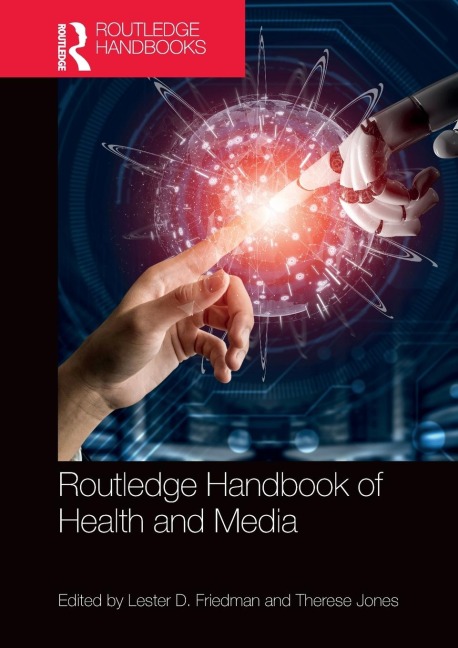
The Routledge Handbook of Health and Media provides an extensive review and exploration of the myriad ways that health and media function as a symbiotic partnership that profoundly influences contemporary societies.
Lester D. Friedman is Emeritus Professor of Media and Society from Hobart and William Smith Colleges. His publications include: Cultural Sutures (ed.), Health Humanities Reader (co-editor) and The Picture of Health (co-editor). He has also written books on Clint Eastwood, Steven Spielberg, American Jewish Cinema, genre theory, and Films of the 1970s. Currently, he is completing a book on Hollywood directors and composers. Therese (Tess) Jones is Associate Director of the Center for Bioethics and Humanities; Director of the Arts and Humanities in Healthcare Program at the University of Colorado Anschutz Medical Campus; and Professor in the Department of Medicine. The editor of the Journal of Medical Humanities; lead editor of the Health Humanities Reader; and co-editor of the Handbook on Health and Media, she has published and presented extensively on HIV/AIDS and the arts; literature, film and medicine; and medical education.
Introduction: The Stories of our Lives: Narrative, Media, and Health, Part I: Print Media, 1. 'Fish and Chips as an Excellent Food': Newspapers, Nutrition and Government Neglect in 1930s Britain, 2. Breaking News: Medical Research Reporting and its Consequences, 3. Climate Health is Human Health: Working Through Eco-Anxiety with the Written Word in Print and Digital Media, 4. Health Zines: Hand-Made and Heart-Felt, Part II: Photography, 5. Photography on the Brain, 6. Power and Pictures on the Threshold of Life: Brain Death and Visual Culture, 7. Military Bodies, Healthy Bodies, Damaged Bodies in the Photography of August Sander, 8. Entangled Subjectivities in Lisa Lindvey's Photographic Project Hold Together, Part III: Fiction Film, 9. Brains for Hire: Exploring the Role of Psychiatric Consultancy in The Aviator, 10. Recovering the Patient's Voice: The Diagnostic Process from Early Modern History to Oliver Sacks, 11. Beneath the Covers: The Illness of Sex as Depicted in Film, 12. -Stereotypes,' Focalization and Modality: Mainstream Cinematic Images of Disability, Part IV: Documentary Film, 13. From Corporate Discourse to Menstrual Equity?: A History of Menstruation Films Christie Milliken, 14. Crip Wisdom in the Time of Insulin Crisis: Performing #insulinforall in Short Documentary Film, 15. Aging Remixed: Intergenerational Storytelling in the Digital Realm, 16. Documenting the American Way of Dying: The Near Death Experience, Part V: Television, 17. Early Pharmaceutical TV Ads and Medicalized Consumers, 18. Medical Horror Story: Realism, Reality, and the Real on Television, 19. Unhealthy Horrors: The Biopolitical Zombie in Twenty-First Century Film and Television, 20. The Category is LIVE!': Transing Care and the Persistence of Queer Survival in F/X's Pose, Part VI: Comics, 21. Comics and the Health Humanities, 22. Mad World-Building: Comics and OCD, 23. 'I found balance': Complementary and Alternative Medicine in Selected Graphic Medical Narratives, 24. Drawing Health Activism: Illness Politics and Prices of Care in Graphic AIDS Narratives, Part VII: Apps, Devices, and Wearables, 25. On Mediating Women in Unsane Spaces, 26. Black Sites in the Matrix: Digital Psychiatric Power and Racialized Technologies, 27. Mobile Health and Its Problems: The Case of Hearing and Communication Apps, 28. Data Visualization and Digital Contact Tracing Technology: Emerging Forms of Health Media, Part VIII: Social Media, 29. Paratext and Medical Authority in the World of the Internet, 30. Chronic Constellations: Instagrammatic Aesthetics and Crip Time, 31. Art Spaces, Performances, Podcasts: Community-Building in a Virtual Age, Afterword: Audience Construction and Health Care Storytelling in the Digital Age