Und dann auf "Zum Home-Bildschirm [+]".

Stöbern
genialokal zum Startbildschirm hinzufügen
Installieren Sie die genialokal App auf Ihrem Startbildschirm für einen schnellen Zugriff und eine komfortable Nutzung.
Installieren Sie die genialokal App auf Ihrem Startbildschirm für einen schnellen Zugriff und eine komfortable Nutzung.
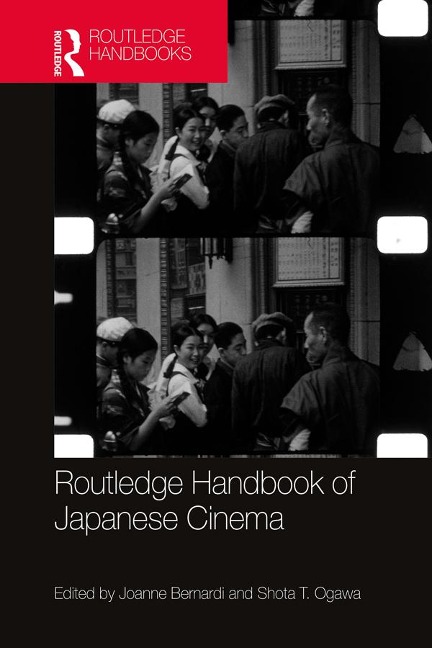
The Routledge Handbook of Japanese Cinema provides a timely and expansive overview of Japanese cinema today, through cutting-edge scholarship that reflects the hybridity of approaches defining the field. The volume's twenty-one chapters represent work by authors with diverse backgrounds and expertise, recasting traditional questions of authorship, genre, and industry in broad conceptual frameworks such as gender, media theory, archive studies, and neoliberalism. The volume is divided into four parts, each representing an emergent area of inquiry: - "Decentring Classical Cinema" - "Questions of Industry" - "Intermedia as an Approach" - "The Object Life of Film" This is the first anthology of Japanese cinema scholarship to span the temporal framework of 200 years, from the vibrant magic lantern culture of the nineteenth century, through to the formation of the film industry in the twentieth century, and culminating in cinema's migration to gaming, surveillance video, and other new media platforms of the twenty-first century. This handbook will prove a useful resource to students and scholars of Japanese studies, film studies, and cultural studies more broadly.
Joanne Bernardi is Professor of Japanese/Film and Media, University of Rochester. Her background includes East Asian Studies, film preservation, filmmaking, and photography. She directs the Re-Envisioning Japan DH Project; publications include Japanese and silent cinema, film historiography, screenwriting, material culture, tourism, popular culture, and digital humanities. Shota T. Ogawa is Assistant Professor of Cinema Studies at Nagoya University, Japan. With a background in Visual and Cultural Studies, his research interests include postcolonial hybridity in Japanese cinema, tourism and travel films in imperial Japan, and trans-cultural migration of passing narratives.
Introduction Part 1: Decentering Classical Cinema: Modernity, Translation, and Mobilization 1. Suspense and Border Crossing: Ozu Yasujiro's Crime Melodrama 2. Beyond Mt. Fuji and the Lenin Cap: Identity Crisis in Taniguchi Senkichi's Akasen kichi (The Red Light Military Base, 1953) 3. Home Movies of the Revolution: Proletarian Filmmaking and Counter-Mobilization in Interwar Japan 4. When Marnie Was There: Female Friendship Film and the Genealogy of Queer Girls Culture 5. Making Sense of Nakai Masakazu's Film Theory, "Kino Satz" 6. Geysers of Another Nature: The Optical Unconscious of the Japanese Science Film Part 2: Questions of Industry: Critical Studies of Regulatory Frameworks, Creative Labor, and Distributive Networks 7. Kaiju Films as Exportable Content: Reassessing the Function of the Japanese Film Export Promotion Association 8. "Fugitives" from the Studio System: Ikebe Ryo, Sada Keiji, and the Transition from Cinema to Television in the Early 1960s 9. Solo Animation in Japan: Empathy for the Drawn Body 10. Media Models of "Amateur" Film and Manga Part 3: Intermedia as an Approach: Tracing Genealogies across Disciplines and Media 11. Utsushie: Japanese Magic Lantern Performance as Pre-cinematic Projection Practice 12. "Inter-Mediating" Global Modernity: Benshi Film Narrators, Multisensory Performance, and Fan Culture 13. Between Silent and Sound: The Liminal Space of the Japanese "Sound Version" 14. Marionettes No Longer: Politics in the Early Puppet Animation of Kawamoto Kihachiro 15. Rhetorics of Autonomy and Mobility in Japanese "AAA" Games: The Metal Gear Solid and Resident Evil Series within a Global Media Context 16. Pointing Through the Screen: Archiving, Surveillance, and Atomization in the Wake of Japan's 2011 Triple Disasters Part 4: The Object Life of Film: Site-Specific Approaches to Japanese Cinema Studies 17. A Historical Survey of Film Archiving in Japan 18. Japanese Film History and the Challenges of IMAGICA WEST Corp. 19. A Case Study of Japanese Film Exhibition in North America: The Japan Society, New York 20. Regional Film Archive in Transit: Yasui Yoshio and Kobe Planet Film Archive 21. New Paths toward Preserving Japanese Cinema: The Toy Film Museum Backstory
Dieses eBook wird im PDF-Format geliefert und ist mit einem Adobe Kopierschutz (DRM) versehen. Sie können dieses eBook mit allen Geräten lesen, die das PDF-Format und den Adobe Kopierschutz (DRM) unterstützen.
Zum Beispiel mit den folgenden Geräten:
• tolino Reader
Laden Sie das eBook direkt über den Reader-Shop auf dem tolino herunter oder übertragen Sie das eBook auf Ihren tolino mit einer kostenlosen Software wie beispielsweise Adobe Digital Editions.
• Sony Reader & andere eBook Reader
Laden Sie das eBook direkt über den Reader-Shop herunter oder übertragen Sie das eBook mit der kostenlosen Software Sony READER FOR PC/Mac oder Adobe Digital Editions auf ein Standard-Lesegeräte mit epub- und Adobe DRM-Unterstützung.
• Tablets & Smartphones
Möchten Sie dieses eBook auf Ihrem Smartphone oder Tablet lesen, finden Sie hier unsere kostenlose Lese-App für iPhone/iPad und Android Smartphone/Tablets.
• PC & Mac
Lesen Sie das eBook direkt nach dem Herunterladen mit einer kostenlosen Lesesoftware, beispielsweise Adobe Digital Editions, Sony READER FOR PC/Mac oder direkt über Ihre eBook-Bibliothek in Ihrem Konto unter „Meine eBooks“ - „online lesen“.
Schalten Sie das eBook mit Ihrer persönlichen Adobe ID auf bis zu sechs Geräten gleichzeitig frei.
Bitte beachten Sie, dass die Kindle-Geräte das Format nicht unterstützen und dieses eBook somit nicht auf Kindle-Geräten lesbar ist.