Und dann auf "Zum Home-Bildschirm [+]".

Stöbern
genialokal zum Startbildschirm hinzufügen
Installieren Sie die genialokal App auf Ihrem Startbildschirm für einen schnellen Zugriff und eine komfortable Nutzung.
Installieren Sie die genialokal App auf Ihrem Startbildschirm für einen schnellen Zugriff und eine komfortable Nutzung.
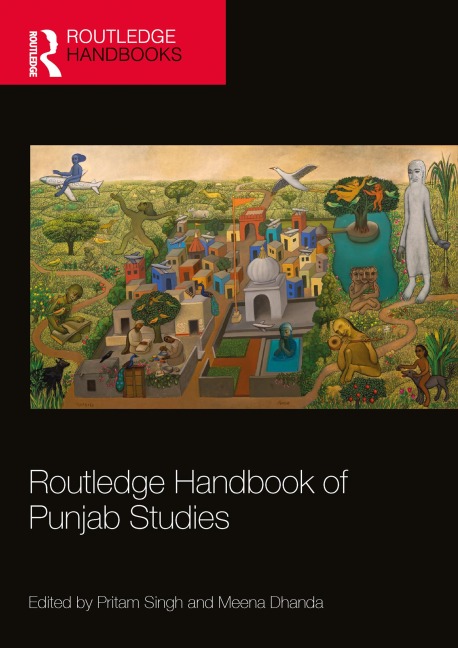
The Routledge Handbook of Punjab Studies offers a comprehensive introduction to the field of Punjab studies. Chapters cover the history, politics, economics, culture, religion and society as well as the Punjab diaspora, and the Handbook is structured into six parts: Punjab, Partition and Beyond; Economic Development: Labour, Resources and Challenges; Political Contestations and Movements; Cultural Repositioning: Language, Literature and the Arts; Religion, Caste and Gender; and Diasporic Dilemmas. Topics explored include migration, memory, anti-colonialism, industrialisation, federalism, river water disputes, agriculture, ecology, communism, conflict, militancy, counter-insurgency, poetry, cinema, plays, music, theology, sexuality, inequality, tribal marginalisation, multiculturalism, diasporic homeland connections and gender-based violence. Providing an interdisciplinary analysis by a set of international contributors, this Handbook will be an indispensable resource for researchers and students in the field of South Asian studies in general and Sikh and Punjab studies in particular.
Pritam Singh is Professor Emeritus of Economics at Oxford Brookes Business School, UK. Professor Singh is on the editorial board of several leading journals in South Asian/Punjab studies and eco-socialist studies. He has held visiting positions at the University of Oxford, UK; the University of Uberlandia, Brazil; Lomonosov Moscow State University, Russia; and Jawaharlal Nehru University, India. In 2015, the World Association of Political Economy honoured him with the Distinguished Achievement Award in Political Economy, and in 2021, the University of California (Riverside) honoured him with a Lifetime Achievement Award for his distinguished contribution to Sikh and Punjab studies. Meena Dhanda is Professor of Philosophy and Cultural Politics at the University of Wolverhampton, UK, and is also Visiting Professor in the Department of Media and Communications at the London School of Economics and Political Science, UK. Her transdisciplinary research lies at the intersections of caste, class, gender and race.
List of Illustrations x Preface and Acknowledgements xii Notes on Contributors xvi 1 Introduction 1 PRITAM SINGH AND MEENA DHANDA PART I Punjab, Partition and Beyond 27 2 Towards an Ecologically Sustainable Present and Future for Punjab 29 PRITAM SINGH 3 From a Border Region to the Power Engine: Punjab as the Centrefold of the Pakistani State 41 IFTIKHAR MALIK 4 Partition and the Search for a Sikh State: From Azad Punjab to Punjabi Suba 50 TAN TAI YONG 5 Microhistory and Memory: A Pioneer's Life Story of Migration and Home 60 KARAMJIT SINGH 6 Memorialising Sikh and Punjab History in the Public Realm 68 RANVEER (RAV) SINGH 7 Hindutva in Punjab: Appropriation and Resistance 78 CHRISTINE MOLINER 8 The Anti-colonialism of Bhagat Singh 87 SATVINDER S. JUSS PART II Economic Development: Labour, Resources and Challenges 97 9 Prospects for Punjab's Economic Development 99 LAKHWINDER SINGH AND NIRVIKAR SINGH 10 Rural Commercial Capital in Punjab: Emergence, Disruption and Reconstitution 109 MUHAMMAD ALI JAN 11 Structure of Industrialisation in Punjab 118 VARINDER JAIN 12 Agro-Industrialisation in Indian Punjab: Rationale, Factors and Policy Options 127 SUKHPAL SINGH 13 Industrial Development and Labour Structure: Evidence from the Industrial Sector of Indian Punjab 137 JATINDER SINGH 14 Water Resources in Punjab: Status, Use and Challenges 153 RANJIT SINGH GHUMAN AND DEEPRATAN SINGH KHARA 15 Sustainable Agriculture in Punjab: Questions from an Ecological Justice Perspective 164 NADIA SINGH 16 Evaluation of the Environmental Impacts of the Changed Cropping Pattern Arising from the Green Revolution Policy in Punjab: 1966-67 to 2020-21 174 RAJ MANN PART III Political Contestations and Movements 193 17 Communist Movement in Punjab 195 BHAGWAN JOSH 18 Dynamics of Coexistence of Competing Identities in Punjab Politics 204 PRAMOD KUMAR 19 Trolley Times in Farmers' Protest and Beyond 218 JASDEEP SINGH 20 Subaltern Religious Movements in the Punjab 232 MARK JUERGENSMEYER AND SANTOSH K. SINGH 21 Sikh Militancy 241 RADHIKA CHOPRA 22 Living the Past in the Digital Present: The Anti-Sikh Violence of 1984 and Mediated Memory 249 SHRUTI DEVGAN 23 From Suppression to Service: Ethnicity and Counter-insurgency in the Punjab Conflict 259 DIPIN KAUR PART IV Cultural Repositioning: Language, Literature and the Arts 269 24 Punjabi as an Anti-establishment Language in Pakistan 271 TARIQ RAHMAN 25 Beyond the Nation: Punjabi Language and Literature in India, Pakistan, and Beyond 280 ANNE MURPHY 26 Twentieth-Century Punjabi Literature: Key Signposts 289 AKSHAYA KUMAR 27 Print, Publication, and Punjabi Literary Periodicals 298 AMITOJ KAUR CHANDI 28 Fascinating Contours of Literary Creativity of Punjabi Dalits 309 RAJKUMAR HANS 29 Anticolonialism and Protest Poetry in Punjab 317 SARA KAZMI 30 Patriarchal Masculinity, Homosocial Intimacy, and Male Failure in Punjabi Cinema 327 HARJANT S. GILL 31 The Defiant Voices from the Margins: The Punjabi Plays of Lakht Pasha 340 QAISAR ABBAS 32 Listening to Nature and the Cosmos Through Gurbani 350 GURMINDER K. BHOGAL PART V Religion, Caste and Gender 359 33 Sikh Theology Through a Feminist Lens 361 NIKKY-GUNINDER KAUR SINGH 34 Gender, Sect, and Society in Nineteenth-Century Punjab 370 ANSHU MALHOTRA 35 Ideal Wives, Birth Control, and Sexuality in Pre-1947 Punjabi Literature 381 NIKITA ARORA 36 Social Inequalities in the Indian Punjab: Structures and Fluidities 390 SURINDER S. JODHKA 37 Christianity in Punjab and Punjabi Christians 400 ELEANOR NESBITT 38 Tribal Communities in Punjab: Past and Present 411 BIRINDER PAL SINGH PART VI Diasporic Dilemmas 421 39 The Quandary of Caste for Sikhs in the UK 423 MEENA DHANDA 40 Navigating Belonging: Sikhs' Understandings of the Multicultural Landscape in Britain 435 JASKIRAN KAUR BHOGAL 41 Decolonial Queer Politics of Punjabi Diasporas 444 SANDEEP BAKSHI 42 Punjabi Diaspora-Homeland Connections: Transnationalism, Transformation, and Significance 454 SHINDER S. THANDI 43 Precarity and Politization of Punjabi Diasporas 465 MICHAEL NIJHAWAN 44 Unpacking the White Gaze in Recent Diasporic Punjabi Women's Memoirs 474 POOJA MARWAHA AND KAVERI QURESHI 45 Gender-Based Violence in Diaspora Sikh Punjabi Communities 485 JAGBIR JHUTTI-JOHAL Glossary 496 Index 501
Dieses eBook wird im PDF-Format geliefert und ist mit einem Adobe Kopierschutz (DRM) versehen. Sie können dieses eBook mit allen Geräten lesen, die das PDF-Format und den Adobe Kopierschutz (DRM) unterstützen.
Zum Beispiel mit den folgenden Geräten:
• tolino Reader
Laden Sie das eBook direkt über den Reader-Shop auf dem tolino herunter oder übertragen Sie das eBook auf Ihren tolino mit einer kostenlosen Software wie beispielsweise Adobe Digital Editions.
• Sony Reader & andere eBook Reader
Laden Sie das eBook direkt über den Reader-Shop herunter oder übertragen Sie das eBook mit der kostenlosen Software Sony READER FOR PC/Mac oder Adobe Digital Editions auf ein Standard-Lesegeräte mit epub- und Adobe DRM-Unterstützung.
• Tablets & Smartphones
Möchten Sie dieses eBook auf Ihrem Smartphone oder Tablet lesen, finden Sie hier unsere kostenlose Lese-App für iPhone/iPad und Android Smartphone/Tablets.
• PC & Mac
Lesen Sie das eBook direkt nach dem Herunterladen mit einer kostenlosen Lesesoftware, beispielsweise Adobe Digital Editions, Sony READER FOR PC/Mac oder direkt über Ihre eBook-Bibliothek in Ihrem Konto unter „Meine eBooks“ - „online lesen“.
Schalten Sie das eBook mit Ihrer persönlichen Adobe ID auf bis zu sechs Geräten gleichzeitig frei.
Bitte beachten Sie, dass die Kindle-Geräte das Format nicht unterstützen und dieses eBook somit nicht auf Kindle-Geräten lesbar ist.