Und dann auf "Zum Home-Bildschirm [+]".

Stöbern
genialokal zum Startbildschirm hinzufügen
Installieren Sie die genialokal App auf Ihrem Startbildschirm für einen schnellen Zugriff und eine komfortable Nutzung.
Installieren Sie die genialokal App auf Ihrem Startbildschirm für einen schnellen Zugriff und eine komfortable Nutzung.
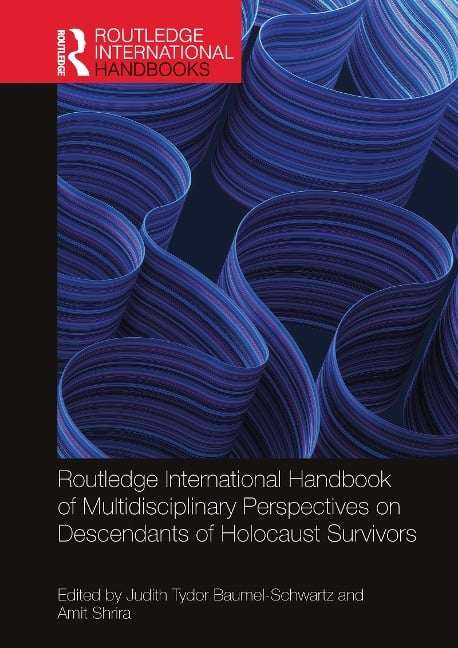
The Routledge International Handbook of Multidisciplinary Perspectives on Descendants of Holocaust Survivors offers a comprehensive collection of cutting-edge studies from a wide range of fields dealing with new research about descendants of Holocaust survivors. Examining the aftermath of the Holocaust on the Second Generation and Third Generation, children and grandchildren of Holocaust survivors, it is the first volume to bring together research perspectives from history, psychology, sociology, communications, literature, film, theater, art, music, biology, and medicine. With contributions from international experts, key topics covered include survivor characteristics and experiences; the phenomenological experience of transmitted trauma legacies; the creation of Second Generation groups; the epigenetics of inherited trauma; the development of Second Generation writing; representation of Holocaust survivors in film; music and the transmission of memory; art, music, and the Holocaust; ancestral trauma and its effect on the ageing process of subsequent generations; 2G and 3G health issues and outcomes. Divided into two sections, the first deals with the humanities: history and testimony, literature, film and theater, art, and music. The second section, focusing on the social sciences and health-related sciences, contains chapters dealing with studies in the fields of psychology, sociology, anthropology, communication, gerontology, nursing, and medicine. This insightful handbook is a contemporary anthology for advanced students and scholars in the humanities, along with those in behavioral, social, and health-related sciences concerned with research about second- and third-generation Holocaust survivors.
Judith Tydor Baumel-Schwartz is Director of the Arnold and Leona Finkler Institute of Holocaust Research, Abraham and Edita Spiegel Family Professor in Holocaust Research, Rabbi Pynchas Brener Professor in Research on the Holocaust of European Jewry, and Professor of Modern Jewish History in the Israel and Golda Koschitzky Department of Jewish History and Contemporary Jewry at Bar-Ilan University, Ramat Gan, Israel. Amit Shrira is the chair of the Department of Social & Health Sciences at Bar-Ilan University, Israel. He supervises the social sciences track at the interdisciplinary graduate program in gerontology at Bar-Ilan University, Israel. His research program focuses on late-life effects of massive trauma and its intergenerational transmission.
Introduction - Judith Tydor Baumel-Schwartz and Amit Shrira Part I - Humanities - Creating Second Generation Groups in the USA and Israel: A Four-decade Perspective - Judith Tydor Baumel-Schwartz - The Metamorphosis of Second-Generation Writing: Just When I Thought I Was Out - A Case Study - Melvin Jules Bukiet - Literary Works on the Second and Third Generation of Holocaust Survivors in Hungary - Presence or Absence? - Katalin Pécsi-Pollner - Past Life: A Cantata for Holocaust Voices Past and Present - Phyllis Lassner - Time Stands Still: Acting Out the Trauma in Second Generation Israeli Documentaries - Liat Steir Livny - The Representation of Second Generation Holocaust Survivors in Certificate of Life - On and Off the Stage - Roy Horovitz - Arbeit Macht Frei: Reality and Meaning in Second Generation Israeli Artists' Artworks - Batya Brutin - The Role of Music in Shaping Holocaust Memory: An Intergenerational Process of Preservation and Transmission - Rachel Kollender - Holocaust Remembrance: Music as a Therapeutic Tool That Mediates Between Holocaust Survivors and Their Offspring - Atarah Fisher Part II - The Social Sciences and Health-Related Sciences - Effects of the Holocaust on the Second Generation: A Preliminary Analysis of an Ongoing Survey -Samuel Juni - Intergenerational Transmission in the Experiences of Aging Children of Holocaust Survivors During the COVID-19 Pandemic in the USA - Irit Felsen - Past, Present, and Future Perspectives of Holocaust Trauma Transmission - Natan P.F. Kellermann - Ethnographic Accounts of Israeli Holocaust Descendant Resilient-Vulnerability: Moral-Political Worldviews and the Emergence of Empowering Distress - Carol A. Kidron, Dan Kotliar, and Laurence J. Kirmayer - A Digital Safe Haven: Six Functions of Social Media for Second Generation Holocaust Survivors - Motti Neiger and Miriam Neiger-Fleischmann - Late Life Manifestations of Ancestral Trauma: The Case of Older Adult Offspring of Holocaust Survivors - Amit Shrira - Specific Aspects in the Life and Care of the Offspring of Shoah Survivors in Germany - Andrea Zielke-Nadkarni - Long-term Physical Health Outcomes in Child Holocaust Survivors and in Offspring of Holocaust Survivors - Lital Keinan Boker
Dieses eBook wird im PDF-Format geliefert und ist mit einem Adobe Kopierschutz (DRM) versehen. Sie können dieses eBook mit allen Geräten lesen, die das PDF-Format und den Adobe Kopierschutz (DRM) unterstützen.
Zum Beispiel mit den folgenden Geräten:
• tolino Reader
Laden Sie das eBook direkt über den Reader-Shop auf dem tolino herunter oder übertragen Sie das eBook auf Ihren tolino mit einer kostenlosen Software wie beispielsweise Adobe Digital Editions.
• Sony Reader & andere eBook Reader
Laden Sie das eBook direkt über den Reader-Shop herunter oder übertragen Sie das eBook mit der kostenlosen Software Sony READER FOR PC/Mac oder Adobe Digital Editions auf ein Standard-Lesegeräte mit epub- und Adobe DRM-Unterstützung.
• Tablets & Smartphones
Möchten Sie dieses eBook auf Ihrem Smartphone oder Tablet lesen, finden Sie hier unsere kostenlose Lese-App für iPhone/iPad und Android Smartphone/Tablets.
• PC & Mac
Lesen Sie das eBook direkt nach dem Herunterladen mit einer kostenlosen Lesesoftware, beispielsweise Adobe Digital Editions, Sony READER FOR PC/Mac oder direkt über Ihre eBook-Bibliothek in Ihrem Konto unter „Meine eBooks“ - „online lesen“.
Schalten Sie das eBook mit Ihrer persönlichen Adobe ID auf bis zu sechs Geräten gleichzeitig frei.
Bitte beachten Sie, dass die Kindle-Geräte das Format nicht unterstützen und dieses eBook somit nicht auf Kindle-Geräten lesbar ist.