Stöbern
genialokal zum Startbildschirm hinzufügen
Installieren Sie die genialokal App auf Ihrem Startbildschirm für einen schnellen Zugriff und eine komfortable Nutzung.
Installieren Sie die genialokal App auf Ihrem Startbildschirm für einen schnellen Zugriff und eine komfortable Nutzung.
Tippen Sie einfach auf Teilen:
 Und dann auf "Zum Home-Bildschirm [+]".
Ihr gewünschter Artikel ist in 0 Buchhandlungen vorrätig - wählen Sie hier eine Buchhandlung in Ihrer Nähe aus:

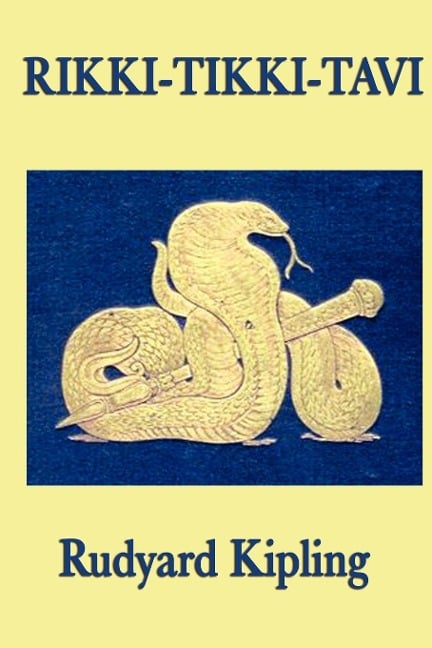
A short tale of courage and vigilance, set within the domestic and natural spaces of British India. First published in 1894 as part of The Jungle Book, Rikki-Tikki-Tavi recounts the actions of a young mongoose who comes to live with an English family and undertakes the defence of their household against a pair of cobras. Kipling's narrative is direct and controlled, combining elements of fable with precise observation of animal behaviour. The story proceeds through a sequence of encounters that test the mongoose's alertness and resolve, presenting a clear structure of threat and response within a confined setting. Its economy of form and clarity of movement have contributed to its continued presence in both literary collections and educational reading. Situated within Kipling's broader engagement with the natural world and imperial setting, the tale reflects a late nineteenth-century perspective while maintaining its distinct narrative focus on action, character, and environment.
Joseph Rudyard Kipling (30 December 1865 - 18 January 1936)[1] was an English journalist, short-story writer, poet, and novelist. He was born in India, which inspired much of his work. Kipling's works of fiction include The Jungle Book (1894), Kim (1901), and many short stories, including "The Man Who Would Be King" (1888).[2] His poems include "Mandalay" (1890), "Gunga Din" (1890), "The Gods of the Copybook Headings" (1919), "The White Man's Burden" (1899), and "If-" (1910). He is regarded as a major innovator in the art of the short story;[3] his children's books are classics of children's literature, and one critic described his work as exhibiting "a versatile and luminous narrative gift". Kipling was one of the most popular writers in the United Kingdom, in both prose and verse, in the late 19th and early 20th centuries.[3]Henry James said: "Kipling strikes me personally as the most complete man of genius, as distinct from fine intelligence, that I have ever known."[3] In 1907, at the age of 41, he was awarded the Nobel Prize in Literature, making him the first English-language writer to receive the prize and its youngest recipient to date.[6] He was also sounded out for the British Poet Laureateship and on several occasions for a knighthood, both of which he declined.[7] Kipling's subsequent reputation has changed according to the political and social climate of the age[8][9] and the resulting contrasting views about him continued for much of the 20th century.[10][11] George Orwell saw Kipling as "a jingo imperialist", who was "morally insensitive and aesthetically disgusting".[12] Literary critic Douglas Kerr wrote: "[Kipling] is still an author who can inspire passionate disagreement and his place in literary and cultural history is far from settled. But as the age of the European empires recedes, he is recognised as an incomparable, if controversial, interpreter of how empire was experienced. That, and an increasing recognition of his extraordinary narrative gifts, make him a force to be reckoned with. In 2010, the International Astronomical Union approved that a crater on the planet Mercury would be named after Kipling-one of ten newly discovered impact craters observed by the MESSENGER spacecraft in 2008-9.[117] In 2012, an extinct species of crocodile, Goniopholis kiplingi, was named in his honour, "in recognition for his enthusiasm for natural sciences"