Und dann auf "Zum Home-Bildschirm [+]".

Stöbern
genialokal zum Startbildschirm hinzufügen
Installieren Sie die genialokal App auf Ihrem Startbildschirm für einen schnellen Zugriff und eine komfortable Nutzung.
Installieren Sie die genialokal App auf Ihrem Startbildschirm für einen schnellen Zugriff und eine komfortable Nutzung.
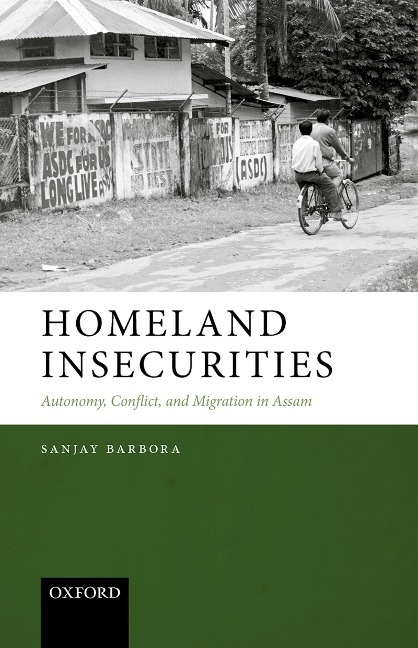
'Homeland Insecurities' engages with the impact of counterinsurgency, migration, and conflicts arising out of demands for autonomy in Assam, Northeast India. It asks three sets of related questions: (a) what are the origins of demands for ethnic homelands? (b) why does migration continue to be such an overarching oeuvre in political discourse in Assam and how does one engage with new forms of mobility? (c) how does a society recover from counterinsurgency and what are the new forms of militarisation that are emerging in the present? Working on the main argument that demands for autonomy and social justice have been central themes that have been historically articulated in Assam, it shows the tensions that arise in explanations about causes of conflict in the state. These tensions, I argue, are best understood through a critical engagement with everyday politics of organisations and individuals working on the ground. Although there is a general tendency to read conflict in Assam through the lenses of ethnicity and development, nevertheless there is evidence to show that affect offers an additional analytical tool because of its ability to offer a layered, sometimes paradoxical account of events and situations that cause conflicts in the region.
Sanjay Barbora is a sociologist who has worked extensively with media and human rights advocacy. His research interests intersect along issues pertaining to agrarian change, media, science and technology impact on social sciences, migration and human-animal interface in conservation. In the past decade, he has contributed to debates on borderlands, citizenship, identity, and human rights in South Asia.
He is affiliated to the Centre for Peace and Conflict Studies, Tata Institute of Social Sciences, India, and is on the editorial board of Refugee Watch.
- One - 1: Barbora: From Autonomy to Accommodation - Two - 2: Barbora: "Autonomy or Death" - Three - 3: Barbora: Migration Matters - Four - 4: Barbora: Elephants (and Rhinos) in the Room - Five - 5: Barbora: Commune and (Relief) camp - Six - 6: Barbora: Conclusion - Seven - 7: Endnotes - Eight - 8: Bibliography
Dieses eBook wird im PDF-Format geliefert und ist mit einem Adobe Kopierschutz (DRM) versehen. Sie können dieses eBook mit allen Geräten lesen, die das PDF-Format und den Adobe Kopierschutz (DRM) unterstützen.
Zum Beispiel mit den folgenden Geräten:
• tolino Reader
Laden Sie das eBook direkt über den Reader-Shop auf dem tolino herunter oder übertragen Sie das eBook auf Ihren tolino mit einer kostenlosen Software wie beispielsweise Adobe Digital Editions.
• Sony Reader & andere eBook Reader
Laden Sie das eBook direkt über den Reader-Shop herunter oder übertragen Sie das eBook mit der kostenlosen Software Sony READER FOR PC/Mac oder Adobe Digital Editions auf ein Standard-Lesegeräte mit epub- und Adobe DRM-Unterstützung.
• Tablets & Smartphones
Möchten Sie dieses eBook auf Ihrem Smartphone oder Tablet lesen, finden Sie hier unsere kostenlose Lese-App für iPhone/iPad und Android Smartphone/Tablets.
• PC & Mac
Lesen Sie das eBook direkt nach dem Herunterladen mit einer kostenlosen Lesesoftware, beispielsweise Adobe Digital Editions, Sony READER FOR PC/Mac oder direkt über Ihre eBook-Bibliothek in Ihrem Konto unter „Meine eBooks“ - „online lesen“.
Schalten Sie das eBook mit Ihrer persönlichen Adobe ID auf bis zu sechs Geräten gleichzeitig frei.
Bitte beachten Sie, dass die Kindle-Geräte das Format nicht unterstützen und dieses eBook somit nicht auf Kindle-Geräten lesbar ist.