Und dann auf "Zum Home-Bildschirm [+]".

Stöbern
genialokal zum Startbildschirm hinzufügen
Installieren Sie die genialokal App auf Ihrem Startbildschirm für einen schnellen Zugriff und eine komfortable Nutzung.
Installieren Sie die genialokal App auf Ihrem Startbildschirm für einen schnellen Zugriff und eine komfortable Nutzung.
Ihr gewünschter Artikel ist in 0 Buchhandlungen vorrätig - wählen Sie hier eine Buchhandlung in Ihrer Nähe aus:


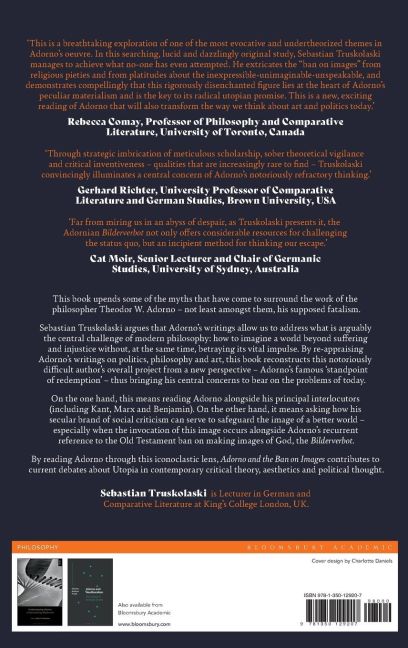
This book upends some of the myths that have come to surround the work of the philosopher Theodor W. Adorno - not least amongst them, his supposed fatalism. Sebastian Truskolaski argues that Adorno's writings allow us to address what is arguably the central challenge of modern philosophy: how to picture a world beyond suffering and injustice without, at the same time, betraying its vital impulse. By re-appraising Adorno's writings on politics, philosophy, and art, this book reconstructs this notoriously difficult author's overall project from a radically new perspective (Adorno's famous 'standpoint of redemption'), and brings his central concerns to bear on the problems of today. On the one hand, this means reading Adorno alongside his principal interlocutors (including Kant, Marx and Benjamin). On the other hand, it means asking how his secular brand of social criticism can serve to safeguard the image of a better world - above all, when the invocation of this image occurs alongside Adorno's recurrent reference to the Old Testament ban on making images of God. By reading Adorno in this iconoclastic way, Adorno and the Ban on Images contributes to current debates about Utopia that have come to define political visions across the political spectrum.
Sebastian Truskolaski is Lecturer in German and Comparative Literature at King's College London, UK. His research focuses on the relationship between modern and contemporary art, literature and philosophy.
Acknowledgements Prelude: Adorno and the Ban on Images Chapter One: Imageless Materialism Part I: Materialism Part II: Imagelessness Chapter Two: Inverse Theology Part I: Theology Part II: Inversion Chapter Three: Aesthetic Negativity Part I: Aesthetics Part II: Natural Beauty Reprise: 'Zum Ende' Notes Bibliography Index