Und dann auf "Zum Home-Bildschirm [+]".

Stöbern
genialokal zum Startbildschirm hinzufügen
Installieren Sie die genialokal App auf Ihrem Startbildschirm für einen schnellen Zugriff und eine komfortable Nutzung.
Installieren Sie die genialokal App auf Ihrem Startbildschirm für einen schnellen Zugriff und eine komfortable Nutzung.
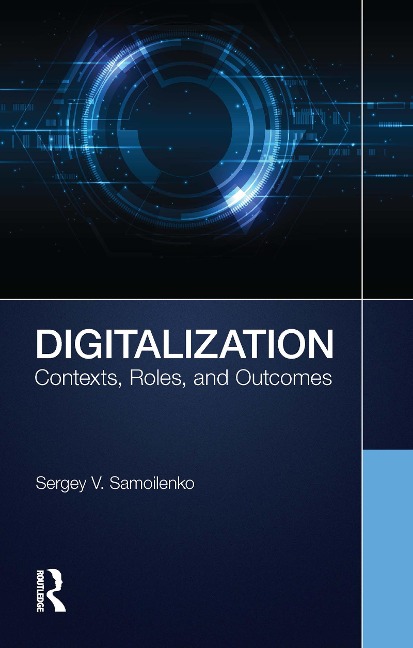
Conceptually, as well as practically, digitalization is similar to the implementation of a modern computation model - the model may be a centralized setup using a mainframe or it may be extended to an N-tier architecture. Regardless of the specifics of the implementation, however, the conceptual model of data processing remains the same. Digitalization is nothing but a system relying on digital technologies to create, conduct and, potentially, expand a business activity of some sort. Digitalization can be used to create an e-commerce model for a small business or to create a global supply and distribution chain geared toward almost any kind of a business. It could also be used for non-profit purposes, such as on-line education and telemedicine or e-government. Digitalization: Contexts, Roles, and Outcomes is a contemplation and analysis of the socio-technical system that is known as digitalization. It considers the context of digitalization as well as the ways by which digitalization offers value to the context within which it operates. This book aims to offer readers an entry point to a path of inquiry into the different aspects of digitalization. The goal is to identify main directions for further inquiry as well as to outline the most obvious obstacles along the way. The book aims to guide readers on their own unique journeys using the basic ideas, principles, and concepts synthesized, developed, and presented in the book. It is beneficial to both practitioners and researchers. The book covers: - The functionality of digitalization - The significance of digitalization - Identifying the context of digitalization - Designing a control system - A cognitive model for the theory of digitalization - Designing a theory of digitalization The book helps readers to consider the subject of digitalization in a rigorous and rational way so their own perspectives can emerge stronger and be substantiated and reinforced by building an argument vis-à-vis perspectives and points examined in this book.
Sergey Samoilenko is a Professor in the Department of CIS/CS at Averett University, Danville, Virginia. He holds his PhD and MS in Information Systems from Virginia Commonwealth University. Sergey's research is focused on the areas of Information Technologies for development, decision support systems, and design of quantitative multi-method methodologies. He is an author of multiple books, books' chapters, and he has published in a variety of journals, as well as in numerous conference proceedings. Sergey can be reached at samoilenko@averett.edu.
About the Author. Overview. Introduction: Trouble with Words. Chapter 1 Conceptualizing and Defining Digitalization. Chapter 2 Conceptualizing Digitalization - What is a Good Lens to Use? Chapter 3 Assessing the Present and Planning the Future. Chapter 4 Assumptions Underlying Structure of Digitalization. Chapter 5 Essential Structural Components of Digitalization. Chapter 6 Functionality of Digitalization. Chapter 7 Improving the Output of Digitalization via Process Optimization. Chapter 8 Impact of Digitalization on Its Internal Environment. Chapter 9 Impact of Digitalization on Its External Environment. Chapter 10 Significance of Digitalization - Why Is It Important? Chapter 11 Mechanism of the Impact - What Is the Theory? Chapter 12 Identifying the Context of Digitalization. Chapter 13 Digitalization: Platform Acquisition. Chapter 14 Digitalization: Outcomes of Using a Platform. Chapter 15 Identifying the Scope of the Environment. Chapter 16 Identifying the Outcome of Digitalization. Chapter 17 Digitalization and the Pressures of the Environment. Chapter 18 Digitalization and Non-Competitive Context. Chapter 19 Digitalization and Competitive Context. Chapter 20 Digitalization and Adversarial Social Groups. Chapter 21 Managing a Conflict Environment of Digitalization. Chapter 22 Designing a Control System. Chapter 23 Cognitive Model for Theory of Digitalization. Chapter 24 Designing a Theory of Digitalization. Index.
Dieses eBook wird im PDF-Format geliefert und ist mit einem Adobe Kopierschutz (DRM) versehen. Sie können dieses eBook mit allen Geräten lesen, die das PDF-Format und den Adobe Kopierschutz (DRM) unterstützen.
Zum Beispiel mit den folgenden Geräten:
• tolino Reader
Laden Sie das eBook direkt über den Reader-Shop auf dem tolino herunter oder übertragen Sie das eBook auf Ihren tolino mit einer kostenlosen Software wie beispielsweise Adobe Digital Editions.
• Sony Reader & andere eBook Reader
Laden Sie das eBook direkt über den Reader-Shop herunter oder übertragen Sie das eBook mit der kostenlosen Software Sony READER FOR PC/Mac oder Adobe Digital Editions auf ein Standard-Lesegeräte mit epub- und Adobe DRM-Unterstützung.
• Tablets & Smartphones
Möchten Sie dieses eBook auf Ihrem Smartphone oder Tablet lesen, finden Sie hier unsere kostenlose Lese-App für iPhone/iPad und Android Smartphone/Tablets.
• PC & Mac
Lesen Sie das eBook direkt nach dem Herunterladen mit einer kostenlosen Lesesoftware, beispielsweise Adobe Digital Editions, Sony READER FOR PC/Mac oder direkt über Ihre eBook-Bibliothek in Ihrem Konto unter „Meine eBooks“ - „online lesen“.
Schalten Sie das eBook mit Ihrer persönlichen Adobe ID auf bis zu sechs Geräten gleichzeitig frei.
Bitte beachten Sie, dass die Kindle-Geräte das Format nicht unterstützen und dieses eBook somit nicht auf Kindle-Geräten lesbar ist.