Und dann auf "Zum Home-Bildschirm [+]".

Stöbern
genialokal zum Startbildschirm hinzufügen
Installieren Sie die genialokal App auf Ihrem Startbildschirm für einen schnellen Zugriff und eine komfortable Nutzung.
Installieren Sie die genialokal App auf Ihrem Startbildschirm für einen schnellen Zugriff und eine komfortable Nutzung.
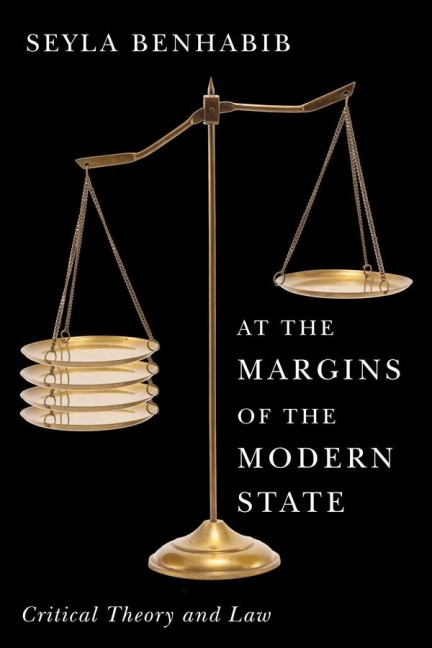
The international order of the post-WW II period is in disarray. The sounds of war can be heard all around us, from Ukraine to Gaza, from Darfur to the Congo, and there is growing skepticism towards human rights and democracy, the rule of law and peace among peoples.
Facile expressions such as "Eurocentrism" and "demise of the West and the rise of the rest" miss the real challenge in this situation: how to extend moral, legal and political universalism to address the experiences of the multitude of humanity for whom western modernity has brought not only equality but also subordination, not only emancipation but also domination. Benhabib argues that rethinking this universalist project and participating in world-building together can be achieved by reconstructing and retrieving the best insights of critical social theory in the Frankfurt tradition and the liberal Kantianism of Rawls and Dworkin. In that spirit, this volume addresses state and popular sovereignty, Third World approaches to International Law, the 1951 Refugee Convention, and climate change legislation, while focusing on the changing fortunes of the European Union and cosmopolitanism. Benhabib engages with postcolonial thinkers and argues that, although validity claims and relations of domination and inequality are often intermixed, it is possible to reconstruct the insights of international law to serve a more inclusive universalism and world-building.
This vibrant defense of human rights and universal norms in an age of political skepticism and extremism will appeal to a wide readership and will be of particular interest to students and scholars in political theory, critical theory and law.
Seyla Benhabib is Eugene Meyer Professor of Political Science and Philosophy, Emerita at Yale University and Senior Research Scholar at Columbia Law School.
Introduction
Part One: The European Modern State from Hegel to Habermas
1. "The Specter of Popular Sovereignty in Habermas's Between Facts and Norms. After Three Decades"
2. "Hegel's Concept of the Person and International Human Rights"
3. "Restructuring Democracy and the Idea of Europe" with Stefan Eich
Part Two: Democracy and Normativity Beyond Borders
4. "Ronald Dworkin and The Normative Orders of International Law"
5. "Beyond the Hermeneutics of Suspicion. Reconstructing Cosmopolitan
Law"
6. "The End of the 1951 Refugee Convention? Dilemmas of Sovereignty, Territoriality, and Human Rights"
Part Three: Sovereignty and Cosmopolitanism and After Europe
7. "Sovereignty and Constituent Power"
8. "Politics in a Planetary Age. The Globe as World, Earth and Planet"
9. "Habermas's New Phenomenology of Spirit: Two Centuries after Hegel"
10. Conclusion. In Defense of Rational Indignation
Dieses eBook wird im PDF-Format geliefert und ist mit einem Adobe Kopierschutz (DRM) versehen. Sie können dieses eBook mit allen Geräten lesen, die das PDF-Format und den Adobe Kopierschutz (DRM) unterstützen.
Zum Beispiel mit den folgenden Geräten:
• tolino Reader
Laden Sie das eBook direkt über den Reader-Shop auf dem tolino herunter oder übertragen Sie das eBook auf Ihren tolino mit einer kostenlosen Software wie beispielsweise Adobe Digital Editions.
• Sony Reader & andere eBook Reader
Laden Sie das eBook direkt über den Reader-Shop herunter oder übertragen Sie das eBook mit der kostenlosen Software Sony READER FOR PC/Mac oder Adobe Digital Editions auf ein Standard-Lesegeräte mit epub- und Adobe DRM-Unterstützung.
• Tablets & Smartphones
Möchten Sie dieses eBook auf Ihrem Smartphone oder Tablet lesen, finden Sie hier unsere kostenlose Lese-App für iPhone/iPad und Android Smartphone/Tablets.
• PC & Mac
Lesen Sie das eBook direkt nach dem Herunterladen mit einer kostenlosen Lesesoftware, beispielsweise Adobe Digital Editions, Sony READER FOR PC/Mac oder direkt über Ihre eBook-Bibliothek in Ihrem Konto unter „Meine eBooks“ - „online lesen“.
Schalten Sie das eBook mit Ihrer persönlichen Adobe ID auf bis zu sechs Geräten gleichzeitig frei.
Bitte beachten Sie, dass die Kindle-Geräte das Format nicht unterstützen und dieses eBook somit nicht auf Kindle-Geräten lesbar ist.